The Ultimate Guide to Enrichment of Data in B2B Sales

By Mriganka Bhuyan
•Founder at Munch
Think of data enrichment like this: you have a raw, basic list of contacts. It’s a good start, but it's like a pencil sketch. Data enrichment is the process of adding all the color, shading, and detail that turns that sketch into a vibrant, photorealistic painting.
It's not about collecting more data just for the sake of it. It’s about making the data you already have smarter. You're taking a simple name and email and layering on crucial context: things like verified job titles, company size, and even the tech stack a prospect’s company uses.
What Is Data Enrichment And Why Should You Care?
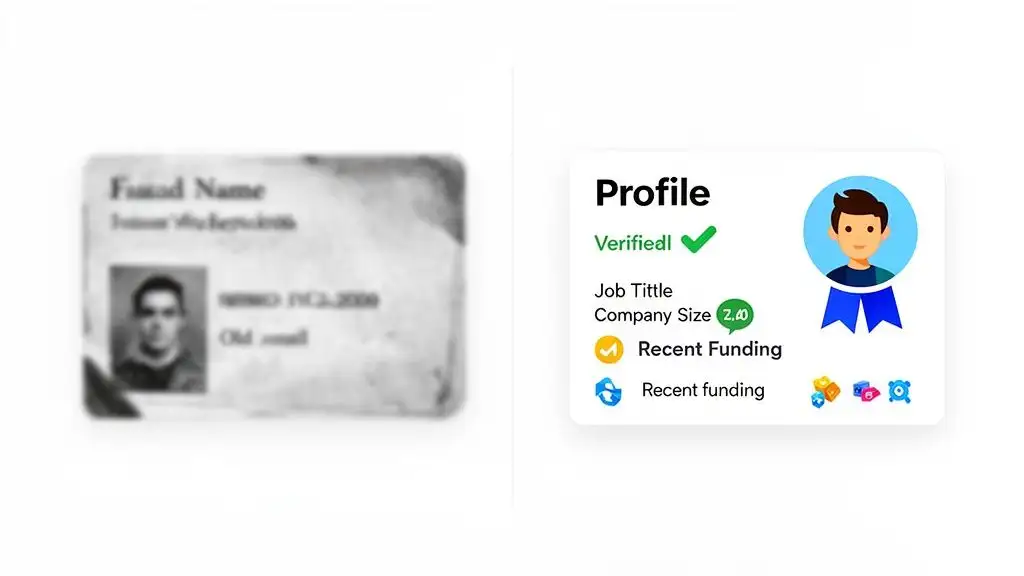
Your current prospect list might feel like a blurry photo from a 1990s disposable camera. You can kinda make out the general shape of who you're talking to, but the critical details are completely lost in the noise. Data enrichment is what brings that grainy snapshot into stunning 4K.
For a sales rep, this is the game-changing difference between sending a cold email that screams "I AM A ROBOT" and crafting a message that says, "I've done my homework, I get your world, and I know exactly how I can help."
It's about transforming a sad, lonely line in your CRM from Jane Doe, jane@email.com into a rich, detailed story you can actually work with.
The Data Glow Up From Raw to Enriched
Here’s a quick look at how data enrichment takes a flimsy lead and turns it into a sales-ready prospect with a ton of potential.
| Data Point | Before Enrichment (The Basic List) | After Enrichment (The Smart Profile) |
|---|---|---|
| Contact | Alex Chen, achen@megacorp.io | Alex Chen, VP of Marketing |
| Company | MegaCorp Inc. | MegaCorp Inc. (500-person SaaS) |
| Context | None | Recently raised $20M in Series B funding |
| Tech Stack | Unknown | Uses Salesforce, Marketo, but no sales intel tool |
| Contact Info | Generic email | Verified direct-dial number + LinkedIn profile |
See the difference? Suddenly, "Alex" isn't just a name on a list. He’s a high-value prospect with clear pain points and buying signals. You can now build a hyper-relevant outreach that mentions their funding and how your tool slots perfectly into their existing workflow.
The Real-World Impact on Sales
This isn't some niche trend; the demand for this level of detail is exploding. The global data enrichment market is on track to jump from USD 697 million in 2024 to USD 1,087 million by 2032.
Why the massive growth? Because nearly 68% of companies now rely on high-quality data to sharpen their customer insights and go-to-market strategies. This isn't just about having cool data points; it's about solving the real, frustrating problems that plague sales teams every single day.
Data enrichment isn’t just an IT function; it's a strategic sales advantage. It directly impacts your ability to connect with the right person, with the right message, at precisely the right time.
For SDRs and B2B sales teams, the benefits are immediate and obvious. You can finally stop the dreaded email bounce by verifying contact info before you hit send. This simple step protects your sender reputation and makes sure your hard work actually lands in an inbox, not the digital void.
Even better, you can focus your precious time on leads who are actually ready to buy. Enriched data is the fuel for a lead scoring model that actually works. For a deeper look, check out this great explainer on what data enrichment is and how it powers modern sales engines.
What Are the Different Flavors of Enriched Data?
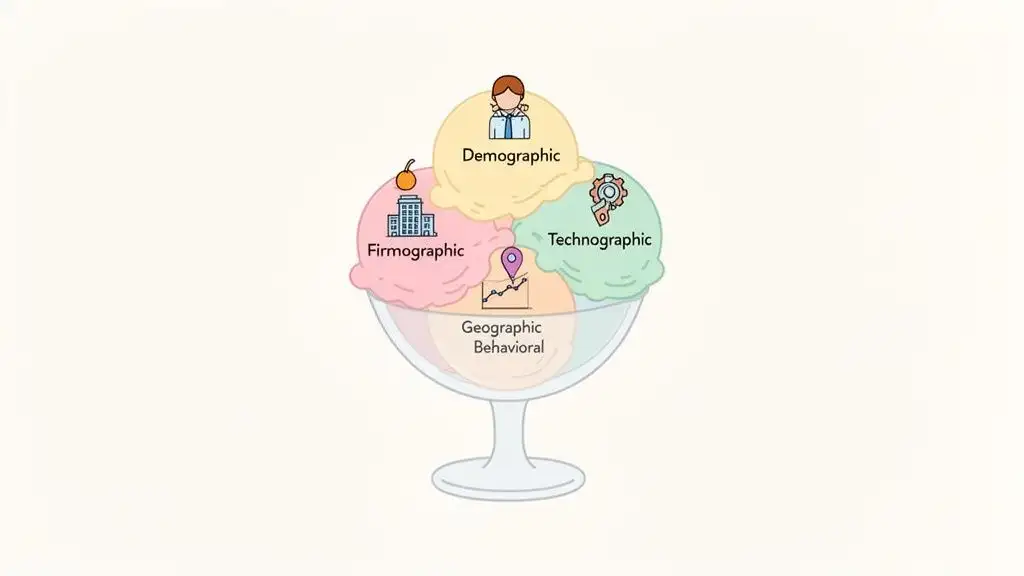
Data enrichment isn't a one-size-fits-all process. Think of it more like building the ultimate ice cream sundae. Each scoop of data you add has its own unique flavor, turning a plain bowl of vanilla (your basic lead list) into a masterpiece.
You've got data that tells you about the person, other data that spills the details on their company, and even some that reveals their secret weapons, a.k.a. their tech stack. Getting a handle on these different "flavors" is the secret to building a sales intelligence sundae that actually gets you meetings.
Demographic Data: The "Who"
This is your first scoop, the foundational layer. Demographic data is all about the person behind the email address, answering the simple question: "Who exactly am I talking to?" It’s how you add a human dimension to an otherwise faceless contact record.
It’s like getting a character bio for your prospect. You go from just a name to a person with a story.
-
Job Title & Seniority: Is this a "Marketing Coordinator" or the "VP of Marketing"? Knowing this completely changes how you frame your pitch.
-
Location (City/State): This is your ticket to hyper-relevant outreach, whether it’s referencing a local sports team or sending a conference meetup invite.
-
Contact Info: This means a verified email that won't bounce and, most importantly, a direct-dial phone number that gets you past the gatekeeper.
Here’s how it plays out: Your CRM has a lead named "Sarah Chen." A quick enrichment reveals she was just promoted to "Head of People Operations" and is based in Austin, Texas. Suddenly, your outreach can lead with a genuine "Congrats on the new role!" and mention a local customer success story. Your message is no longer cold; it’s relevant.
Firmographic Data: The "Where They Work"
While demographics are about the person, firmographics are all about the company they work for. This is like getting the company's vital signs, helping you understand their size, industry, and overall health.
This is absolutely crucial for proper qualification. A 10-person startup has wildly different priorities (and budgets) than a 10,000-person enterprise. Firmographic data lets you stop spraying and praying, allowing you to tailor your message to their specific business reality.
Firmographic insights ensure you’re not trying to sell a monster truck to someone who just needs a skateboard. It’s all about matching the scale of your solution to the scale of their business.
-
Industry: Are they in SaaS, manufacturing, or healthcare? Their industry dictates their biggest headaches.
-
Company Size: Employee count is a dead-simple but incredibly powerful clue about their budget and operational complexity.
-
Annual Revenue: This helps you quickly gauge their purchasing power and the potential deal size.
-
Funding Status: A company that just landed a $50 million Series C round? They're probably in a buying mood.
Technographic Data: The "What They Use"
Okay, this is where it gets really fun, especially for anyone in B2B tech sales. Technographic data is the ultimate cheat code. It reveals the specific software and technologies a company is already using, giving you a peek into their toolkit before you even hop on a call.
This information is pure gold. It allows you to position your product not just as a solution, but as the solution that perfectly complements or replaces what they're already paying for.
Let's see it in action: You sell a marketing automation tool that has a killer integration with Salesforce. Technographic data tells you a target account is currently using HubSpot. Your email can now lead with, "Saw you're on HubSpot. A lot of our customers make the switch when they need more advanced lead scoring, which I see is a huge priority for companies your size." Boom. Instant credibility and a value prop that hits home.
This insatiable hunger for a complete 360-degree view of the customer is exactly why the data enrichment market was valued at USD 2.08 billion in 2024. To see a more practical guide on what to look for in a provider, check out our list of top-tier lead enrichment tools.
How Enriched Data Actually Supercharges Your B2B Sales
Alright, let's get real. Having clean, detailed data is nice, but data itself doesn't pay the bills. Booking more meetings and closing more deals does. This is where data enrichment stops being a nerdy concept and starts becoming a tactical weapon for your entire B2B sales team.
Think of it like this: raw data is a car with a foggy windshield, a busted GPS, and no clue how much gas is in the tank. You might get somewhere, but it's going to be a rough ride. Enriched data is like getting a crystal-clear display, a navigation system that predicts traffic jams, and a perfectly tuned engine. It turns your sales vehicle from a clunker into a high-performance machine.
This flow chart nails down how enriched data directly cranks up your sales outcomes.
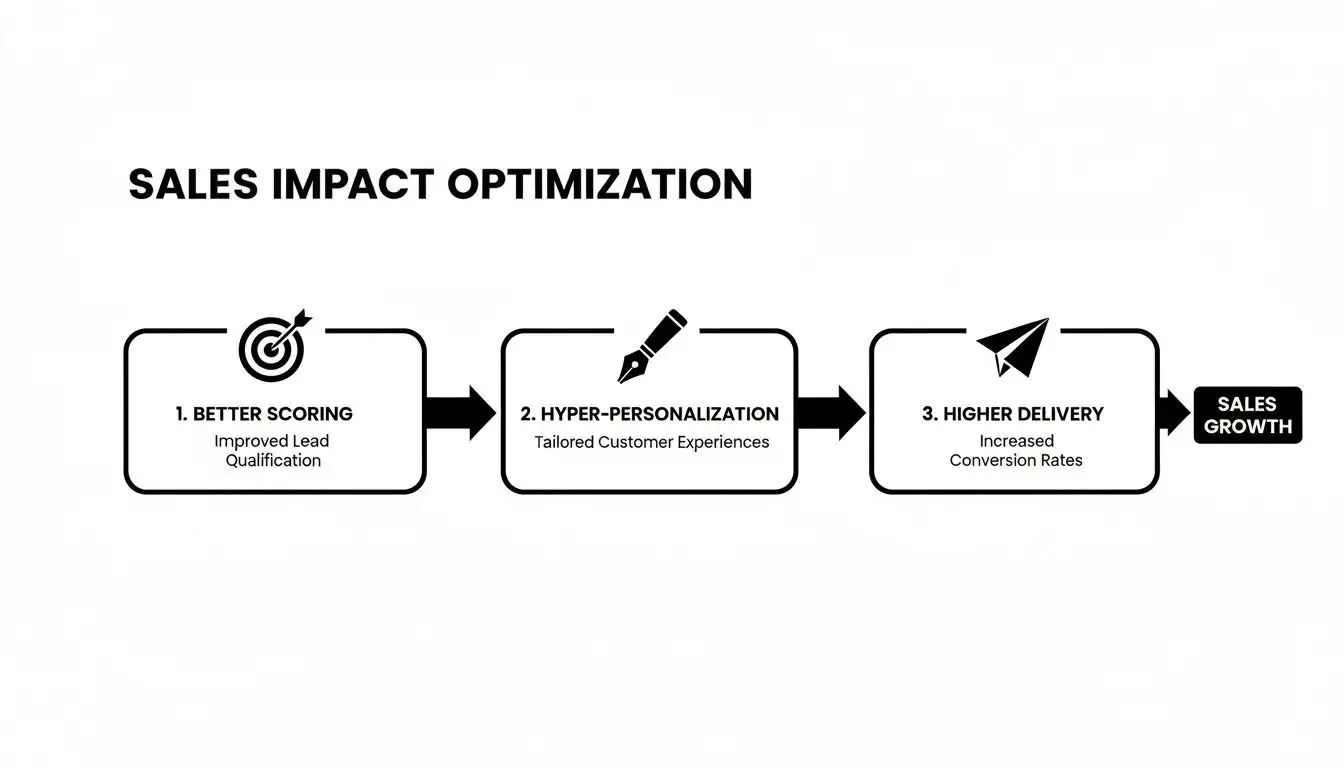
As you can see, the path from raw info to a closed-won deal is paved with smarter scoring, deeper personalization, and guaranteed delivery, all fueled by enrichment.
Surgical Lead Scoring That Actually Works
Let's be honest, without enrichment, lead scoring is basically a guessing game. You’re assigning points based on flimsy details, like someone downloading an ebook. With enriched data, you can perform surgical strikes, separating the "talk to me now" leads from the "maybe next quarter" crowd with almost scary accuracy.
Practical Example: Instead of just knowing a lead works at "MegaCorp," you now know MegaCorp is a 500-person SaaS company that just locked down $20 million in Series B funding. That single detail about their funding is a massive buying signal, instantly rocketing them to the top of your priority list.
-
Company Size & Revenue: Stop wasting cycles on companies that can't afford your solution. Filter and prioritize leads that are a perfect fit for your ideal customer profile (ICP) right from the start.
-
Funding Events: A fresh injection of cash often means new budgets, ambitious new projects, and a team that’s ready to spend on new tools.
-
Hiring Trends: Is a company suddenly posting jobs for a dozen new sales reps? It's a pretty safe bet they need a tool to help those reps succeed.
This process turns your CRM from a messy garage sale into a curated art gallery where every single piece is a potential masterpiece. You spend way less time sifting and way more time selling to prospects who are actually ready to have a conversation.
Next-Level Personalization That Gets Replies
Look, "Hi {first_name}" is the sales equivalent of a dial-up modem. It's slow, it’s outdated, and everybody hates it. Real personalization goes way beyond a name, and enriched data is the secret sauce for crafting opening lines that feel less like a template and more like a genuine, one-to-one conversation.
Practical Example: Instead of a generic blast, you send this:
"Hey Sarah, saw you just stepped in as the new Head of Ops at Innovate Inc. Congrats! Noticed on G2 that your team uses Salesforce, and I thought you might find this case study on optimizing sales workflows useful."
That one opener is packed with enriched data points: a recent job change (demographic) and their tech stack (technographic). It screams, "I did my homework." This isn't just another cold email; it's a relevant, timely, and helpful piece of outreach that respects their time. The incredible impact of this kind of targeted communication is a huge reason why sales leaders are diving deep into how artificial intelligence and sales are changing the entire playbook.
Making Sure Your Message Actually Lands
All the brilliant lead scoring and personalization in the world mean absolutely nothing if your email bounces. It’s the digital version of showing up for a meeting at an address that doesn't exist. You're just shouting into the void.
Data enrichment is your insurance policy against that dreaded bounce-back notification. A core function of any solid enrichment process is contact verification.
Data enrichment doesn't just add new information; it validates the information you already have. It confirms that the email address you’re using isn't from three jobs ago and the phone number isn't a disconnected line.
This delivers two massive wins. First, your messages actually land in the inbox of the person you’re trying to reach, which dramatically boosts your chances of getting a reply. Second, it protects your domain’s sender reputation. High bounce rates are a major red flag for email providers and can get your entire domain blacklisted, crippling your outbound engine overnight.
By using verified, enriched data, you guarantee that your carefully crafted message has a fighting chance to be seen, read, and acted on. This foundational step is what turns your outreach from a lottery into a predictable system for generating pipeline.
Your Roadmap to Implementing Data Enrichment
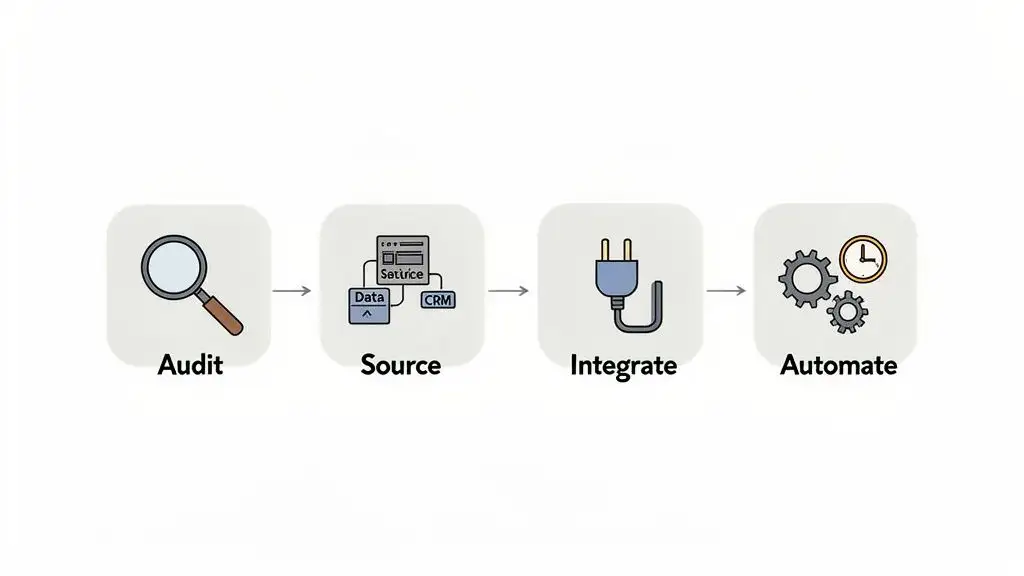
Alright, you're sold on the idea that enriched data is the secret sauce for B2B sales. Now what? The good news is you don't need a data science degree or a server farm in your basement to get this done.
Putting data enrichment into practice is a lot more straightforward than you might think. We've boiled it down to a simple, four-step roadmap that will take you from data chaos to crystal clarity, no confusing jargon required. Let's make it happen.
Pro Tip: Use Munch to build your prospect list and then enrich your contacts in waterfall motion.
Step 1: Audit Your Data Needs
Before you start piling on new data, you’ve got to figure out what you’re actually missing. Think of it as looking in the fridge before you go grocery shopping. An audit is just a fancy way of saying you’re comparing the data you have with the data you need to crush your sales goals.
Start with your Ideal Customer Profile (ICP). What are the absolute must-have data points that separate a perfect lead from a total time-waster?
-
Practical Example: A software company selling a tool for enterprise-level accounting needs to know a prospect's annual revenue and current ERP system. A lead without this info is unqualified.
-
Do you need to know a company's annual revenue to qualify them?
-
Is their technology stack a make-or-break piece of the puzzle?
-
Are your reps constantly spinning their wheels on leads outside your target industry or employee count?
Jot down a list of these essential fields. This audit creates your "most wanted" list of data and becomes the blueprint for your entire enrichment strategy.
Step 2: Source the Right Tools
With your data wishlist in hand, it’s time to go shopping for a provider. This is where you decide if you’re going to do this the hard way (manual) or the smart way (automated). Manually enriching data is like trying to win a footrace on a pogo stick. It's technically possible, but it’s slow, exhausting, and you're probably going to fall on your face.
Automated platforms do all the heavy lifting for you. They save countless hours and prevent the kind of soul-crushing data entry errors that make you question your career choices.
Choosing an enrichment tool isn't just about the data it provides; it's about how seamlessly it fits into your existing workflow. A powerful tool that no one uses is just expensive shelfware.
When you're comparing platforms, look for providers that specialize in the data you need most, whether that’s firmographics, technographics, or verified contact info. Check their accuracy guarantees, where they get their data, and (most importantly) how well they play with others. You’ll need that for the next step.
Choosing Your Data Enrichment Tool
Finding the right tool can feel overwhelming, but it really comes down to your team's size, budget, and technical comfort level. Here’s a quick breakdown of your options.
| Approach | Best For | Pros | Cons |
|---|---|---|---|
| Manual (In-House) | Very small teams or one-off projects with a tight budget. | Low initial cost; total control over the process. | Extremely time-consuming; high risk of human error; not scalable. |
| API-Based Platforms | Teams with some development resources who need flexibility. | Highly customizable; integrates deeply with existing systems. | Requires technical skills to implement; can be complex to manage. |
| CRM-Native Apps | Sales teams that live in their CRM (e.g., Salesforce, HubSpot). | Easy setup; data lives right where you work; often automated. | Can be less flexible; might lock you into a specific ecosystem. |
| All-in-One Platforms | Mid-to-large teams wanting a comprehensive, managed solution. | Rich data sets; minimal setup; ongoing support and updates. | Higher cost; may have features you don't need. |
Ultimately, the best tool is the one your team will actually use every day. Start with your must-have integrations and work backward from there.
Step 3: Integrate With Your Core Tools
This step is absolutely critical. Your shiny new enrichment tool is useless if it’s stuck on a deserted island, completely cut off from your CRM and sales engagement platforms. The whole point is to make enriched data available right where your sales team lives and breathes.
A proper integration means that when a new lead pops into your CRM, the enrichment process kicks off automatically. It’s like having a helpful robot sidekick who instantly fills in all the missing details on a contact record the second it appears. This is where the magic really starts to happen.
Step 4: Automate and Activate
The final step is to put all that beautiful, enriched data to work on autopilot. This is where you build the workflows that turn raw leads into qualified opportunities, no manual meddling required. Automation is the engine that drives your entire strategy.
Here are a few practical examples of automation in action:
-
Trigger an enrichment workflow the moment a new lead is created in your CRM.
-
Automatically route high-value leads (like companies with over 500 employees that just got funded) directly to your top closers.
-
Enroll leads into specific email sequences based on their enriched job title or the exact software they use.
This level of automation shifts your sales process from reactive to proactive. For a closer look at setting this up, our guide on automated lead generation dives deep into building these kinds of efficient systems. By setting up these rules, you ensure every single lead gets the right follow-up at the right time, powered by flawless data.
Common Data Enrichment Pitfalls to Avoid
Diving into data enrichment can feel a bit like playing an old-school video game. You're excited about the goal, but one wrong step can send you right back to the start, wondering what just happened. This section is your cheat sheet to help you sidestep those hidden traps and make sure your efforts actually pay off.
Even with the best game plan, a few classic blunders can totally derail your progress. We'll walk through the three biggest mistakes we see people make: starting with a messy data foundation, treating enrichment like a one-and-done task, and failing to plug the data into the tools your team lives in. Let’s make sure you avoid these common fails.
Pitfall 1: Garbage In, Garbage Out
This is the oldest and truest rule in the data playbook. You can't take a dirty, disorganized list and expect a shiny, high-value asset to pop out the other side. That’s like trying to turn a beat-up 1990s pickup truck into a brand-new Rivian just by slapping on a fresh coat of paint; underneath, the engine’s still coughing and sputtering.
If your original data is a mess of duplicates, typos, and out-of-date info, the enrichment process will just make those problems bigger. You’ll end up with more detailed garbage, which is almost worse because it looks credible at first glance.
The Solution: Kick things off with a serious data cleaning session before you even think about enriching.
-
Dedupe everything: Merge those duplicate contacts and companies.
-
Standardize your formats: Make sure fields like job titles ("VP of Sales" vs. "Sales VP") and state names ("CA" vs. "California") are consistent.
-
Verify what you already have: Use a tool to confirm the emails and phone numbers you've got are still good.
Pitfall 2: The "Set It and Forget It" Mindset
Thinking of data enrichment as a one-time project is a recipe for failure. Data goes stale faster than a carton of milk left on the counter. People switch jobs, companies get bought, and phone numbers get disconnected. A perfectly enriched list today could be 30% inaccurate a year from now.
When that decay sets in, your sales team starts hitting dead ends: bounced emails, wrong numbers, and totally missed opportunities. And the problem is only getting bigger. With data volumes doubling every two years, keeping your sales intelligence fresh is critical for building a predictable pipeline. If you want to dive deeper, you can explore the research on the data enrichment market's growth.
The Solution: Build a system for continuous data hygiene.
-
Enrich in Real-Time: Get a tool that enriches new leads the second they hit your system.
-
Schedule Regular Refreshes: Plan to refresh your entire database every quarter or so to catch what’s changed.
-
Verify Emails Constantly: Regularly run your lists through a verification service to weed out the bad addresses. For a deep dive, check out our guide on how to verify email addresses.
Pitfall 3: Ignoring Proper Integration
Okay, so you’ve got beautiful, clean, up-to-the-minute data. Fantastic! But if it’s just sitting in a spreadsheet somewhere, totally cut off from your CRM or sales platform, it’s basically useless. It’s like owning the world's most detailed map but keeping it locked in a safe while your team is trying to find its way through a forest.
Having great data that isn't accessible where your reps work is one of the most common and frustrating ways enrichment projects fail. The goal is to make your team's workflow easier, not to add another dashboard they have to check.
If your sales team has to switch tabs and manually look up info in another system, they just won't do it. The real magic of enrichment happens when that data is seamlessly baked into the tools they use all day, every day, giving them context and insight right when and where they need it most.
Your Burning Data Enrichment Questions, Answered
Jumping into data enrichment can feel a bit like trying to assemble IKEA furniture without the instructions. You know what the end result is supposed to look like, but a few nagging questions keep tripping you up. Let's iron out those wrinkles.
Think of this as your personal cheat sheet: quick, clear answers to the stuff sales teams actually ask when they start exploring this stuff. No jargon, just straight talk so you can get back to crushing your quota.
How Often Should I Be Enriching My Data?
Treating data enrichment as a one-and-done task is like getting a haircut and expecting it to look sharp forever. It just doesn't work that way. Data gets old, fast. People switch jobs, companies get acquired, and phone numbers change.
For any list you're actively working, you should be refreshing it at least once a quarter. But honestly, the gold standard is real-time enrichment. This is where your tools automatically update a new lead the second it lands in your CRM. Your team gets the freshest intel, every single time, without lifting a finger.
Let's be real: your CRM data has a shorter shelf life than a carton of milk. Real-time enrichment means you're always starting conversations with fresh, relevant info instead of pitching with stale, expired details. For any serious sales team, it’s not a luxury; it’s a necessity.
Do These Enrichment Tools Actually Play Nice With My CRM?
They better! A data enrichment tool that can’t connect to your CRM is about as useful as a race car with no engine. It might look cool, but it isn’t going to get you anywhere.
Any modern enrichment platform worth its salt is built to integrate seamlessly with the big players like HubSpot and Salesforce. This connection is the magic that makes it all work. It allows you to automatically enrich a contact the moment it’s created, saving your reps from the mind-numbing agony of manual data entry.
Is This Stuff Even Legal With All The Privacy Rules?
That's the million-dollar question, isn't it? The short answer is: yes, provided you’re working with a provider who isn’t cutting corners. Any legitimate data enrichment service is obsessed with compliance, especially with regulations like GDPR and CCPA watching everyone's every move.
Reputable companies get their data from publicly available, above-board sources, like company websites, press releases, and professional networks like LinkedIn. When you're shopping for a tool, put their compliance standards under a microscope. They should be completely upfront about where their data comes from and how they stick to the rules, so you can get all the benefits without any of the legal nightmares.
Ready to stop guessing and start selling with surgically precise data? Munch is your all-in-one platform for finding high-intent leads, enriching them with verified data, and launching personalized outreach that actually gets replies. Sign up on Munch today!