The 12 Best Lead Enrichment Tools To Supercharge Your Sales In 2026

By Mriganka Bhuyan
•Founder at Munch

Trying to prospect with bad data is like showing up to a potluck with nothing but a bag of ice. You’re technically there, but you’re not contributing much, and everyone’s a little disappointed. A lead with just a name and company is the sales equivalent of that bag of ice: a cold, incomplete offering that melts away under the slightest pressure. It's a half-baked conversation waiting to happen, a shot in the dark that almost always misses. You might as well be navigating a new city with a map from 1998, searching for a Blockbuster where a fancy juice bar now stands.
Lead enrichment tools are your secret ingredient. They take that sparse contact information and transform it into a full-blown, actionable profile. We're talking about layering on crucial details like verified email addresses, direct-dial phone numbers, job titles, company size, tech stack, and even recent buying signals. For example, instead of just knowing a lead is "Jane Doe, Acme Corp," you now know Jane is the "VP of Marketing," her company just received Series B funding, and they use a competitor's software. This process turns a faceless name into a real person with specific challenges you can actually solve. Instead of shouting generic pitches into the digital void, you can start a genuine conversation, saving you from the professional embarrassment of asking for the nearest payphone in a world of smartphones.
This guide is your treasure map to better data. We’ve meticulously reviewed the 12 best lead enrichment tools on the market. For each tool, you’ll find a no-fluff breakdown, including core features, pricing insights, honest pros and cons, and real-world use cases. We hope it helps you find the perfect platform to fill the gaps in your sales data and turn every lead into a golden opportunity.
1. Munch
Munch isn’t just another entry in the crowded market of lead enrichment tools; it’s a full-blown outbound command center. It tackles the entire top-of-funnel workflow, from finding the right people to ping, enriching their data until it sparkles, and then crafting outreach that doesn't immediately get sent to the trash folder. This all-in-one approach is its superpower, designed to stop sales teams from toggling between five different tabs just to send one decent email.
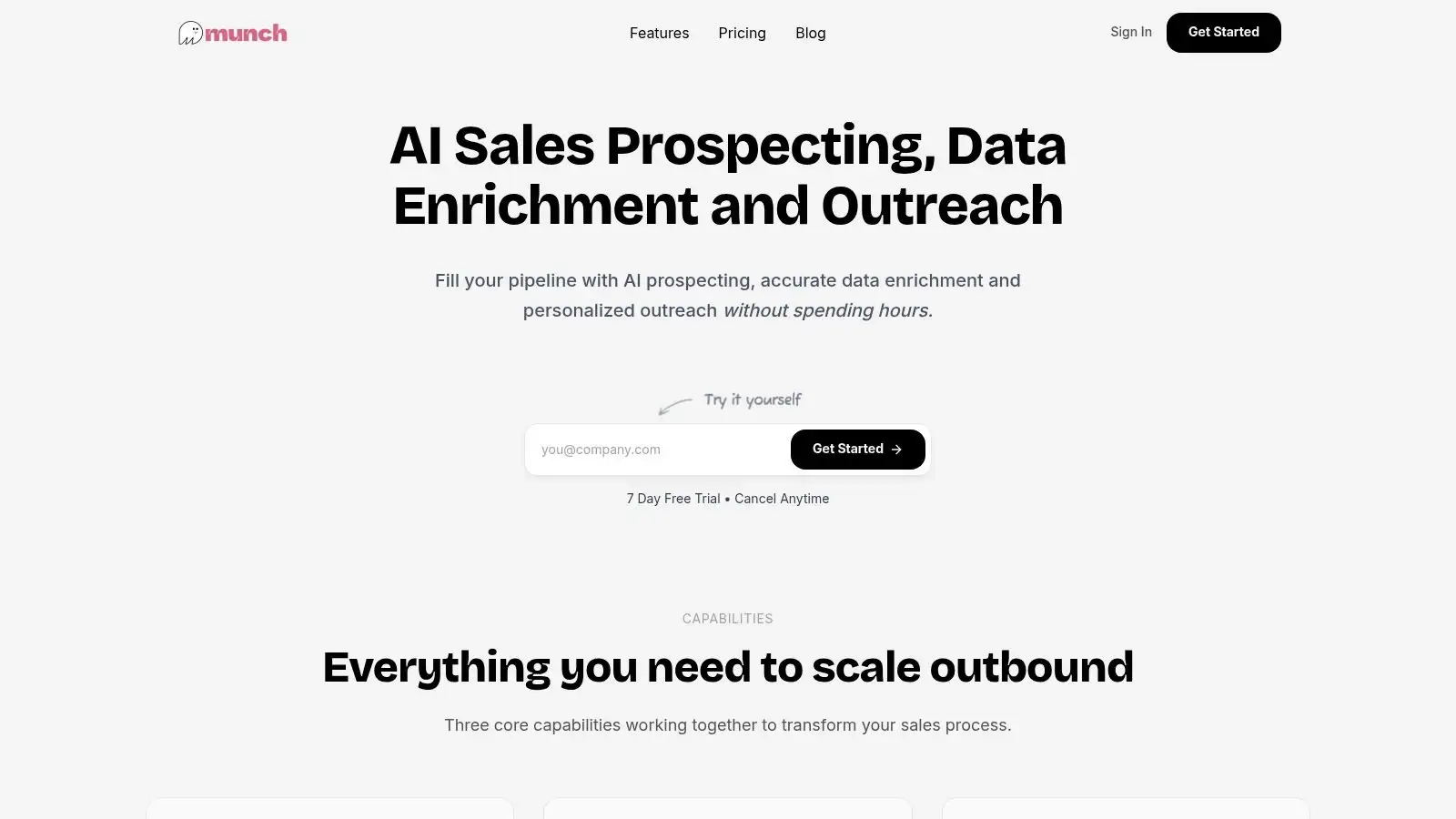
The platform is built on three core pillars: intent-driven prospecting, high-accuracy enrichment, and AI-powered personalization. It’s like having a scout, a private investigator, and a world-class copywriter all working together. Munch scours over 50 data sources for buying signals (think job changes, new funding announcements, or a company adopting a new technology) and then matches those high-intent prospects against your Ideal Customer Profile (ICP) in real-time.
Why It Stands Out
What truly separates Munch is its “waterfall enrichment” process. Instead of relying on a single data source, it cross-references multiple providers to verify contact information, promising an impressive 95%+ email accuracy. This means fewer bounced emails and more time spent on actual conversations, not data janitor work. The platform’s claim of getting a new campaign launched in about 10 minutes is a bold one, but it reflects the streamlined, integrated nature of its workflow.
The built-in AI personalization is another major win. It goes beyond simple [First Name] tokens, generating unique, context-aware messaging for each prospect. Paired with its multi-channel sequencer for email and LinkedIn, you can orchestrate sophisticated outreach that feels genuinely human.
Key Features & Pricing
-
Intent-Driven Discovery: Surfaces prospects based on real-time buying signals like job changes, funding, and tech stack updates.
-
Waterfall Enrichment: Uses multiple data sources for high-accuracy contact info (emails, phone numbers), firmographics, and technographics.
-
AI-Powered Personalization: Generates unique outreach copy for each lead to boost reply rates.
-
Multi-Channel Sequencing: Manages and optimizes outreach across both email and LinkedIn.
| Plan | Price/Month | Credits | Key Benefit |
|---|---|---|---|
| Basic | $49 | 1,000 | Perfect for solo sellers or small teams getting started. |
| Pro | $99 | 2,200 | Ideal for growing teams needing more volume. |
| Advanced | $249 | 5,500 | Best for high-volume outbound and dedicated support. |
Pros & Cons:
-
Pros: The all-in-one workflow is a massive efficiency boost. Waterfall enrichment dramatically improves data quality and deliverability. The entry-level price is accessible for almost any team.
-
Cons: Key CRM integrations are still on the "coming soon" list, which could be a dealbreaker for teams needing immediate sync. Robust third-party validation like named case studies is not prominently featured.
Learn more at usemunch.com
2. ZoomInfo (SalesOS + Enrich)
ZoomInfo’s SalesOS platform combined with its Enrich product is designed to automatically pump your CRM and marketing automation tools full of fresh, accurate data.
ZoomInfo appends over 200 data points, from direct-dial phone numbers and org charts to technographics (what software they use) and buyer intent signals. It’s a comprehensive solution for large teams needing to automate data hygiene at scale.
Core Features & Use Case
ZoomInfo is best suited for established sales organizations that need an all-in-one solution for prospecting and enrichment. Its ability to automatically cleanse and update records in Salesforce or HubSpot saves countless hours for RevOps teams. The buyer intent data is particularly powerful, flagging accounts that are actively researching solutions like yours, so your SDRs can swoop in at the perfect moment.
-
Pros:
-
Incredible data depth, especially for North American companies.
-
Powerful automation that keeps your CRM clean without manual effort.
-
Mature ecosystem with deep integrations across the enterprise tech stack.
-
-
Cons:
-
Opaque, high-tier pricing with mandatory annual contracts.
-
Some users report aggressive sales and billing practices.
-
Website: https://www.zoominfo.com
3. Apollo.io
It’s a unified sales intelligence and engagement platform that bundles lead enrichment, prospecting, and sequencing into one cohesive workflow.
You can find prospects, enrich their contact info with verified emails and mobile numbers, and immediately enroll them in a multi-channel outreach sequence.
Core Features & Use Case
Apollo.io is ideal for SMBs and mid-market sales teams who want an all-in-one solution for their entire outbound motion. The ability to move seamlessly from finding a lead to enriching their data and launching an outreach campaign within a single interface significantly boosts SDR efficiency. Its credit-based system for exports and enrichment offers flexibility, allowing teams to scale their usage up or down as needed.
-
Pros:
-
Clear, self-serve pricing makes it accessible and easy to get started.
-
Unified workflow from data to outreach accelerates SDR execution.
-
Broad integrations connect easily with typical GTM tech stacks.
-
-
Cons:
-
Credit allocations and usage policies can be nuanced and subject to change.
-
Data depth can sometimes lag behind specialized enterprise datasets in niche industries.
-
Website: https://www.apollo.io/pricing
4. Clearbit by HubSpot
Once a celebrated standalone tool known for its slick API and developer-friendly approach, Clearbit is now deeply integrated into the HubSpot ecosystem. This marriage creates a powerful, native solution for teams already living and breathing inside the HubSpot CRM, turning it into a one-stop shop for lead enrichment and buyer intent.
This isn't just a simple data top-off. Clearbit's power lies in its seamless ability to enrich company and contact records right inside HubSpot, supercharging your lead scoring, routing, and segmentation workflows. It also powers HubSpot's "Prospects" tool, revealing which companies are visiting your website, even if they never fill out a form.
Core Features & Use Case
Clearbit is the go-to for HubSpot-centric GTM teams that want to minimize tech stack complexity. Its ability to shorten forms by enriching data on the backend is a classic conversion rate booster. For example, a user enters their email, and Clearbit instantly fills in their name, company, and role, making the process frictionless. This makes it an essential part of the modern lead enrichment tools landscape, especially for marketers who want to effectively qualify sales leads from the start.
-
Pros:
-
Unbeatable HubSpot integration simplifies RevOps and workflows.
-
Strong fit for teams using HubSpot for all their CRM and automation needs.
-
Excellent documentation and support through HubSpot's established ecosystem.
-
-
Cons:
-
Access is now primarily tied to HubSpot packages; the beloved standalone free tools are gone.
-
Pricing is quote-based and often bundled, which can lack transparency.
-
Website: https://www.hubspot.com/products/clearbit
5. Lusha
It’s celebrated for its simplicity, particularly its popular Chrome extension that lets sales reps grab verified contact details directly from LinkedIn profiles or company websites. Lusha’s credit-based model and straightforward interface make it a favorite among SMBs and individual reps who need reliable data without the enterprise-level price tag or complexity.
It’s less about deep, automated CRM cleansing and more about arming your frontline team with the tools to quickly find the right person’s email or direct dial. For SDRs living on LinkedIn, the Lusha extension becomes an indispensable part of their daily workflow, turning profile views into actionable contact information with a single click.
Core Features & Use Case
Lusha is ideal for sales teams that prioritize prospecting speed and ease of use. The credit system is transparent: you use credits to reveal contact information, with different values for emails versus phone numbers. The free plan, which offers a handful of credits per month, is a fantastic way to test the data quality for your specific industry and ideal customer profile before committing to a paid plan.
-
Pros:
-
Simple credit model that’s easy to understand and quick to start with.
-
Excellent Chrome extension for seamless SDR prospecting workflows.
-
Generous free plan allows you to test coverage and fit without any cost.
-
-
Cons:
-
Phone number reveals are more costly, which can quickly increase your spend. Read more on how to find a business phone number.
-
Data quality can vary by segment, so validation on your ICP is crucial before scaling.
-
Website: https://www.lusha.com/pricing/
6. Cognism
If your sales team has ever felt like they’re trying to navigate European privacy laws with a blindfold on, Cognism is the James Bond of lead enrichment tools: sophisticated, internationally savvy, and laser-focused on compliance. It’s built with a GDPR-first mentality, offering high-quality, phone-verified B2B data with a particular strength in the EMEA market. This isn’t just about getting an email; it’s about getting data you can legally and confidently use.
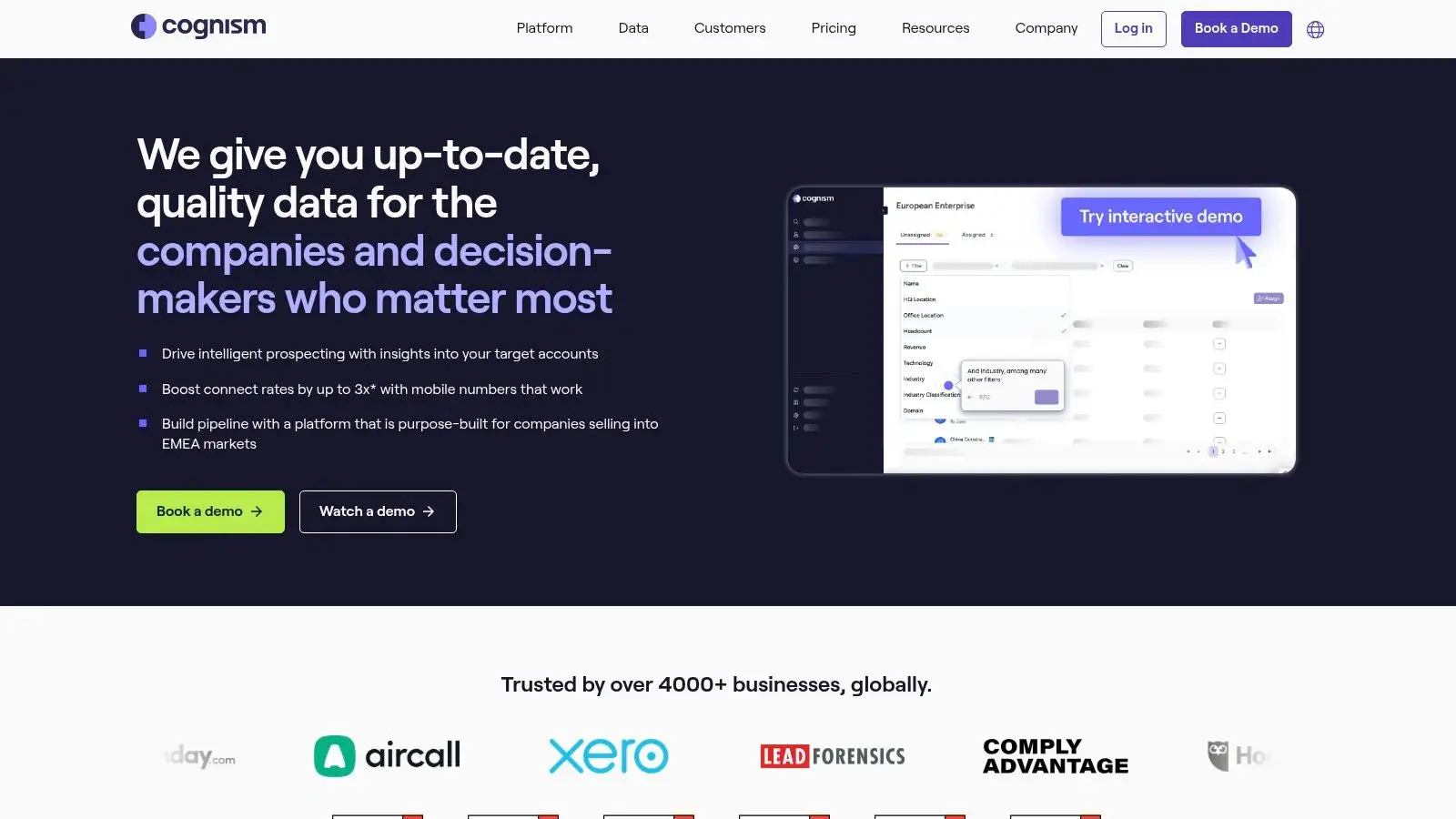
Cognism provides enrichment via CSV uploads for quick batch jobs or through API for real-time updates directly in your systems. It’s designed to give your sales and marketing teams the compliant fuel they need for global outreach, complete with signals like company funding and hiring trends to time your engagement perfectly.
Core Features & Use Case
Cognism is the go-to for teams that split their focus between North America and Europe. Its standout feature is the quality and compliance of its EMEA data, including hard-to-find mobile numbers, all checked against Do-Not-Call (DNC) lists. This makes it ideal for organizations that need reliable international contact information without navigating a legal minefield. The platform’s ability to enrich both contact and account records helps build a complete picture of your target market.
-
Pros:
-
Strong compliance posture, especially around GDPR and DNC screening.
-
Excellent data quality for Europe and the UK, including verified mobile numbers.
-
Flexible enrichment options usable by both ops teams and non-technical users.
-
-
Cons:
-
Quote-based pricing and typically requires annual contracts.
-
May be less cost-effective for teams focused exclusively on the US market.
-
Website: https://www.cognism.com
7. UpLead
If the world of B2B data were a grocery store, UpLead would be the organic, farm-to-table section. It prides itself on quality over sheer quantity, emphasizing a 95% data accuracy guarantee that’s verified in real-time right before you download a contact. This commitment makes it a standout choice for teams that would rather have a handful of perfect leads than a mountain of maybes. It’s less about brute force and more about surgical precision.
UpLead operates on a transparent, credit-based system, making it incredibly accessible for SMBs and startups that can't commit to a hefty enterprise contract. It’s one of the few high-quality lead enrichment tools where you can see the price, sign up, and start enriching leads in less time than it takes to brew a pot of coffee.
Core Features & Use Case
UpLead is ideal for small to mid-sized businesses that prioritize email deliverability and direct-dial accuracy above all else. Its strength lies in providing highly verified contact information, especially mobile numbers, which are often the holy grail for sales teams. The platform's user-friendly interface allows you to build hyper-targeted lists using technographics and other advanced filters, then enrich that data directly into your CRM.
-
Pros:
-
Transparent and flexible pricing with clear monthly and annual plans.
-
High data accuracy guarantee, especially for verified emails and mobile numbers.
-
Generous free trial (7 days with 5 credits) lets you fully test the service.
-
-
Cons:
-
The credit-based system can become costly for high-volume data exports.
-
Some of the most powerful features are reserved for higher-tier or annual plans.
-
Website: https://www.uplead.com/pricing/
8. LeadIQ
If other lead enrichment tools are the entire supply chain, LeadIQ is the last-mile delivery service built specifically for your sales reps. It's designed from the ground up to streamline the most tedious part of an SDR's day: capturing a promising lead on LinkedIn and getting their verified data into the CRM without a dozen clicks and copy-pastes. LeadIQ is less about massive, automated database cleansing and more about arming front-line reps with a lightning-fast workflow.
It focuses on verified emails and mobile numbers, capturing prospects with a single click from their LinkedIn profile via a slick Chrome extension. This action enriches the contact and syncs it directly to your Salesforce or sales engagement platform, making it a favorite for teams focused on high-velocity outreach. It's a workflow optimization tool as much as it is a data provider.
Core Features & Use Case
LeadIQ is the perfect co-pilot for SDR and BDR teams who live on LinkedIn and in their sales engagement tools. Its biggest strength lies in its capture-to-CRM workflow, which dramatically cuts down on the manual admin of prospecting on LinkedIn. The job-change alerts are also a key feature, notifying you when past champions or target contacts move to a new company, opening up fresh opportunities.
-
Pros:
-
Exceptional SDR-friendly workflow that dramatically speeds up prospecting.
-
Affordable entry-point with a free tier and a reasonably priced Essential plan.
-
Strong Salesforce enrichment and useful job-change triggers for timely outreach.
-
-
Cons:
-
Credit system is split between emails and mobile numbers, which requires careful management.
-
Data coverage isn't as vast as enterprise giants like ZoomInfo; it may be less effective outside North America.
-
Website: https://leadiq.com/pricing
9. People Data Labs (PDL)
If most lead enrichment tools are shiny, pre-built sports cars, People Data Labs (PDL) is the high-performance engine, exhaust, and transmission kit. It's built for the teams who want to pop the hood and customize their data machine from the ground up. PDL is a developer-first platform, offering powerful APIs that let engineering, RevOps, and data science teams build enrichment directly into their own products and internal systems.
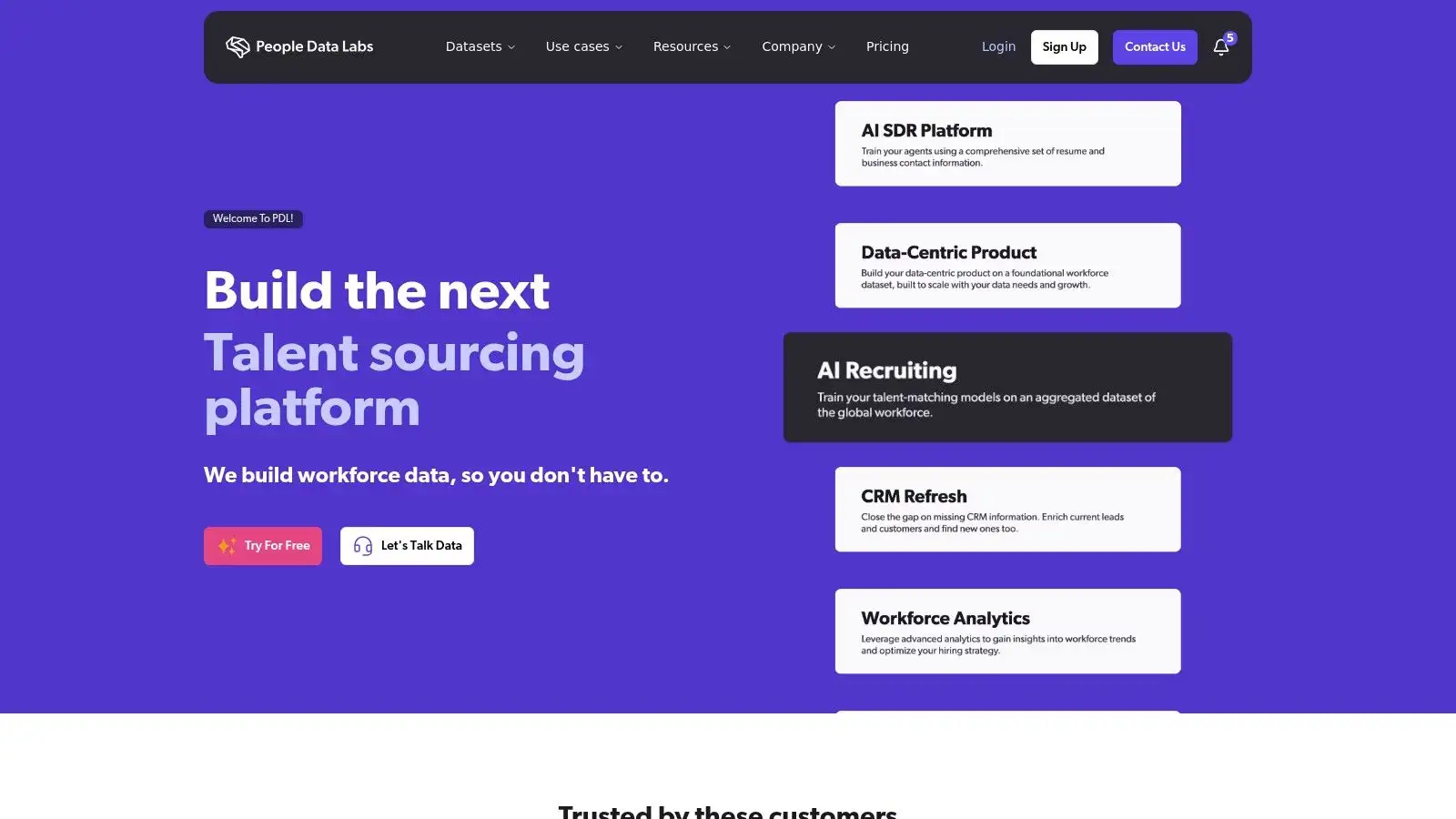
This is the tool you turn to when off-the-shelf solutions are too rigid. Instead of a one-size-fits-all integration, PDL provides the raw data and flexible delivery so you can build exactly what you need. For those without an engineering team on speed dial, their Batch Enrich tool lets you upload a CSV and get the goods without writing a single line of code.
Core Features & Use Case
PDL is the perfect fit for tech-savvy organizations that require granular control over their data workflows or companies that want to embed enrichment features into their own SaaS product. Its APIs allow you to programmatically enrich leads, search for new prospects based on very specific criteria, and even clean messy, user-submitted data in real-time. It’s less about a simple CRM plugin and more about building a data-powered competitive advantage.
-
Pros:
-
Extremely flexible with a powerful API and fantastic, developer-centric documentation.
-
Transparent, per-credit pricing so you only pay for the data you actually consume.
-
No-code Batch Enrich option provides a great escape hatch for non-technical teams.
-
-
Cons:
-
Requires technical resources to unlock its full potential via the API.
-
Pay-as-you-go pricing can be hard to forecast and may become costly without careful management.
-
Website: https://www.peopledatalabs.com
10. RocketReach
It built its name on a massive database of emails and phone numbers, making it a go-to for quick, ad hoc lookups and list building.
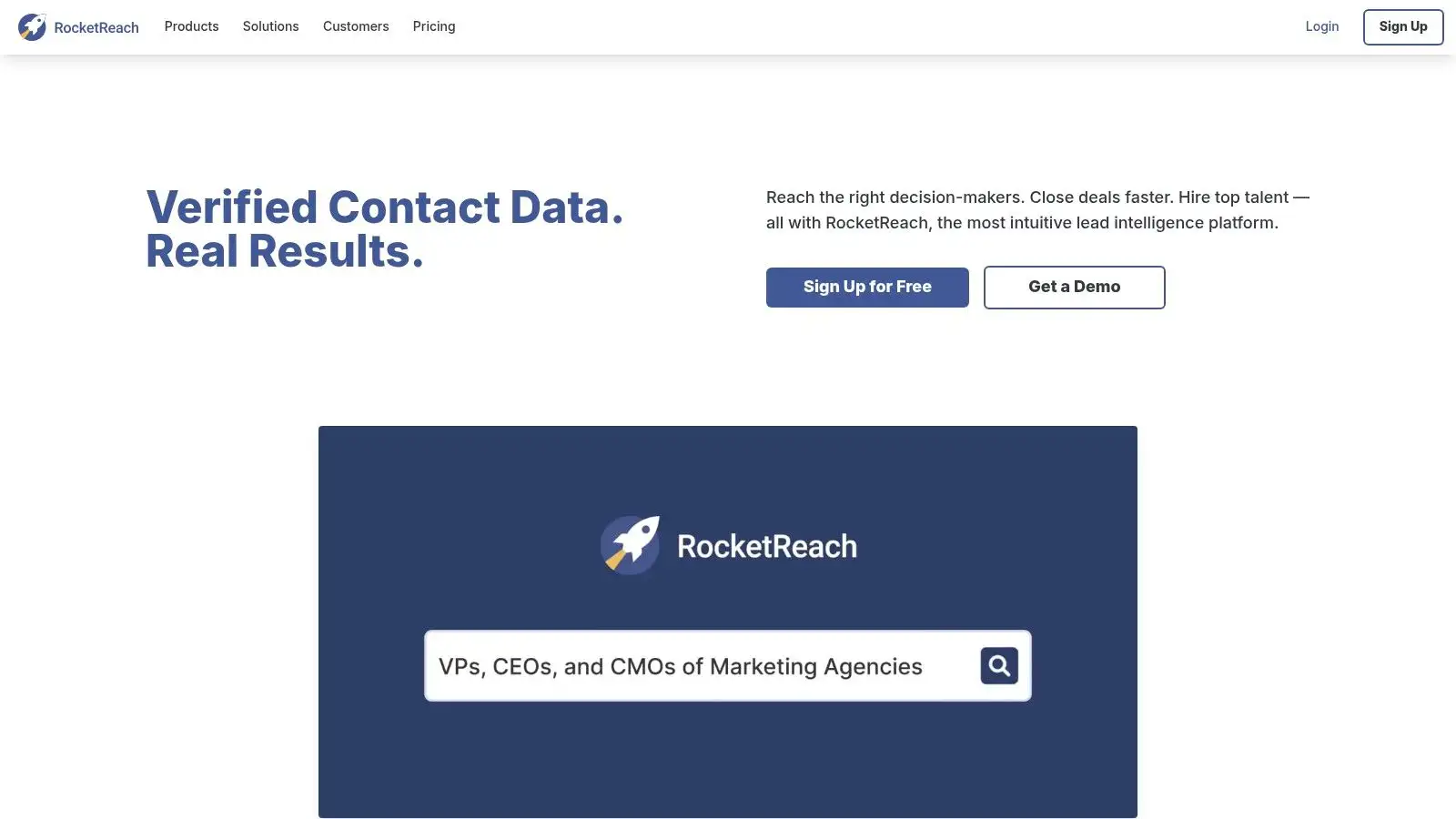
While it started as a simple lookup tool, RocketReach has matured. It now offers bulk CSV enrichment, API access, and even some technographics and org chart data at higher tiers. It's the Swiss Army knife for salespeople who need to find a specific contact's email right now and then get back to selling.
Core Features & Use Case
RocketReach is the ideal starting point for solo sellers, startup founders, and small sales teams. The browser extension is a killer feature, allowing you to pull contact details directly from LinkedIn profiles or company websites. It’s perfect for targeted prospecting where you’ve identified a key person and just need their direct line to start a conversation, making it one of the most straightforward lead enrichment tools to implement.
-
Pros:
-
Fast and easy to use, especially for one-off contact lookups.
-
Accessible pricing with individual and small team plans available.
-
Helpful browser extension for sourcing contacts on the fly.
-
-
Cons:
-
Credit system can be confusing (lookups vs. exports use credits differently).
-
Data accuracy can be inconsistent outside of major North American markets.
-
Website: https://rocketreach.co
11. Hunter
t doesn't pretend to do everything; it focuses with laser precision on its core mission: finding and verifying professional email addresses. It's the lean, mean, email-finding machine for teams that prioritize straightforward data and cost-effectiveness over a sprawling feature set. Hunter is the go-to tool when your primary goal is simply to ensure your message lands in the right inbox without breaking the bank.
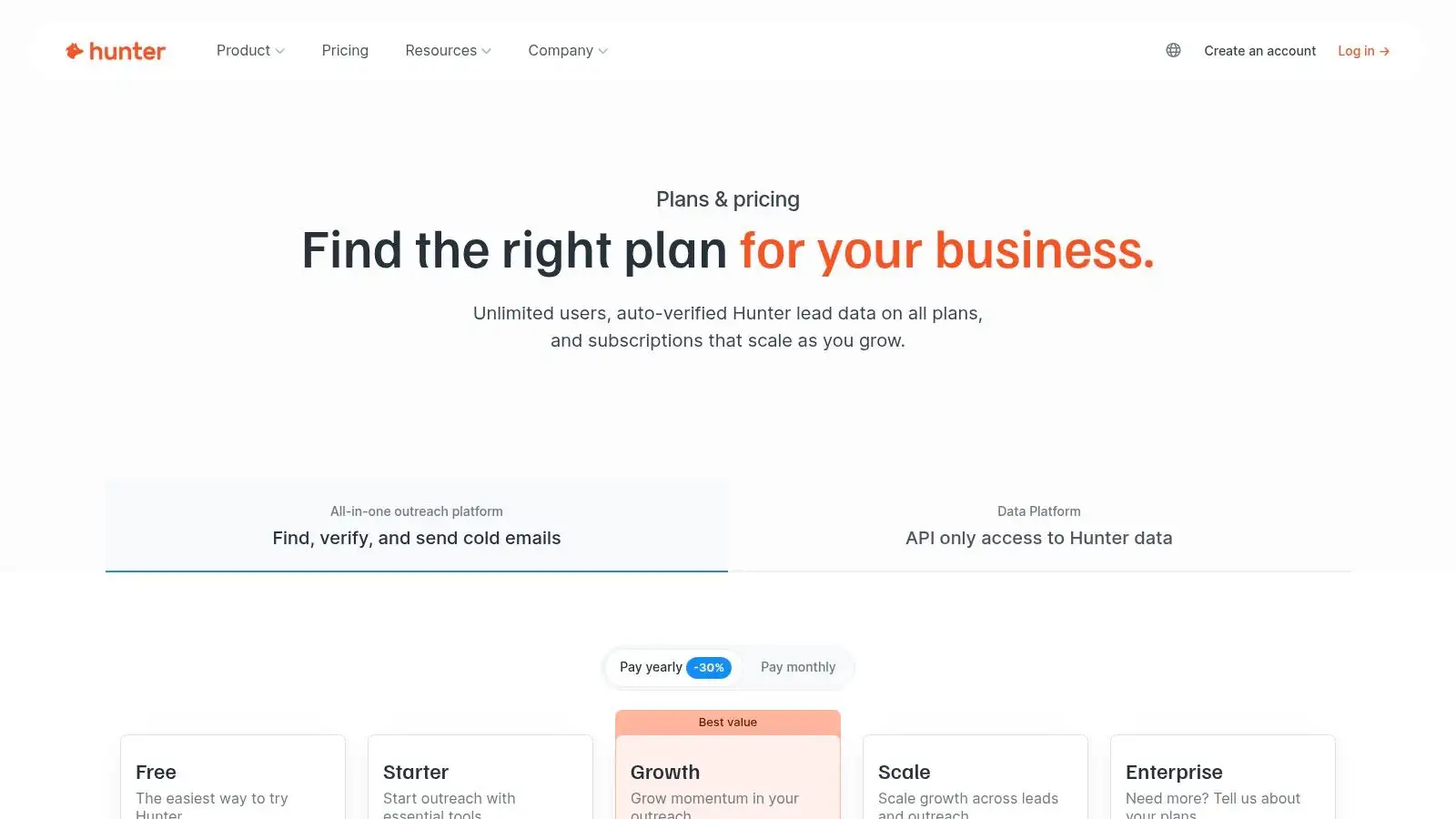
While its enrichment capabilities are lighter than enterprise platforms, its value is in its simplicity and accuracy for email-centric workflows. It’s a specialist tool that performs its specific job exceptionally well, making it a staple for SDRs, recruiters, and marketers who need reliable email data without the complexity or cost of a full-blown sales intelligence suite.
Core Features & Use Case
Hunter is best suited for startups, SMBs, and agencies that need a reliable, budget-friendly way to handle email discovery and verification at scale. The Domain Search feature is perfect for account-based prospecting, while the bulk Email Verifier is essential for list hygiene before launching a major campaign. Its straightforward API and Google Sheets add-on make it incredibly easy to integrate into existing processes without a heavy lift from your RevOps team. If you're building a high-quality email list from scratch, this is one of the most efficient tools out there. If you'd like a more detailed breakdown, you can learn more about finding business emails.
-
Pros:
-
Very cost-effective with transparent, usage-based credit pricing.
-
Excellent for email verification and cleaning up existing lists.
-
Simple to integrate into workflows via its API, Chrome extension, and Sheets add-on.
-
-
Cons:
-
Primarily focused on email data; very limited phone numbers or deep firmographics.
-
Not a comprehensive sales intelligence database for complex account mapping.
-
Website: https://hunter.io/pricing
12. Snov.io
This platform is built for teams that want to collapse their tech stack and run a lean, mean, email-driven outbound machine without breaking the bank.
Snov.io bundles prospect discovery, verification, and multichannel outreach into a single, credit-based system. Its Chrome extension is a workhorse for grabbing emails from LinkedIn, while its API allows for deeper integration. It’s the perfect solution for startups and SMBs who need a comprehensive toolset without the enterprise-level price tag.
Core Features & Use Case
Snov.io is the go-to for sales teams and agencies focused on high-volume, email-led outbound campaigns. The platform shines for users who need to find a contact, instantly verify their email, and drop them into an outreach sequence without toggling between three different tabs. The flexible credit model means you can use your allowance for finding new leads, verifying a list, or enriching existing contacts, which is great for agile teams.
-
Pros:
-
Competitive pricing with generous credit volumes and unlimited team seats on higher plans.
-
Combines enrichment, verification, and outreach to reduce tool sprawl and streamline workflows.
-
Flexible add-ons like LinkedIn automation slots that can be added as needed.
-
-
Cons:
-
Phone data and deep firmographics are limited compared to larger, enterprise-focused vendors.
-
LinkedIn automation and other multichannel features require extra configuration and cost.
-
Website: https://snov.io/pricing
Top 12 Lead Enrichment Tools — Comparison
| Product | Core features ✨ | Quality & UX ★ | Price / Value 💰 | Target 👥 |
|---|---|---|---|---|
| Munch 🏆 | Intent-driven discovery, waterfall enrichment, AI personalization | ★★★★★ : 95%+ email accuracy; quick setup (~10 min) | 💰 From $49/mo (Basic); 7‑day trial; tiers to $249 | 👥 SDRs/BDRs, sales leaders, founders, agencies |
| ZoomInfo (SalesOS + Enrich) | Enterprise DB, Enrich, org charts, APIs, intent signals | ★★★★★ : deep coverage & mature integrations | 💰 Quote-based; enterprise contracts | 👥 Large sales orgs, enterprise RevOps |
| Apollo.io | Search + enrichment, sequencing, A/B testing, CRM sync | ★★★★☆ : strong SMB/mid-market fit | 💰 Transparent self-serve tiers; SMB-friendly | 👥 SMBs, mid-market SDR teams, startups |
| Clearbit (by HubSpot) | HubSpot-native enrichment, form shortening, visitor reveal | ★★★★ : tight HubSpot integration | 💰 Quote-based; tied to HubSpot packaging | 👥 HubSpot-native teams, marketing ops |
| Lusha | Chrome extension, credit-based email/phone reveals, CRM plugs | ★★★ : fast reveals; variable coverage by segment | 💰 Credit model; free plan available | 👥 SMBs, individual reps, quick prospecting |
| Cognism | GDPR-first enrichment, API/CSV, phone-verified EMEA data | ★★★★ : strong EU/UK coverage & compliance | 💰 Quote-based; typically annual | 👥 EMEA sales teams, compliance-focused orgs |
| UpLead | Verified contacts (95% claim), technographics, CRM sync | ★★★★ : transparent verification & reliable exports | 💰 Monthly/annual plans with credits | 👥 SMBs/SMEs needing verified contacts |
| LeadIQ | Capture-to-CRM, Chrome extension, job-change alerts | ★★★ : SDR-friendly capture workflows | 💰 Free tier + paid plans; credit splits apply | 👥 SDRs, Salesforce-heavy teams |
| People Data Labs (PDL) | Developer-first Person/Company APIs, Batch Enrich UI | ★★★★ : precise fields & strong docs for devs | 💰 Per-credit pricing; volume discounts | 👥 RevOps, data teams, product/engineering |
| RocketReach | Email/phone lookup, org charts, bulk CSV & API, extensions | ★★★ : fast ad-hoc sourcing & team plans | 💰 Credit tiers; team & annual plans | 👥 Recruiters, sourcers, small teams |
| Hunter | Email Finder, Verifier, enrichment, Sheets/API, outreach | ★★★★ : cost-effective email verification | 💰 Usage-based credits; generous annual pools | 👥 Email-led teams, list cleanup, SMBs |
| Snov.io | Email finder/verification, enrichment API, outreach sequences | ★★★ : high-credit volumes; email-led outreach | 💰 Competitive credit pricing; unlimited seats on higher tiers | 👥 Cost-sensitive teams, agencies |
Choosing Your Character: Which Tool Wins the Game?
And there you have it, our epic quest through the realm of the best lead enrichment tools is complete. We’ve journeyed from the all-in-one kingdoms of Munch and Apollo to the data-hoarding dragons like ZoomInfo and Cognism. You’ve seen the stats, weighed the pros and cons, and probably feel like you've just binge-watched an entire season of a very nerdy, data-heavy show.
The big takeaway? There's no single "One Ring to rule them all" when it comes to lead enrichment. The perfect tool for a scrappy startup founder trying to do it all is wildly different from what a massive enterprise RevOps team needs to fuel its global sales engine. Trying to force a tool to fit your workflow is like trying to use a cheat code from Grand Theft Auto in The Sims; you’re just going to cause chaos and nobody gets what they want.
Your Final Boss Battle: Making the Right Choice
Before you sign on the dotted line, let’s boil this down to the core questions you need to answer. This is your personal character creation screen.
-
Who are you building for? A lean, mean SDR team of five needs agility and an all-in-one platform. A 500-person sales org needs a robust, scalable data source that integrates flawlessly with its complex tech stack. For instance, a small team would get more value from a platform like Munch that combines discovery, enrichment, and outreach, while a larger org might look at a pure data provider like People Data Labs to build a custom solution.
-
What’s your primary quest? Are you trying to fill the top of the funnel with net-new leads? Or are you focused on making your existing CRM data more valuable by filling in the gaps? Your main goal dictates which features are non-negotiable and which are just nice-to-haves.
-
How much gold is in your treasury? Let's be real, budget is a major boss battle. Always calculate the cost per enriched lead and weigh it against the potential ROI. Don't forget to account for implementation time and training costs.
Beyond the Tool: The Implementation Game Plan
Remember, buying one of these powerful lead enrichment tools is just the start. The real magic happens during implementation. You wouldn’t buy a DeLorean and not know how to get it to 88 mph, right?
First, define your data governance rules. Decide on a single source of truth for your data and map out how enriched information will flow into your CRM. Without a plan, you risk creating a Frankenstein's monster of duplicate fields and conflicting information.
Second, start with a pilot program. Roll out the tool to a small, dedicated group of users first. Let them test it, break it, and provide feedback. This allows you to iron out the kinks and build a solid training program before unleashing it on the entire team. This prevents mass confusion and ensures everyone understands how to get the most value from day one. The goal is to spend less time wrestling with data and more time actually talking to high-quality, well-vetted leads. The right tool, implemented thoughtfully, gets you there faster.
Ready to stop juggling a dozen different tools and just focus on closing deals? Munch combines high-intent lead discovery with top-tier enrichment and AI-powered outreach in a single, intuitive platform. Stop the data scavenger hunt and start having meaningful conversations today by visiting Munch.