Mastering Prospecting for Sales - A Modern Playbook

By Mriganka Bhuyan
•Founder at Munch
"Sales prospecting" can sound a bit dry. At its core, it's about finding and talking to people who could become your next best customers. It's part detective work, part relationship building - imagine channeling your inner Sherlock Holmes with a smartphone and a killer spreadsheet. You're on a treasure hunt, but instead of gold nuggets, you're digging up qualified leads.
Why Your Old Prospecting Playbook Belongs in a Museum
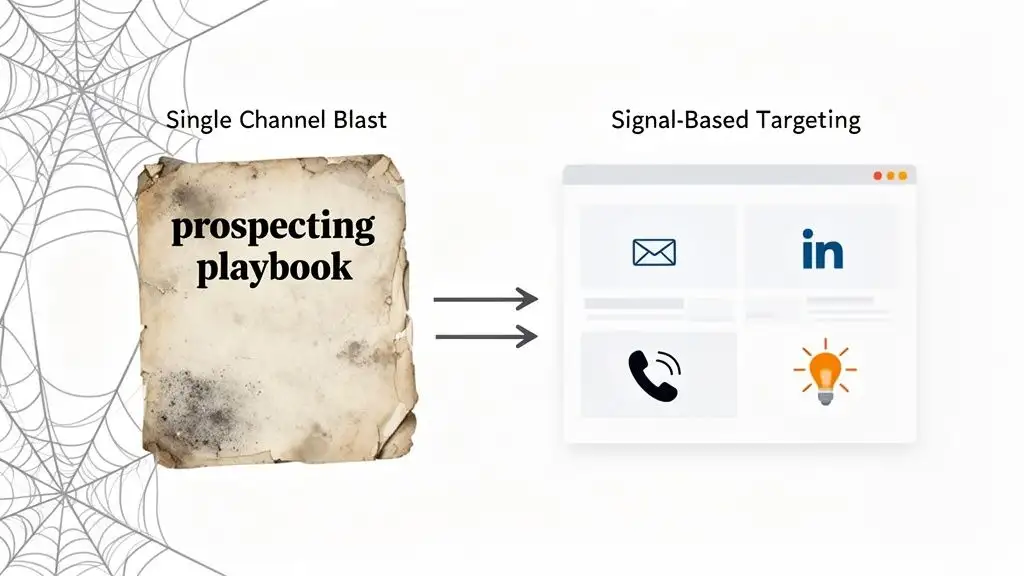
Remember when you could buy a list, blast out the same generic email to thousands of addresses, and actually see demo bookings? It feels like the era of dialing up AOL with a screeching modem or waiting for your Tamagotchi to hatch. Well, those days are officially over. The old 'spray and pray' method isn't just a waste of time - it's a one-way ticket to blacklisted domains and a tarnished reputation.
Today's buyers are smarter and more skeptical. They’ve already scoured G2 for reviews, watched your competitor’s demo on YouTube, and lurked in a subreddit about your industry. They know who you are long before you ever know they exist.
The Buyer Complexity Crisis
The whole game has changed. B2B buying decisions are no longer made by a single champion. Now you're often pitching to a committee so big it feels like you're presenting to the entire cast of The Office. That group-think, combined with budgets tighter than Ross's leather pants after Thanksgiving, means your solo email is probably getting deleted without a second thought.
The numbers don't lie. A deep dive into over 97 million prospecting emails reveals a brutal truth for anyone still using outdated tactics. Email-only campaigns have seen their lead rates crash by a jaw-dropping 29% year-over-year. Why? Because a whopping 65% of B2B companies are tightening their belts, turning every purchase into a high-stakes decision. To get ahead, you have to understand the modern B2B lead generation playbook and how it can fill your pipeline.
But it's not all doom and gloom. That same research showed that 75% of vendors who intelligently mix their channels (think email, LinkedIn and even the good old-fashioned phone) are crushing it. This multi-channel approach is not just a suggestion, it's the new standard.
The Old Way vs. The New Way of Prospecting
| Tactic | The Old Way (Spray & Pray) | The New Way (Signal-Based) |
|---|---|---|
| Targeting | Massive, cold lists | Laser-focused on ICP & intent signals |
| Messaging | Generic, "me-first" pitch | Hyper-personalized, problem-focused |
| Channels | Email only | Multi-channel (Email, Social, Phone, etc.) |
| Timing | Random blasts | Based on buying signals (e.g., job change) |
| Goal | Volume of outreach | Quality of conversations |
The old playbook failed because it was loud, selfish and untargeted. It was the sales equivalent of shouting into a hurricane and hoping someone hears your pitch—like trying to win a dance-off by lip-syncing to "Ice Ice Baby" in 2024.
The new era of prospecting demands a total mindset shift. It's about moving from finding anyone to finding the right one at the perfect time. This guide is your playbook for building a predictable pipeline using modern outbound sales strategies that actually get results. Let's dive in.
Define Your Ideal Customer So You Can Stop Wasting Time
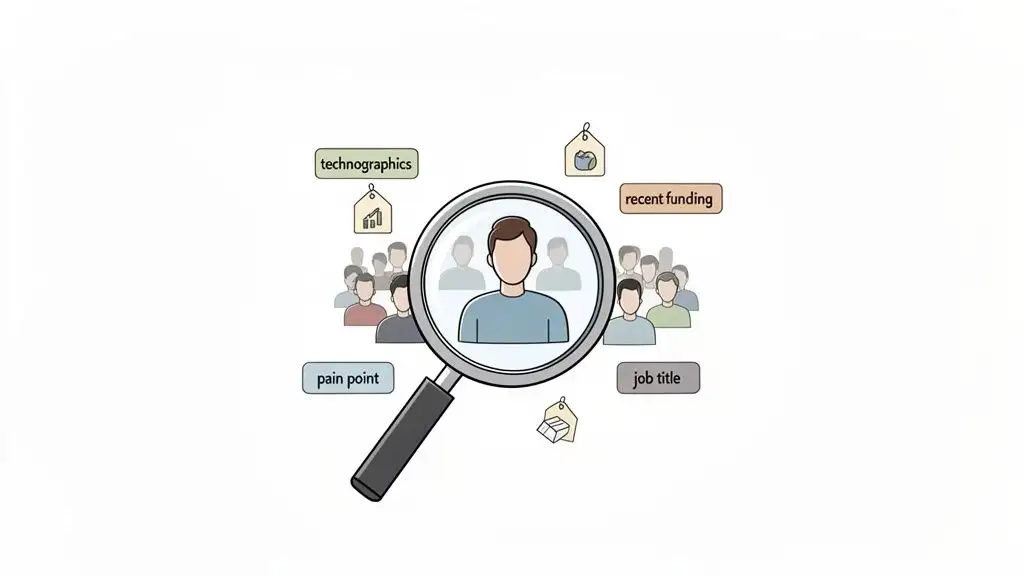
Prospecting without a crystal-clear Ideal Customer Profile (ICP) is like showing up to a networking event wearing Crocs and expecting CEOs to flock to you. You’ll wander around aimlessly, make awkward small talk, and probably leave empty-handed.
An ICP is your GPS for finding future customers. Think of it as a detailed, data-backed description of the perfect-fit company you want to sell to. This isn't a fluffy persona with a stock photo and a cute name - it's a strategic filter that screens out distractions and zeroes in on high-value opportunities.
For instance, if you sell expense management software, your ICP might be finance teams at fast-growing startups with remote workforces of 50 to 200 employees who already use QuickBooks, Slack and Zoom.
When you nail your ICP, you stop shouting into the void and start having meaningful conversations with companies actively looking for solutions like yours.
Reverse-Engineer Your Best Customers
Want to find more great customers? The fastest way is to figure out what your current best ones have in common. They’re the blueprint. So forget guesswork—time to play investigator inside your own CRM, almost like assembling the Mystery Machine in Scooby-Doo but with spreadsheets.
Start by pulling a list of your top 10 to 15 customers. These are the ones who renewed without fuss, saw massive value in 30 days or less, and maybe even sent referrals your way. They’re your A-listers.
Now break them down across three key categories:
-
Firmographics: What's their industry, annual revenue, employee count and location? For example, all your champions might be B2B SaaS firms in North America with 50 to 200 employees.
-
Technographics: What software do they already use? Do they all run Salesforce, HubSpot or a niche marketing automation platform? This indicates their integration needs and tech maturity.
-
Behavioral Data: How did they find you? Did they download a whitepaper on GDPR compliance or attend your last webinar? Mapping their buyer journey highlights which channels work best.
This analysis creates a composite sketch of your ideal target. Suddenly, you’re not just looking for “tech companies”—you’re hunting “mid-market SaaS firms using Salesforce and Marketo that recently attended industry conferences.” See the difference? For a head start, check out our guide with an ideal customer profile template.
Go Beyond the Basics with Buying Signals
A solid ICP gets you in the right neighborhood, but buying signals are the neon signs pointing to your front door. These timely events indicate a company is actively in market or about to be, so you can swoop in with a solution rather than cold-call blind.
Your best prospects drop clues constantly. Your job is to spot those clues, connect the dots and show up with an offer that fits like the One Ring in Lord of the Rings.
Here are some high-value buying signals:
-
Executive Hires: A new VP of Sales, CMO or Head of Ops typically has a mandate to shake things up—cue a replacement cycle for tools.
-
Funding Announcements: A Series A or B means cash is burning a hole in their budget for growth projects.
-
Company Growth: Posting 10+ open roles in a quarter often correlates with bottlenecks in systems and processes.
-
Tech Stack Changes: When they integrate or drop software that overlaps with yours, it’s like rolling out the red carpet.
-
Industry Buzz: Complaints on forums or social media are an open invitation for you to swoop in with a fix.
Bain & Company data shows companies using analytics to define targets have win rates 12 percentage points higher than those that don’t. And with over 20% of buying groups now having six or more decision-makers, precision matters more than ever.
Once you layer ICP and buying signals, every outreach becomes sharper, every message more relevant and your time spent on deals likely to close skyrockets.
Hunt for High-Intent Leads in the Digital Jungle
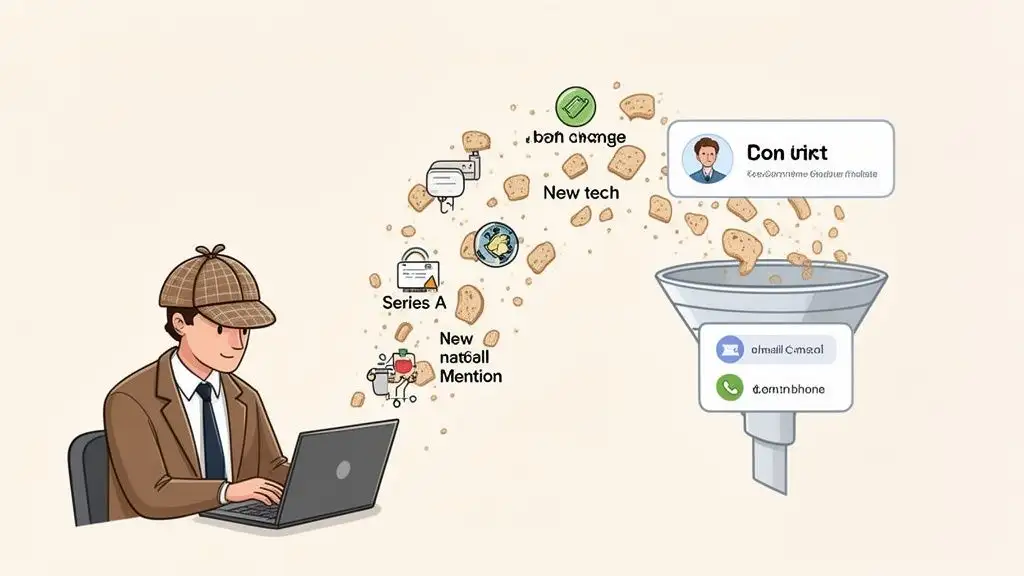
Now that you’ve locked in your ICP and mapped key signals, gear up for the hunt. Your prospects are leaving digital footprints all over the internet—think of it like being a modern-day Indiana Jones on the trail of the Holy Grail, only your prize is revenue.
This isn’t mindless LinkedIn stalking; it’s strategic listening for high-intent indicators—those digital breadcrumbs that say, “We have a problem you can solve, budget to spend and urgency to act.” For example, if a tech CEO tweets about struggling to track remote teams, you know there’s an opening for your collaboration suite.
Decoding the Digital Breadcrumbs
The best hunters know how to spot signals from across the battlefield. Here are the top ones:
-
Job Changes: A new VP of Sales or CMO means fresh initiatives—90-day mandates to prove ROI.
-
Funding News: Series A or B announcements signal new budgets and growth pressures.
-
Tech Stack Shake-ups: When they integrate or remove tools that overlap with yours, it’s prime time to reach out.
-
Negative Competitor Mentions: A bad review on G2 or Twitter rant? That’s your chance to offer the hero’s solution.
Imagine getting an instant alert the moment TargetCorp hires a "Head of Demand Generation." It's not just a lead; it’s a personally addressed invitation. Using sales intelligence tools can automate this process so you spend minutes reviewing leads instead of hours hunting them.
Prospecting isn’t a numbers game—it's a timing game. Be the seller who’s not just loud but laser-focused and perfectly timed.
Turning Clues into Complete Contacts
Once you’ve spotted a signal, you need full contact details to strike quickly. That’s where waterfall enrichment comes in. It’s like running a Netflix recommendation engine across multiple data providers until you find the perfect match.
Here’s what a good enrichment workflow delivers:
-
Verified Email: Confirmed and active with over 95% accuracy.
-
Direct-Dial Phone: Skip gatekeepers and call decision-makers directly.
-
Full Profile Data: Titles, social links, company info—everything you need for hyper-personalized outreach.
That one automated step turns your list from a stack of tennis balls into laser-guided missiles aimed at the right targets, ready to close.
Pro Tip: Use Munch to build your lead list based on your ICP and craft personalized outreach messages for each lead!
Craft Outreach That Doesn’t Get Instantly Deleted
Your prospect’s inbox is a cage match of "quick question" emails and LinkedIn DMs that read like they were written by robots. To survive and thrive, your outreach can’t be another spray-and-pray attempt. It needs to be a sniper shot—precise, relevant and maybe even with a dash of wit.
Using all the research you’ve done, connect the dots between buying signals and a message that hits home. It’s the difference between "I have software" and "I saw you’re hiring 10 new SDRs and know how chaotic that can get without a clear lead routing system."
The Trigger-Problem-Solution Framework
Cut the jargon and follow a simple narrative: Trigger -> Problem -> Solution.
-
Trigger: The event that shows why now is the time to talk—maybe they just landed $20 million in funding or announced a new product.
-
Problem: The pain point that event creates—fast growth often leads to messy CRM data or broken workflows.
-
Solution: The hint that you have the answer—no feature dump, just enough promise to spark curiosity.
Example Scenario
-
Trigger: Acme Corp just closed a $20M Series B.
-
Problem: Rapid scaling usually means overwhelmed sales teams and inaccurate pipeline forecasts.
-
Solution: We help revenue leaders at fast-growing startups keep data clean and forecasts reliable, even when five new reps join in a week.
That simple story turns a cold outreach into a relatable plotline prospects see themselves in.
Writing Messages That Actually Get Replies
Gartner predicts 80% of B2B interactions will happen on digital channels by 2025. Your prospect is already swimming in over 200 emails a day. Personalization isn’t optional; it’s the ticket in.
Even a tweaked subject line can boost opens by 26%, and a tailored message can double reply rates. For more data, see surprising sales statistics from trinity42.com.
Example Email
Subject: Congrats on the Series B! Scaling sales?
Body:
Hi [Prospect Name],
Congrats on your $20M funding round! I saw the news on TechCrunch and know how exciting—and hectic—that phase can be.
From working with other startups at this stage, I’ve seen rapid growth cause messy CRM data and unpredictable forecasts.
We help teams like [Similar Customer] keep real-time visibility on pipeline health, so you don’t lose deals in the shuffle.
Quick 15-minute chat next week to see if this could help you avoid those headaches?
That email nails relevance, timing and context. For more templates, check out how to write cold emails that get responses.
Don't Be a One-Trick Pony: Use Social Selling
Prospecting shouldn’t live and die in the inbox. Social selling on LinkedIn is like having a digital cocktail party. In fact, 78% of sales reps who use social selling outsell their peers who don’t.
But please, no copy-paste pitch in a connection request—that’s the sales equivalent of proposing on the first date. Instead, play the long game:
-
Engage with their content: Leave thoughtful comments, not just likes.
-
Share useful articles: Send a link to something that addresses their pain point.
-
Personalize connection invites: Reference a specific post, mutual connection or their recent achievement.
By the time you finally send your email, your prospect has already seen you as someone who adds value, not noise.
Build Your Unstoppable Prospecting Machine
One killer email is great, but a championship season comes from a playbook—a repeatable, scalable outreach system. Think of your prospecting machine like Tony Stark’s workshop: structured, automated and always optimizing.
Designing a High-Impact Outreach Sequence
An outreach sequence is a series of touchpoints across channels to build familiarity and prompt a reply. It’s not about harassing your target; it’s about being helpful and consistent.
Sample 14-Day Multi-Channel Sequence:
-
Day 1: Send your personalized Trigger-Problem-Solution email. Later, view their LinkedIn profile as a silent hello.
-
Day 3: Send a connection request with a note: “Hi [Name], your take on [topic from their post] was spot-on. Mind connecting?”
-
Day 5: Follow up via email with added value—a relevant case study or short guide.
-
Day 8: Comment thoughtfully on a recent LinkedIn post they shared.
-
Day 10: Make a quick 60-second call. No demo ask, just a short introduction referencing your previous touchpoints.
-
Day 14: Send a polite break-up email leaving the door open for future contact.
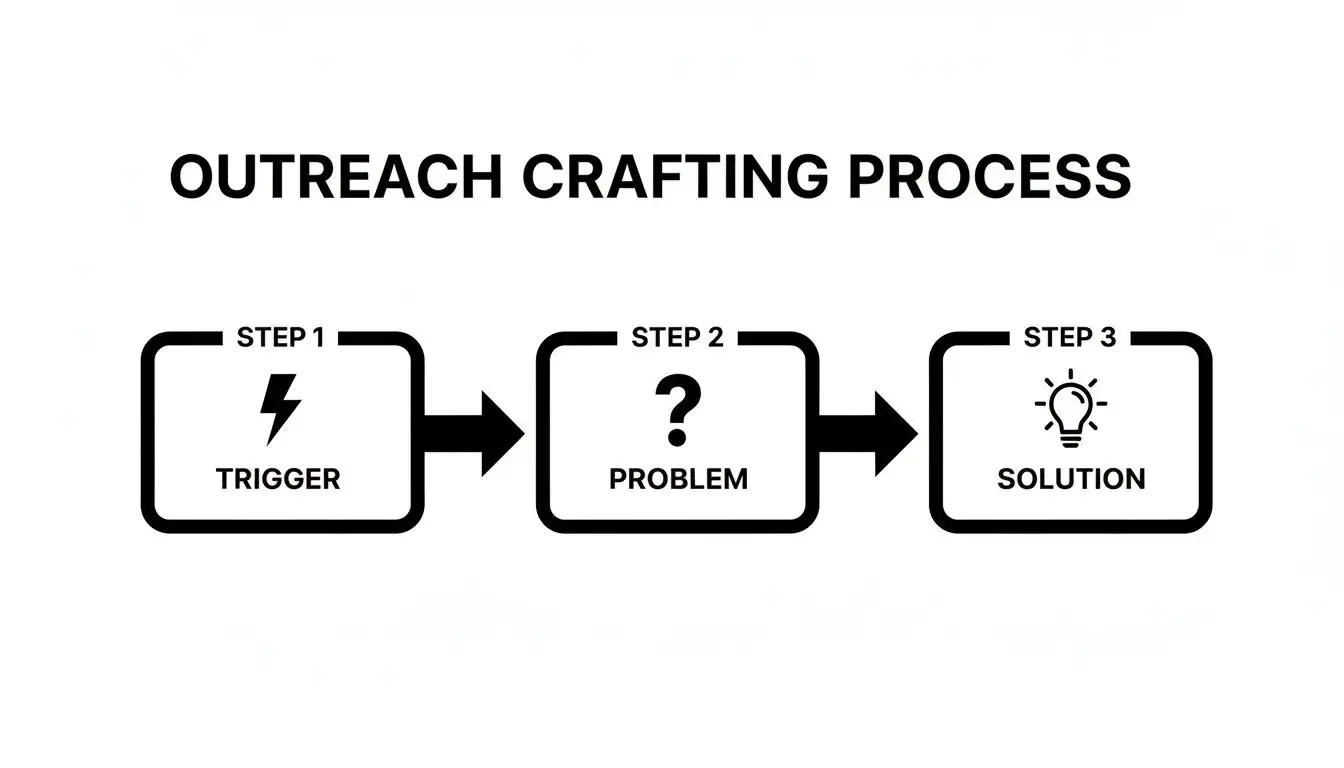
This simple flow—spot a trigger, tie it to a problem, propose a solution—is your outreach engine.
Test Everything Like a Mad Scientist
Your first sequence won’t be perfect, and that’s okay. Treat outreach like a series of lab experiments, thanks to A/B testing. Try different variables until you find what works best.
Start with these tests:
-
Subject Lines: Questions ("Scaling your sales team?") versus benefits ("A better way to manage sales data").
-
Calls to Action: Hard asks ("Are you free for a 15-minute call?") versus soft asks ("Worth a look?").
-
Message Angles: Pain points versus recent company wins.
Pick one variable, run at least 100 sends per version, then keep the winner and move on. No more guesswork—just data-driven optimization.
For an advanced blueprint, explore the complete guide to sales automation. This is how you turn random outreach into predictable revenue.
Prospecting FAQs: Answering the Tough Questions
Now that you have the playbook, let’s tackle the curveballs that come up when you’re on the front lines.
How Many Times Should I Actually Follow Up?
There’s no magic number, but definitely more than one. Aim for 5 to 8 touchpoints across a few weeks and channels. Each follow-up must bring fresh value:
-
Share a new case study.
-
Congratulate them on a recent achievement in the news.
-
Send an article or podcast that speaks to their pain points.
When you run out of genuine value, send a graceful closing email and move on.
Is Cold Calling Officially Dead?
Not even close. Saying cold calling is dead is like saying vinyl records are obsolete—nostalgia’s making a comeback. Over 80% of buyers have accepted meetings from a cold call, especially when it’s warmed up by prior emails and LinkedIn touches.
By the time your number shows up, they know your name. Suddenly, it feels like a follow-up call rather than a cold call.
What’s the Best Time of Day to Send Emails?
Forget the mythical mid-morning sweet spot on Tuesdays. The best time to send an email is whenever you have something truly relevant to say.
A hyper-personalized email sent at 7 PM because you just saw their company announce a big hire will outperform a generic template sent at 10:30 AM. Every time.
Let real-world triggers dictate your timing, not the clock.
How Should I Handle the “Not Interested” Reply?
First, don’t take it personally. A "no" is data, not failure. Respond with a brief note:
Appreciate the honesty, thanks for letting me know. Was it just a timing issue or is this never in your roadmap?
You’ll be surprised how often that invitation for feedback turns into intel—like learning they’re locked into a rival contract or their budget is frozen until next quarter. That’s gold for your next outreach sequence six months down the road.
Ready to stop guessing and start building a pipeline you can count on? Munch brings lead discovery, data enrichment and AI-powered outreach together in one smooth workflow. Find prospects who are ready to buy and launch personalized campaigns that actually start conversations.