Your B2B Ideal Customer Profile Template Made Simple

By Mriganka Bhuyan
•Founder at Munch
Trying to chase every lead you can find is the B2B sales version of trying to binge-watch every single show on Netflix. It's a noble effort, I guess, but you'll just end up overwhelmed, exhausted, and wondering why you ever started. An ideal customer profile template is what stops the madness. It’s your focusing lens, helping you zero in on the accounts that actually matter.
Why Chasing Every Lead Is a Terrible Idea
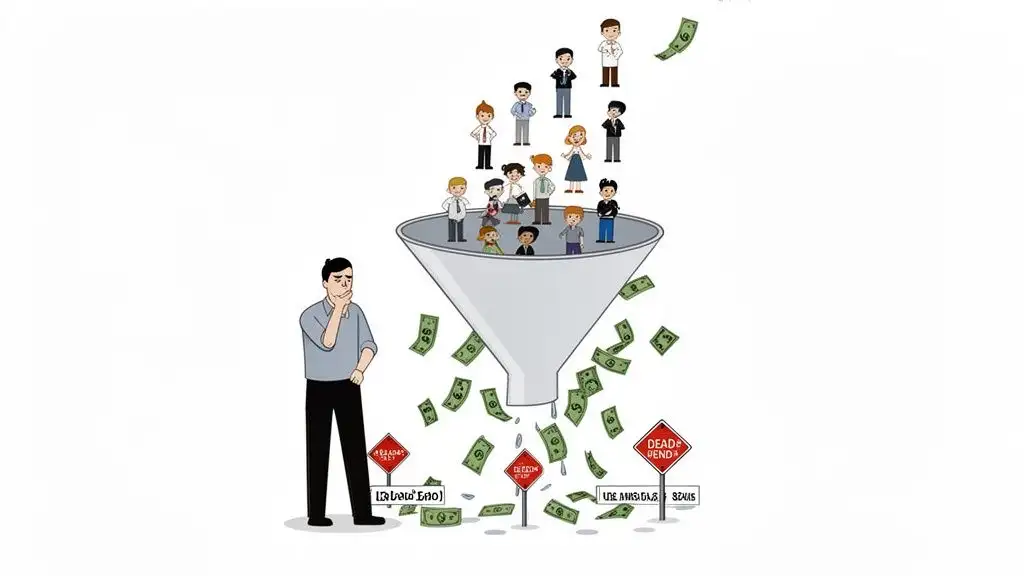
Let's just be honest with each other: the 'spray and pray' sales approach is dead. If it ever really worked, its time is long past. It’s a spectacularly inefficient way to burn through resources and morale, turning your sales pipeline into a chaotic mess of dead ends.
This isn't just some abstract theory; we're talking about real, painful costs. Wasted ad spend, burned-out sales reps, and a CRM clogged with leads going nowhere are the direct consequences of sloppy targeting. On the flip side, organizations with a strong, data-backed ICP see 68% higher account win rates. That’s a game-changing difference, and it all comes down to one simple idea: focus.
The True Cost of Unqualified Leads
The problem goes deeper than just wasting time on prospects who will never, ever buy. It’s about the massive opportunity cost of ignoring the ones who would. Every single minute your team spends chasing a poor-fit lead is a minute they aren't spending with a high-value, ready-to-buy account. This kicks off a vicious cycle of missed quotas and frantic, last-ditch efforts at the end of every quarter.
Think of your ICP as your targeting computer, the secret weapon that helps you make the Kessel Run in less than twelve parsecs. It gives you the strategic framework for your entire go-to-market motion.
By defining the firmographic, technographic, and behavioral DNA of your best customers, you create a blueprint for predictable success. This blueprint guides everything from marketing campaigns to sales outreach, making sure everyone is aiming at the same bullseye.
From Chaos to Predictability
Without a clear profile, you're just guessing. You might get lucky here and there, but luck has never been a scalable sales strategy. A solid ICP is what shifts your whole operation from chaotic, hopeful outreach to a predictable, revenue-generating machine.
This isn't just about spotting potential customers. It's about deeply understanding the traits of companies that get the most value from what you sell. It’s a critical first step before you can even begin to figure out how to qualify sales leads effectively. You’re swapping a giant, flimsy net for a high-powered fishing spear. Sure, you catch fewer "fish," but the ones you land are exactly what you were after.
In the end, an ideal customer profile template isn't just another document to fill out and forget. It's the foundation for:
-
Smarter resource allocation: Putting your budget and your team's energy where they’ll actually move the needle.
-
Higher conversion rates: Talking to prospects who are a natural fit for your solution from the start.
-
Reduced churn: Bringing in customers who are set up for success and will stick with you for the long haul.
Time to Build Your ICP With Real-World Data
Alright, enough with the theory. Let's get our hands dirty and build your ultimate targeting tool with cold, hard data. Crafting an Ideal Customer Profile isn't about daydreaming up your perfect client; it’s about putting on your detective hat and investigating your own customer base.
The clues are hiding in plain sight.
Your mission, should you choose to accept it, is to analyze your top 10 to 20 customers. I'm not talking about the ones who send the best holiday gifts. I mean the ones who are genuinely crushing it with your product. These are the folks who renew without a fuss, expand their accounts, and become your loudest cheerleaders.
They're the blueprint for your future success.
Uncovering Those Golden Patterns
As you dig into this group of all-star customers, you're hunting for patterns, the shared DNA that makes them such a fantastic fit. We're going to zero in on three core categories of data that, when combined, tell a powerful story about who you should be targeting next.
These are the building blocks of your ICP.
-
Firmographics: This is the basic company intel, like their corporate trading card. For example, you’ll look at their industry (SaaS, FinTech), company size (50-200 employees), and where they're located (North America).
-
Technographics: This pulls back the curtain on the technology they're already using. For instance, do all your best customers use Salesforce as their CRM? Maybe they all rely on Marketo for automation. This is gold because it tells you which ecosystems you plug into seamlessly.
-
Buying Signals: These are the little flares they send up that signal they’re ready to buy. A practical example is a recent funding round, a hiring spree for key roles (like a new VP of Sales), or a major company expansion.
After your analysis, you might discover that your absolute best customers are 150-employee FinTech companies in North America using Salesforce that just hired a new VP of Marketing. That’s not a coincidence; that’s a roadmap.
The Data-Mining Playbook
First things first: you need to define what "best" actually means for your business. When you ground your ICP in data, you stop guessing and start engineering wins. The common threads among your top-tier customers are often striking.
To find them, pull your win/loss data from the last 24 months. Pinpoint the metrics that really move the needle for you, like customers with a lifetime value over $100K, those with expansion revenue topping 20% year-over-year, or accounts with a churn rate below 5%. Nailing this can lead to outreach campaigns with reply rates as high as 30%.
Once you've got your list of star accounts, it's time to fill in the gaps. This is where you flesh out all the firmographic and technographic details you might be missing. You could do this manually, but who has the time for that? Using a platform like Munch for lead enrichment can automate this entire process, serving up a complete picture in minutes instead of days.
Think of your data as ingredients scattered across the kitchen counter. The first step is to get them all organized in one place. Only then can you start following the recipe.
From Raw Data to a Go-To-Market Weapon
With your enriched data all laid out, the patterns will start jumping out at you. You’ll see the common threads connecting your most successful clients, clear as day. The goal is to distill these findings into a profile that’s simple, clear, and actionable.
Your final ICP template should be a straightforward document that answers these key questions:
-
Industry: Which specific verticals do we absolutely own? (e.g., B2B SaaS, FinTech, E-commerce)
-
Company Size: What’s our sweet spot for employee count and annual revenue? (e.g., 50-250 employees, $10M-$50M ARR)
-
Geography: Where are our happiest customers located? (e.g., North America, EMEA)
-
Tech Stack: What key software are they already using? (e.g., Salesforce, HubSpot, AWS)
-
Key Buying Signals: What events usually happen right before a top-tier client buys from us? (e.g., Hired a new CRO, just closed Series B funding)
This finished profile isn't just another document to file away. It's your strategic weapon. It's the North Star that will guide every sales and marketing decision, helping you stop wasting resources on bad-fit leads and start engineering your future wins.
Scoring Your Leads: The Art of the Tiered System
Let's be real: not all leads are created equal. Some are your Neo, "The One," ready to save your quarter. Others are a solid maybe, like a promising pilot episode you're willing to give a few more watches. And then there are those who are like that one friend who always suggests splitting the bill evenly when they only ordered a side salad and water.
This is exactly why a tiered scoring system is your secret weapon. It helps you focus on the leads that actually matter.
By creating a simple but powerful tiering system, you can separate your "must-haves" from your "nice-to-haves" and, well, your "probably-nots." This framework gives your sales team a clear roadmap for prioritizing their energy. Instead of treating every lead like a potential gold mine, they can focus 80% of their effort on the accounts that are most likely to convert.
This decision tree gives you a visual on how it all connects, from identifying basic company details with firmographics, understanding their existing tools with technographics, and spotting readiness with buying signals.
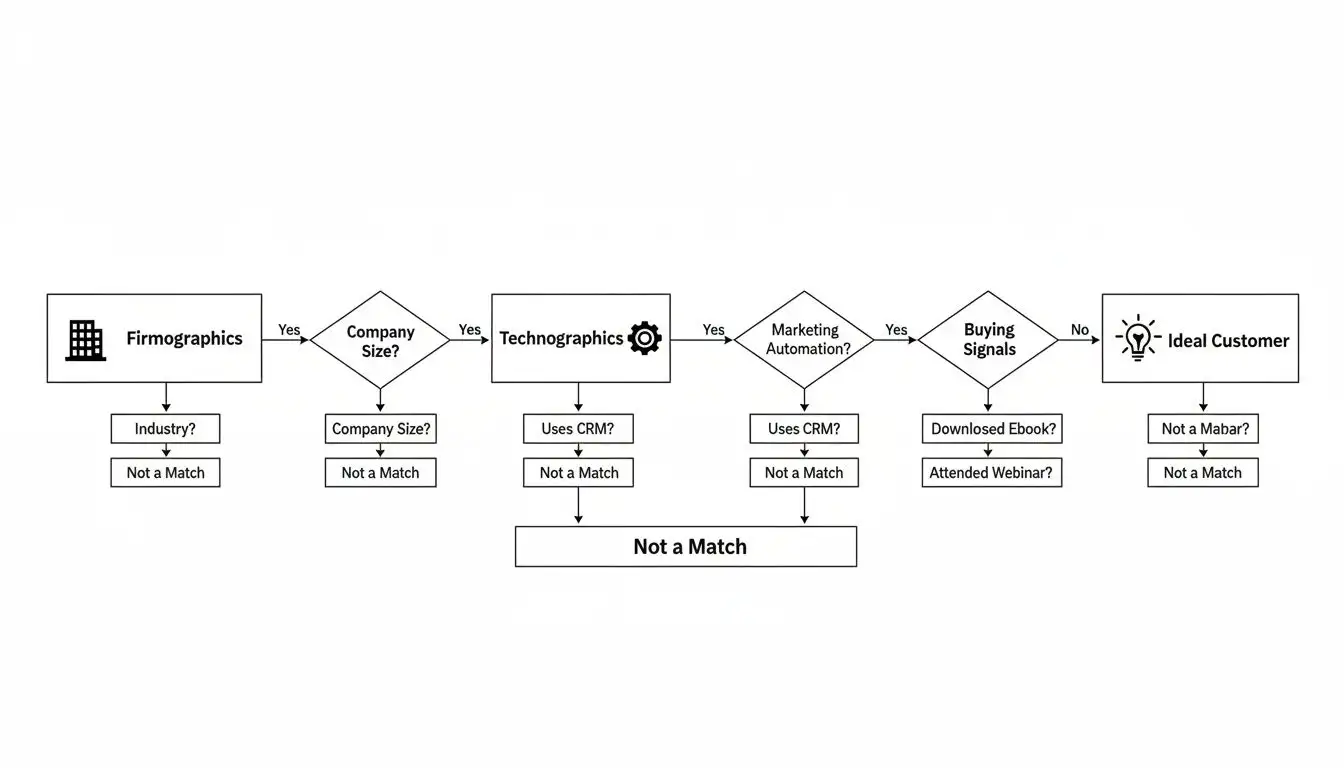
As you can see, each layer of data helps you filter down to the most qualified leads, turning a wide, hopeful search into a precise targeting operation.
Defining Your Tiers
Let’s get practical. Think of it like a video game with different difficulty levels. Tier A accounts are the main quest, Tier B are the important side quests, and Tier C are the fetch quests you only do if you’re really bored.
Here's how you can start structuring your tiers:
-
Tier A (The Perfect Fit): These are your slam dunks. A Tier A lead perfectly matches every critical attribute of your ideal customer profile. They're in the right industry, the right size, and using complementary tech. They’ve also likely shown a strong buying signal, like just announcing a new funding round or hiring a new executive in a key department.
-
Tier B (The Strong Contender): These accounts are almost there. They might check most of your boxes but miss one or two of the "must-have" criteria. For example, they're in the right industry and show buying signals, but they are slightly smaller than your usual sweet spot. They are absolutely worth pursuing, but they might require a bit more nurturing.
-
Tier C (The Long Shot): A Tier C lead only checks one or two boxes from your ICP. Maybe they're in the right industry but are far too small, or they use a competitor's product that’s notoriously difficult to switch from. These aren't necessarily a "no," but they should be the lowest priority on the list.
A Practical Framework for Scoring ICP Tiers
To make this even clearer, here’s a table that breaks down how you might think about each tier, using a B2B SaaS company as an example.
| Scoring Tier | Description | Example Criteria (SaaS Co.) | Sales Action |
|---|---|---|---|
| Tier A | The Bullseye: These accounts match all your critical ICP criteria. | 500-2,000 employees, uses Salesforce, recently hired a VP of Sales. | Immediate, personalized outreach from a senior rep. Multi-channel approach. |
| Tier B | Close, but not quite perfect. Fits most criteria but has a minor deviation. | 250-499 employees, uses Salesforce, but no recent buying signals. | Add to a nurturing sequence with valuable content. Follow-up from a BDR. |
| Tier C | A potential future fit. Matches only one or two non-critical criteria. | <250 employees, uses a competing CRM. | Low-touch, automated marketing campaigns. Monitor for future changes. |
This kind of framework removes the guesswork and aligns your entire team on where to spend their precious time.
Putting Your Scoring System into Action
Once you have your tiers defined, the goal is to get every new lead sorted quickly. This isn't just a fun organizational exercise; it directly impacts your bottom line.
In the cutthroat world of B2B sales, a solid ICP is a game-changer. Companies have seen up to a 20% jump in sales productivity after getting this right. Outbound efforts transform from firing a buckshot into using a sniper rifle, where Tier A accounts can deliver 1.8x higher ACV and 15-20% shorter sales cycles.
A tiered system turns your sales pipeline from a congested traffic jam into a high-speed expressway. Your team knows exactly which lane to be in, who to pass, and where the off-ramps are.
This systematic approach also creates a common language for your sales and marketing teams. When marketing passes a "Tier A" lead to sales, everyone knows exactly what that means, no more debates or finger-pointing. It eliminates friction and ensures your most valuable leads get the immediate, white-glove attention they deserve.
For a deeper dive into this, check out our guide on lead scoring best practices. This alignment is what turns your ICP from a theoretical document into a practical, revenue-driving machine.
Turning Your ICP Data into Human Personas
Alright, so you’ve built a rock-solid Ideal Customer Profile. You know exactly what kind of company you should be targeting. That's a massive step, but let's be honest, you don't sell to a logo. You sell to real, stressed-out, coffee-chugging humans working inside that company.
Your ICP gets you into the right party. Your buyer persona is what tells you who to talk to once you're inside, so you don't waste time chatting with the IT guy when you really need to be charming the VP of Sales. It’s the difference between knowing Wayne Enterprises is a perfect fit and knowing you need to get Bruce Wayne's attention.
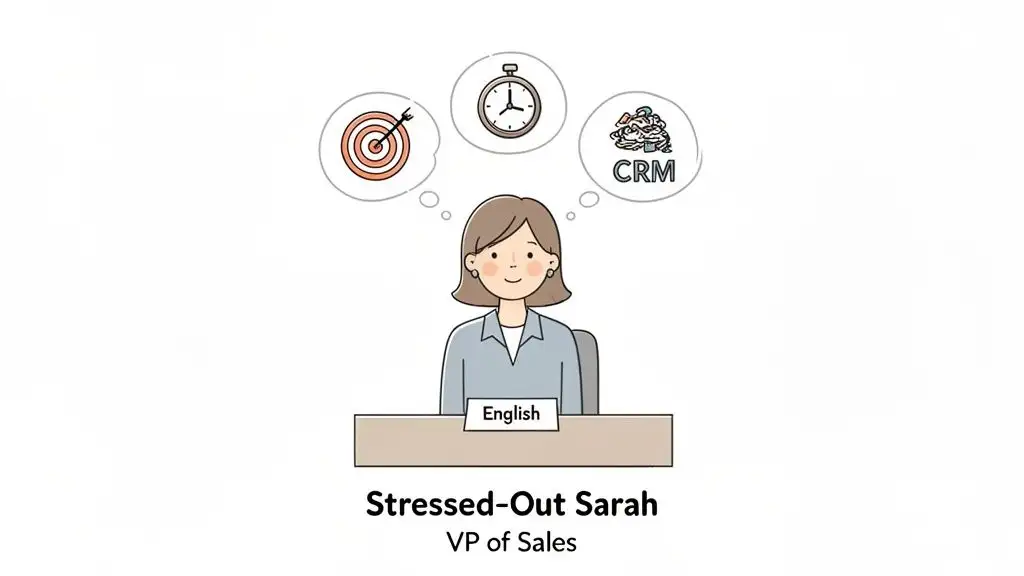
This is where your data gets a soul. You're about to turn dry firmographics into a relatable character with goals, headaches, and a burning hatred for clunky software.
From Data Points to Daily Pains
Let’s move beyond generic job titles. Forget "Director of Marketing." We're going to create "Stressed-Out Sarah," the VP of Sales who’s haunted by quarterly targets and would rather walk barefoot over a floor of LEGOs than manually update her team's CRM.
To really get inside Sarah's head, you need to dig into the human stuff. What's her day really like?
-
Goals: What's the mountain she's trying to climb? For example, hitting 110% of her team's quota, slicing the sales cycle by 15%, and finally getting that big promotion.
-
Challenges: What wakes her up at 3 a.m.? Maybe it's inaccurate forecasting, high rep turnover, or a pipeline that looks more like a leaky faucet than a firehose.
-
Motivations: What's her "why"? It could be recognition from the CRO, the pride of building a high-performing team, or just earning that fat commission check.
-
Watering Holes: Where does she hang out online to get smarter? Think specific LinkedIn sales groups, industry podcasts, or newsletters from top sales gurus.
When you know these details, your messaging gets a superpower. Your outreach suddenly stops being just another unread email and starts looking like a life raft.
Building Your Persona A-Team
Here’s the thing: you're rarely selling to just one person. A typical B2B deal involves a whole crew of stakeholders, and you need a game plan for each of them.
Think of it like assembling The Avengers. Every hero has a different role, a different power, and a different motivation.
-
The Champion (Captain America): This is your advocate, the person inside the company who gets what you do and will fight for your solution. They're often a manager or director who feels the pain you solve every single day.
-
The Economic Buyer (Tony Stark): This is who signs the checks. Usually a C-level exec or VP, they have the final say and care about one thing: the bottom line. Talk ROI and efficiency with them.
-
The End User (Hawkeye): These are the folks who will be in the trenches, using your product day-to-day. Their buy-in is absolutely critical for adoption, and all they care about is whether it makes their job less of a soul-crushing grind.
Crafting a mini-persona for each of these players lets you build a multi-threaded outreach strategy that speaks directly to what each one cares about.
An ICP identifies the right company. A buyer persona tells you who the key players are and what they care about. You absolutely need both to win the deal.
It’s not just a hunch, either. Buyer personas built from a strong ICP have helped 56% of companies seriously improve their lead quality. This magic happens because personas add the human element (psychographics) to your data. Suddenly, you're not just targeting a company, you're focused on an SDR aged 25-35 who’s motivated by quota and fed up with 60% of his cold emails getting ignored. If you want to see more stats on this, check out how customer profiles drive revenue at Nutshell.com.
Your ICP and personas are a dynamic duo; one without the other is like a map with no destination. A great way to start is by looking at your best deals, identifying the common job titles involved, and then doing some research. For a deep dive, our guide to prospecting on LinkedIn will show you exactly how to find and understand these key players.
Bringing Your ICP to Life with Sales Intelligence
An Ideal Customer Profile gathering dust in a spreadsheet is nothing more than a nice thought experiment. It’s like drawing a detailed map to a buried treasure chest and then just leaving it rolled up on your desk. To get the gold, you actually have to use the map.
This is where the rubber meets the road. We’re taking all that hard strategic work and plugging it into a sales intelligence platform, transforming your perfect profile into a real, living list of high-fit prospects you can talk to today. This is the moment your ICP gets its superpowers.
From Static Profile to Dynamic Prospecting
First things first: you need to translate your ICP criteria into a live search. This is where a powerful sales intelligence platform like Munch comes in, letting you plug in the firmographics, technographics, and buying signals you just spent all that time defining.
Let's say your ICP is a Series B FinTech company in North America with 50-200 employees that uses HubSpot. Instead of spending hours, or even days, grinding away on LinkedIn, you just pop those exact parameters into the search. Instantly, you get a validated list of every single company that fits the bill. It’s the prospecting equivalent of telling your smart speaker what you want for dinner and having all the ingredients just appear on your counter.
This is what that dynamic, ICP-based dashboard actually looks like in action.
You can see how the platform brings those perfect-fit accounts right to the surface, complete with the buying signals and key contacts you need. It’s all there in one view, wiping out the manual drudgery so you can focus on what actually matters: outreach.
Let the Buying Signals Come to You
Now for the real magic. This is when your ICP stops being a static list and becomes an automated watchdog, constantly scanning the market for buying signals. These are the little events that turn a "good fit" into a "ready-to-buy-right-now" opportunity. Frankly, an ICP without signal intelligence is like having a fancy radar that only works when you remember to switch it on.
A sales intelligence tool puts this entire process on autopilot.
-
Key Hires: Your platform can ping you the second a Tier A account hires a new VP of Sales. This is a classic tell: they’re looking to shake things up and are almost certainly open to new tools.
-
Funding Rounds: Did one of your target accounts just close a $30 million Series B? You’ll get a notification, which is code for "we have fresh capital and we're ready to invest in growth."
-
Technology Changes: What if a prospect rips out a competitor’s software? That’s not just a signal; it’s a massive flare shooting into the sky, and your platform can flag it automatically.
An ICP defines who you should talk to. Buying signals tell you when to talk to them. Combining the two is how you consistently beat your competition to the door.
This proactive approach means you’re no longer just reacting to the market. You're engaging prospects at the precise moment of need, armed with the kind of context that makes your outreach impossible to ignore. You can get a deeper look into how platforms identify these high-intent leads by understanding how to track website visitors and their online behavior.
A Real-World Play: From Strategy to Signature
Let's walk through how this all connects to actually closing deals.
Picture your sales rep, Alex, logging in on Monday morning. Instead of staring at a messy, overwhelming CRM queue, Alex sees a clean, prioritized list of 25 fresh Tier A prospects that Munch surfaced over the weekend. These aren't just random companies; they perfectly match the ICP and have all flashed recent buying signals.
One company, "FinScale," just brought on a new Head of Demand Gen. The platform doesn't just flag this event. It serves up the new hire's contact info and even suggests a personalized, context-aware email draft.
The opening line isn't some generic, "I saw your profile on LinkedIn." It's sharp and relevant: "Congrats on the new role at FinScale! Usually when a new demand gen leader comes on board, scaling outbound is a top priority."
Alex can review and fire off this hyper-relevant message in seconds. By lunchtime, all 25 high-fit, high-intent prospects have been contacted with unique, personalized messages. No manual research. No guesswork.
This is how an ICP template stops being a theoretical exercise and becomes a practical, deal-closing machine. You’re not just finding prospects; you’re engaging them with the right message at the perfect time, again and again.
Got Questions About Your ICP Template? We’ve Got Answers.
Alright, so you’ve put in the work, filled out the template, and you’re staring at your shiny new Ideal Customer Profile. But if you’re like most people, you’ve probably got a few questions buzzing around your head. That’s a good thing because it means you’re thinking critically.
Let's clear the air and tackle the most common questions we hear from sales teams who are getting their hands dirty with ICPs. No fluff, just straight-up, practical answers to get you moving.
"How Often Should I Actually Update This Thing?"
This is a big one. It's tempting to create your ICP, frame it, and hang it on the wall like a diploma. That's a classic rookie mistake. Your ICP isn't a historical document; it's a living, breathing guide for your entire go-to-market strategy.
Think of it this way: markets change, your product gets new features, and your competitors are always up to something. Your ICP has to keep up.
A good rule of thumb is to schedule a deep-dive review at least once a year. This is where you pull up the data on your best customers from the past 12 months and ask, "Has anything changed?" Maybe you've accidentally become the go-to solution for a new industry. That's a massive signal you don't want to miss.
I also recommend a quick-and-dirty check-in every quarter. This isn't a full teardown. Just ask your team one simple question: "Do our last 10 big wins look exactly like our ICP?" If you get a hesitant "kinda..." then it’s probably time for a little tune-up.
An outdated ICP is worse than having no ICP at all. It sends your team chasing ghosts in a market that no longer exists.
"What’s the Real Difference Between an ICP and a Buyer Persona?"
Ah, the great debate. This one trips up a lot of people, but the distinction is actually simple and incredibly important. Getting this wrong is like having a map but no compass.
Let's cut through the jargon.
-
An Ideal Customer Profile (ICP) is about the COMPANY. It’s the perfect building to walk into. We’re talking firmographics: industry, company size, annual revenue, the tech they use. It answers the question, "Which organizations are a perfect fit for our solution?"
-
A Buyer Persona is about the PEOPLE inside that company. It's the specific door you should knock on. This is where you get into their job title, their daily headaches, what a "win" looks like for them, and what keeps them up at night.
So, your ICP might be, "Series B FinTech companies with 100-500 employees." Your buyer persona could be "Stressed-Out Sarah, the VP of Sales," whose biggest fear is her team missing their quarterly quota again. You absolutely need both to win.
"Can We Have More Than One ICP? Or Is That Cheating?"
Not only can you, but you probably should. A one-size-fits-all ICP only works if your product solves the exact same problem, in the exact same way, for every single customer. For most businesses, that's just not reality.
If your solution has different use cases for different market segments, you need separate ICPs. Trying to talk to a scrappy startup and a massive enterprise with the same message is a recipe for disaster.
Here’s a real-world example from a marketing automation company:
-
ICP 1: The Startup. This profile targets companies with under 50 employees. They have a tiny marketing team and need an affordable, easy-to-use platform. The sales cycle is fast, and the decision-maker is often the founder.
-
ICP 2: The Enterprise. This one targets companies with over 1,000 employees. They need complex security features, deep integrations, and dedicated support. The sales cycle is long, involving multiple stakeholders.
The sales pitch, the pricing, even the features you highlight are wildly different for these two. Separate ICPs ensure your outreach is always sharp, relevant, and speaks directly to the audience you're trying to reach.
"What Are the Biggest Mistakes People Make When Building an ICP?"
Oh, there are a few landmines to watch out for. The biggest mistake, hands down, is building an ICP based on wishful thinking instead of actual data. Don't describe the customers you wish you had, that cool FAANG company everyone name-drops. Build it based on the data from your happiest, most successful, highest-LTV existing customers.
Another huge pitfall is being way too vague.
An ICP that says you sell to "tech companies" is about as useful as a chocolate teapot. It's not actionable. Precision is your best friend here.
Instead of "software companies," aim for something like, "B2B SaaS companies in North America with 50-200 employees using Salesforce as their CRM." Now that is a profile your team can actually use to find and target prospects.
Ready to stop guessing and start targeting with surgical precision? Munch is the sales intelligence platform that turns your ICP into a revenue-generating machine. Discover high-intent prospects, get enriched data, and launch personalized outreach that actually gets replies. Find your next customer with Munch.