A Modern Playbook For Prospecting And Sales That Actually Works

By Mriganka Bhuyan
•Founder at Munch
Prospecting. It’s the art and science of digging for sales gold: finding potential customers and turning them into raving fans. This isn't just about finding leads; it's about identifying the right leads and guiding them on a journey from "who are you?" to "take my money!" The whole point is to build a steady, predictable pipeline of new business.
Stop Cold Calling Into the Void
A lot of the sales advice out there is ancient history. It’s the stuff of dial-up modems and rolodexes. "Just hit the phones!" "Send 500 emails a day!" It’s like telling someone to send a fax in 2024. It just doesn't work anymore.
This playbook isn’t about that. It’s about a smarter, more surgical way to find high-intent prospects who are actually open to a conversation. The old “spray-and-pray” method? It’s a great way to burn through leads, annoy people, and tarnish your brand's reputation. Every ignored email and frustrated hang-up is a small nick in your company's armor.
The Modern Prospecting Philosophy
The philosophy behind modern prospecting is stunningly simple: replace guesswork with precision.
Stop casting a massive, clumsy net and hoping a few good fish swim into it. Instead, you're using data and real-world buying signals to find the fish that are already looking for bait. Think less rusty shotgun, more laser-guided missile.
A modern, strategic workflow zeros in on two critical areas:
-
Finding Companies with Buying Intent: You're looking for triggers. Clues that a company is actively searching for a solution like yours. For example, a company just hired its first-ever "VP of Sales." This is a flashing green light, signaling they are serious about scaling their revenue engine and will likely invest in new tools.
-
Pinpointing the Right People: Once you’ve found the right company, you need to talk to the right person. Pitching a C-suite level decision to a junior associate is a waste of everyone's time. It's like asking a background actor for the director's vision of the film.
The goal is to make every first touchpoint feel less like a jarring interruption and more like a timely, helpful conversation. You're aiming for the opening scene of a blockbuster movie, not another skippable ad.
Why Outdated Tactics Fail
The fatal flaw of old-school prospecting is its complete lack of context. It operates on the wild assumption that every door is worth knocking on. But today’s B2B world is far too sophisticated for that. For anyone still clinging to the old ways, it's time to check out some modern 10 Sales Prospecting Best Practices that are all about intelligent, targeted engagement.
Tools like Munch are flipping the script by automatically surfacing these crucial buying signals. Imagine knowing a prospect just adopted a new piece of tech that pairs perfectly with your product before you even draft an email. That kind of intel turns a cold pitch into a perfectly timed, strategic suggestion.
And look, while cold calling isn't totally extinct, you can at least stack the deck in your favor by understanding the best times to call prospects. It all comes down to working smarter, not just harder.
Finding Your Ideal Prospects Before They Find Your Competitors
Let's be honest. If your prospecting strategy is still "spray and pray," you're not just wasting time, you're on a fast track to burnout. The old-school grind of endlessly scrolling through LinkedIn for anyone with a pulse and a decent job title is dead. It's the sales equivalent of trying to find a needle in a haystack, blindfolded.
The game has changed. Modern prospecting isn't about you chasing prospects; it’s about creating a system where the best prospects practically raise their hands and identify themselves. How? By tuning into buying signals, those timely, specific events that scream a company is ready to solve a problem you can fix.
Think about it. A company just hired its first-ever "VP of Revenue Operations." That's not just a new name on the org chart. That’s a giant flare shooting up, signaling they're about to pour money into their sales and marketing stack. That is a buying signal.
Beyond Static Firmographics
Your Ideal Customer Profile (ICP) is your North Star, but most of them are… well, a bit basic. They often rely on static, "firmographic" data.
-
Company Size: 100-500 employees
-
Industry: B2B SaaS
-
Geography: North America
It’s a decent starting point, but it's like having a map without any landmarks. It tells you who your customers are, but it gives you zero clue about when they actually need you. A company can tick every box on your ICP checklist but have zero budget or interest right now. If you need to build a stronger foundation, this ideal customer profile template is a great place to start.
The real magic happens when you layer dynamic buying signals over your ICP. These are the triggers that turn a passive list-building chore into an active, opportunity-hunting mission. You stop looking for companies that just fit and start finding companies that fit and are showing intent to buy right now.
This flowchart nails the shift from the old scattergun approach to the new, laser-focused strategy.
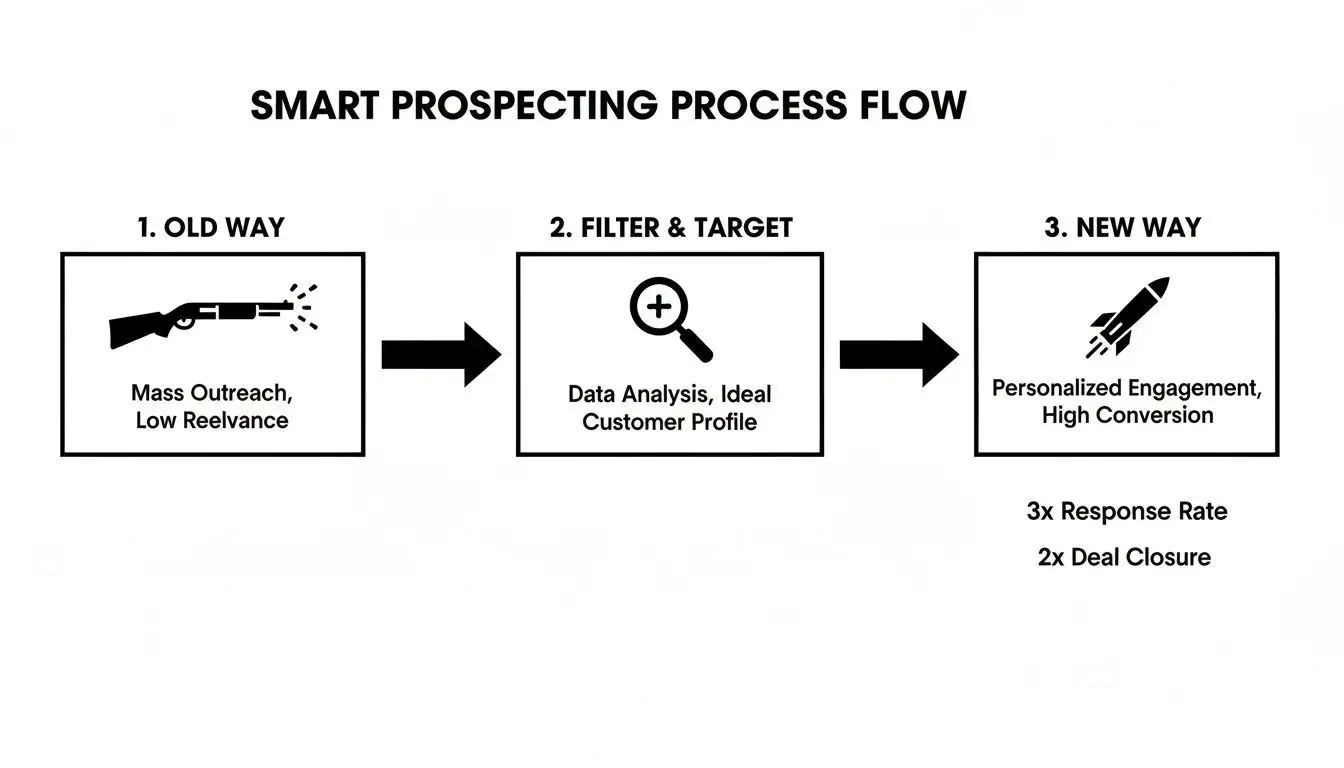
The big idea here is that data-driven signals let you ditch the high-volume, low-value game and switch to timely, high-impact engagement.
Setting Up Your Signal-Based Radar
This is where you get smart. Platforms like Munch act as your automated radar, constantly scanning the market for these critical events. You plug in your ICP, and the system pings you the moment a target account shows a high-intent signal.
Here are some of the most powerful buying signals you should be tracking:
-
Key Hires: A new C-suite exec, like a CMO or CRO, wasn't brought in to maintain the status quo. They're there to shake things up, and their first 90 days are a golden window for new tools and strategies.
-
Funding Events: A company that just closed a Series B round has two things: cash to burn and immense pressure to grow. They're actively shopping for solutions to help them scale. Fast.
-
New Tech Adoption: Did a prospect just start using a tool that integrates perfectly with your product? Your solution just became the most logical, no-brainer next step for them.
-
Company Growth Spurts: If they're hiring aggressively in sales or marketing, you can bet they're feeling the growing pains your product is designed to solve.
-
Competitor Missteps: Is a rival getting hammered with bad reviews or negative press? That’s your cue to slide in as the better, more reliable alternative.
By focusing on these signals, you ensure you're always talking to people who have a fresh problem and a new budget. You're not just another salesperson; you're a timely solution provider.
This signal-based approach builds a predictable pipeline machine. It surfaces the right accounts and the right contacts within them, freeing up your team to do what they do best: have meaningful conversations and close deals.
To really get this machine humming, you can explore the best AI Sales Assistant Software to handle tasks like qualification and data management. This keeps your human touch reserved for the high-potential opportunities your smart system uncovers.
Don't Look Dumb: Why Rich Prospect Data is Your Secret Weapon
Showing up with just a prospect's name and company is the sales equivalent of walking into a party and only knowing the host's first name. It's awkward, you have nothing to talk about, and you'll probably just end up by the snack table talking about the weather.
Real prospecting mastery comes from knowing your audience before you ever say hello. This is where data enrichment saves the day. It's the art of turning a basic contact list into a rich dossier of actionable intelligence. Without it, your "personalized" outreach sounds as generic as a stock photo of a smiling team in a boardroom.
The Old Way: Buying Stale, Crusty Lists
Remember buying CDs? You'd shell out $15 just for that one good song. Buying a static prospect list is the B2B version of that, only a hundred times worse.
These lists are notoriously stale. They’re packed with outdated job titles, dead-end emails, and people who left the company three years ago. Sending emails to a bad list is a one-way ticket to getting your domain flagged as spam. Your deliverability tanks, and your beautifully crafted messages end up in digital purgatory. It’s an expensive, inefficient way to burn more bridges than you build.
A Smarter Play: Waterfall Enrichment
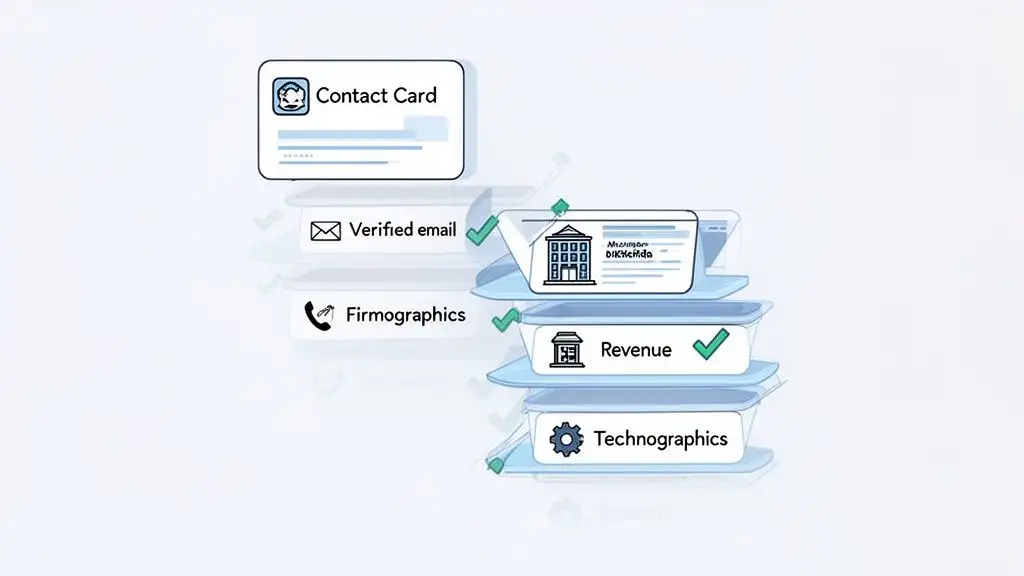
Let’s talk about a much better way: waterfall enrichment. Think of it like a detective checking multiple sources to confirm a lead. Instead of banking on a single, often-outdated database, platforms like Munch check numerous data providers one after another.
If the first source doesn't have a verified email, it automatically moves to the next, and the next, until it strikes gold. This process gets you an incredible 95%+ email accuracy. Your messages actually land in the right person's inbox. This isn’t a small upgrade; it’s a complete game-changer for your entire outreach strategy.
The difference between a static list and enriched data is the difference between a random guess and an educated strategy. One gets you ignored, the other gets you replies.
Pro Tip: Munch enriches your lead list's contact data in a waterfall motion and can craft personalized outreach messages for every lead!
What Intel Should You Be Digging For?
So, what information should you be gathering? It’s all about building a 360-degree view of your prospect and their business.
-
Verified Contact Details: This is table stakes. You need accurate, direct-dial phone numbers and, most importantly, verified email addresses to dodge the dreaded bounce-back notification.
-
Detailed Firmographics: Go way beyond just industry and employee count. Find out their annual revenue, funding stage, and recent growth trends. This helps you frame your pitch around their specific financial reality.
-
Technographics: This is your ace in the hole. Technographics reveal the entire software stack a company uses. Imagine knowing your prospect’s team lives in HubSpot and Salesforce before you even draft your first email. You can instantly position your tool as the missing piece of their puzzle.
-
Key Employee Data: Who are the real decision-makers? Who influences them? Mapping out the key players and their roles helps you navigate the org chart and build consensus from the inside.
Having this level of detail completely changes the game. You're no longer a stranger interrupting their day; you’re a well-informed expert offering a genuinely relevant solution. You can dive deeper into choosing the right platform with our complete guide to data enrichment tools.
This strategic approach makes a massive difference in your results. After all, the data clearly shows that how you connect matters.
Outreach Method Conversion Rates
Here’s a quick look at how different outreach methods typically perform. Notice the huge gap between a truly warm intro and a cold shot in the dark.
| Outreach Method | Typical Appointment/Conversion Rate |
|---|---|
| Referrals | 26% |
| Warm Intro (via mutual connection) | 18% |
| Targeted LinkedIn Outreach | 12% |
| Cold Calling | 9% |
| Cold Emailing | 2% - 5% |
Enriching your data is how you turn a freezing cold outreach attempt into a much warmer, more informed conversation, dramatically improving your odds of success.
Crafting Outreach That Doesn't Get Ignored
If your outreach email kicks off with "I hope this email finds you well," you might as well have written, "Please ignore this and move on with your day." That phrase is the sales equivalent of starting a movie with 20 minutes of opening credits. Nobody has time for that.
This is all about creating multi-channel outreach that people actually want to read. We're ditching the generic, one-size-fits-all templates and stepping into the world of AI-powered personalization. It's time to make your prospects feel like you've done your homework, even when smart technology is doing the heavy lifting for you.
From Generic Guesses to Surgical Strikes
The secret ingredient to great outreach is context. It’s the difference between a welcome message and a spammy interruption. With the right data and tools, you can ditch vague openings for ones that are sharp, relevant, and impossible to ignore.
Just look at the difference:
-
The Old Way: "I saw you work at Company X and thought you might be interested in our services." This is the outreach version of a shrug emoji. It's lazy, instantly forgettable, and screams "I'm sending this to 1,000 other people."
-
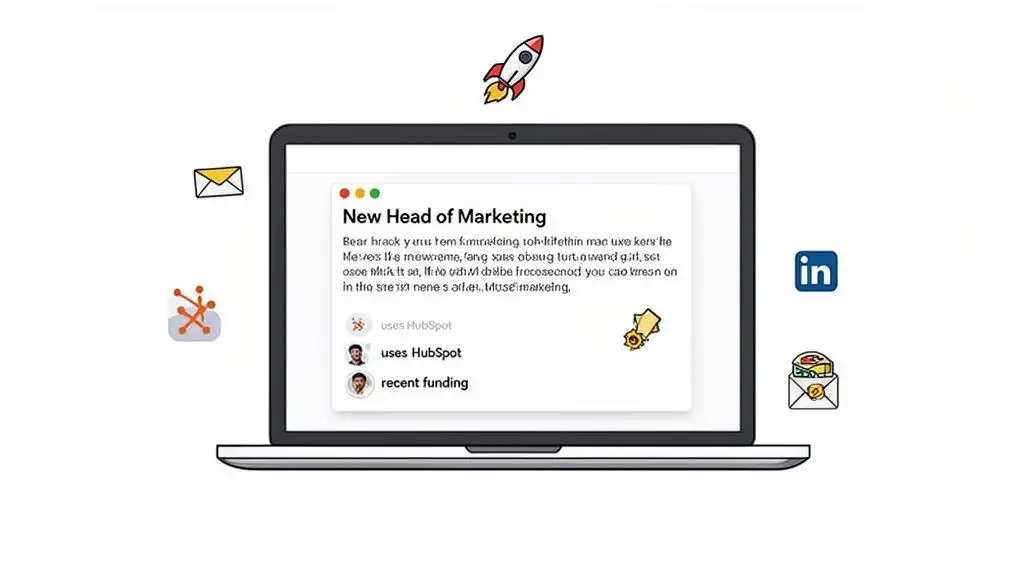
The Smart Way: "Congrats on the new Head of Marketing role at Company X! As you're settling in, leaders in your position are often re-evaluating their content pipeline..."
See that massive leap in quality? The second example is built on a specific buying signal, a key hire. It shows you’re paying attention. Platforms like Munch don't just find these signals; they help you turn them into unique, context-aware messages for every single prospect.
This isn't just about dropping a name or a title. It's about connecting a specific event in their professional life to a problem your product solves. That’s how you get replies.
Building Your Multi-Channel Sequence
Your prospects don't just live in their inbox. A modern prospecting strategy has to meet them where they are, which means a smart mix of email and other channels like LinkedIn. The goal is to create a sequence of touchpoints that feels helpful, not harassing.
Here’s a simple framework I’ve seen work wonders:
-
Email 1 (The Hook): Lead with your strongest signal. Reference their new role, a recent company funding announcement, or a new piece of tech they adopted. Keep it short, focused, and end with a clear, low-friction call-to-action. Don't ask for a meeting; ask for their thoughts on a specific challenge.
-
LinkedIn Connection (Day 2): Send a connection request with a personalized note. Do not pitch here. Just reference your email and add something genuine, like, "Thought it'd be great to connect with another leader in the B2B SaaS space."
-
Email 2 (Add Value - Day 4): Time to follow up with a helpful resource. This could be a case study from a similar company, a blog post about a challenge they likely face, or a useful industry report. The goal is to be a resource, not just a salesperson.
This approach builds familiarity and credibility across multiple platforms, making your name one they recognize and trust.
The Art of the A/B Test
Even with AI doing the personalization, you should never stop testing. Think of it like a stand-up comedian honing their act. You test your jokes, see what lands, and refine your delivery. Optimizing your outreach is a continuous process of making small tweaks to see what drives better results.
Here are the key elements to A/B test in your outreach campaigns:
-
Subject Lines: Try a question vs. a statement. For example, "Quick question about Company X's content strategy" versus "Idea for Company X's content pipeline."
-
Opening Hooks: Pit a personal compliment against a company-level insight. See which one grabs attention more effectively with your audience.
-
Calls-to-Action (CTAs): Compare a "hard" ask (like "Can you chat for 15 minutes next Tuesday?") with a "soft" ask (like "Is this a priority for you right now?").
Consistently testing these variables will help you understand what truly resonates. If you really want to go deep, we have a complete guide on how to write cold emails that get results. This data-driven approach turns your outreach from a game of chance into a predictable system for generating high-quality conversations and, ultimately, winning more deals.
The Art of the Follow-Up Without Being Annoying
Let's get one thing straight: the real money in sales isn't made on that first, perfect email. It's made in the quiet, disciplined, and criminally neglected art of the follow-up.
There's a razor-thin line between being persistent and being a pest, and it's surprisingly easy to cross. Too many reps fall back on the same tired lines. "Hey, just checking in." "Circling back on this." It’s the sales equivalent of poking someone on Facebook in 2012. It adds zero value and instantly casts you as an annoyance, not an asset.
The goal isn't just to stay on their radar; it's to become a welcome, valuable presence in their inbox.
And here’s the kicker: most salespeople give up way, way too soon. This creates a massive "persistence gap" where deals evaporate not because of a bad product or a clumsy pitch, but simply from a lack of patience. The data is shocking. A staggering 92% of salespeople throw in the towel after the fourth "no," even though most deals actually happen after the fifth attempt.
Think about that for a second. The vast majority of your competitors are quitting the race just before they hit the finish line. This isn't just a small gap; it's a Grand Canyon-sized opportunity for anyone willing to go the distance.
Building a Follow-Up Sequence That Actually Adds Value
A great follow-up sequence is a masterclass in giving before you ask. You aren't just begging for their time; you're earning it by providing something genuinely useful with every single message.
Here’s a multi-channel sequence you can steal and make your own:
-
Touchpoint 1 (Day 1 - Email): Your initial outreach, fired off after a strong buying signal. (We talked all about this in the last section).
-
Touchpoint 2 (Day 3 - Email): Send a hyper-relevant case study. And I mean hyper-relevant. If you're pitching a mid-sized SaaS company, a case study about a Fortune 500 manufacturing giant is just noise. Try a subject line like, "How [Similar Company] tackled [Problem X]."
-
Touchpoint 3 (Day 5 - LinkedIn): Time to be a human. Head over to their profile and engage with their content. Like a post. Leave a thoughtful comment. No pitch. Just be present in their professional world.
-
Touchpoint 4 (Day 7 - Email): Share a third-party resource. Find a great article or report on a topic you know they care about. Send it with a quick note: "Saw this piece on [Topic] and thought of you. The bit about [Specific Point] was especially sharp."
-
Touchpoint 5 (Day 10 - Email): Now you can do a quick check-in. A more direct, "Is this still a priority?" email works here because you've already proven you're not just another spammer. You’ve built up some goodwill.
-
Touchpoint 6 (Day 14 - The Breakup Email): This one is pure gold. It's a polite, no-pressure email that puts the ball in their court. "Since I haven't heard back, I'll assume this isn't a priority right now and will close your file. Feel free to reach out if things change." The response rate on these is wild.
Automating Persistence So You Don't Go Insane
Trying to manually track this kind of sequence for hundreds of prospects is a one-way ticket to burnout. Things will fall through the cracks. It's inevitable.
This is exactly where a tool like Munch becomes your secret weapon.
You can build this entire value-packed sequence into an automated cadence. The system handles the email sends and pings you when it's time for a manual touchpoint, like that LinkedIn comment. This frees up your brainpower to focus on what you're actually good at: having real conversations with people who are ready to talk.
If you want to go deeper on this, check out our complete guide on sales cadence best practices.
By marrying a value-first mindset with smart automation, you close that persistence gap for good. You'll start capturing that huge slice of deals your competitors are leaving on the table because they gave up one or two emails too soon.
Got Questions About Prospecting? We've Got Answers.
You've got questions, we've got answers. Let's tackle some of the most common head-scratchers we hear from sales teams trying to build a modern prospecting machine.
How Many Follow-Ups Are Too Many?
This isn't about some magic number. It's all about the quality of each touchpoint.
If every follow-up is just a different flavor of "Hey, just checking in," then honestly, one is too many. But a well-crafted sequence of 6-8 touches spread across email and LinkedIn? That’s where you hit the sweet spot, as long as you're adding value each time.
The real key is spacing. Don't be that stage-five clinger who blasts someone with six messages in six days. Give your prospects a little breathing room and, more importantly, a reason to actually want to hear from you.
What's The Difference Between a Lead and a Prospect?
Let's think of it like fishing.
A lead is any fish that nibbles your bait. Maybe they downloaded an ebook or signed up for a webinar. They’ve shown some interest, but you don't know if they're a keeper or just a bottom-feeder.
A prospect, on the other hand, is the fish you've already identified as the right species and size. They fit your Ideal Customer Profile and have shown real intent. You've qualified them.
All prospects start as leads, but only the best leads earn the right to be called prospects. Making this distinction is what keeps your sales team focused on the real prize.
Should I Focus on Inbound or Outbound Prospecting?
Why choose? This isn't a Star Wars vs. Star Trek debate where you have to pick a side. The best strategies use both.
-
Inbound is awesome. It brings interested people right to your digital doorstep, usually through killer content.
-
Outbound is your sniper rifle. It lets you go after those high-value, perfect-fit accounts you know you can help.
If you only do inbound, you're basically just sitting by the phone, waiting for it to ring. If you only do outbound, you might be missing out on some incredibly warm leads who are already looking for you. A healthy mix of both makes for a pipeline that can weather any storm.
Ready to stop guessing and start winning? Munch is the all-in-one platform that unifies prospect discovery, data enrichment, and AI-powered outreach into a single, seamless workflow. Find high-intent leads and build your pipeline faster by signing up with Munch.