The 8 Best Times to Call for Cold Calling in 2026: A Data-Backed Guide

By Mriganka Bhuyan
•Founder at Munch
Remember when you could just pick up the phone and... talk to someone? It feels like a distant memory, a bygone era like Blockbuster or dial-up internet. Today, every SDR knows the soul-crushing sound of a pre-recorded voice on the other end of the line. You've polished your script, your data is clean, and your product is a game-changer. So why is every call a one-way ticket to voicemail purgatory?
What if the problem isn’t your pitch, but your timing? Calling a prospect during their 9 AM stand-up is like showing up to a party after everyone has gone home; you missed the window. Bad timing kills deals before they even start. It’s the difference between a warm conversation and another unreturned message floating in the ether.
The good news is that finding the best times to call for cold calling isn't some ancient mystery solved by reading tea leaves. It's a science, backed by data, observable patterns, and a little bit of strategic genius. We’ve analyzed research from top sales platforms like HubSpot and Gong and combined it with modern, signal-based tactics to create the ultimate guide to connecting with actual humans.
Forget throwing darts at a calendar. This isn't about generic advice; it's a playbook. We're breaking down the eight most effective windows to dial, explaining the psychology behind why they work, and giving you actionable steps to implement them for your team immediately. We’ll cover everything from the classic mid-week sweet spots to industry-specific nuances and timing calls based on high-intent buyer signals. Ready to turn those voicemail notifications into actual conversations? Let's dial in.
1. Tuesday to Thursday Mid-Morning (9:30 AM - 11:30 AM)
If there's a "prime time" in the cold calling universe, this is it. Think of the 9:30 AM to 11:30 AM slot from Tuesday to Thursday as the undisputed champion, the Michael Jordan of prospecting windows. It’s the time when your prospects have vanquished the morning email dragon, grabbed their second coffee, and are finally settled into a productive groove. They aren't yet buried in afternoon meetings or mentally checked out for the weekend.
This isn’t just sales folklore; it’s a data-backed reality. Industry giants like Outreach have consistently shown that mid-week, mid-morning calls yield the highest connection rates. Why? Monday is often a chaotic mess of catching up, and by Friday, everyone is just trying to make it to happy hour. This Tuesday-to-Thursday window is the sweet spot where focus and receptiveness align perfectly, making it one of the best times to call for cold calling.
How to Dominate This Prime-Time Window
Simply calling during these hours isn't enough. You need a strategy to maximize every minute of this golden opportunity.
-
Start at 9:30 AM, Not 9:00 AM: Give your prospects a 30-minute buffer to handle urgent morning tasks. Calling at 9:00 AM sharp can feel like an ambush; 9:30 AM shows you respect their routine.
-
Time-Block with a Vengeance: Treat this two-hour window as sacred. No distractions, no checking social media. Stack your calls back-to-back to build momentum and maximize your output. This focused approach is a cornerstone of many modern outbound sales strategies.
-
Leverage High-Intent Signals: Don't just call random numbers. Use a tool like Munch to identify prospects who are already showing buying signals. Prioritizing these contacts first dramatically increases your chances of a meaningful conversation.
Pro Tip: If a prospect doesn't answer, leave a concise, value-driven voicemail immediately. Many decision-makers clear their voicemail inbox mid-morning, right before heading into lunch meetings. This is your chance to get on their radar even without a live connection.
2. Lunch Hour Adjacent Calls (11:45 AM - 1:15 PM)
While most reps are taking a break, the contrarian caller sees an opening. Calling around the lunch hour feels like a cheat code, a risky but potentially high-reward play. It's the time when gatekeepers are away from their desks, scheduled meetings are rare, and senior decision-makers might just pick up their direct line while scrolling through their phone and eating a sad desk salad. It’s less crowded, giving your call the spotlight it deserves.
This counterintuitive window is backed by research from platforms like Gong, which has shown that lower competition can lead to surprisingly high-quality conversations. While the raw connection rate might dip slightly, the conversations you do have are often with the right person, who is less rushed and more receptive. This makes the lunch hour one of the sneakiest and best times to call for cold calling when targeting senior leadership.

How to Master the Midday Call
Winning in this window requires a different approach than the mid-morning rush. It’s about precision, not volume.
-
Target the Top: This is your best shot at reaching VPs and C-level executives directly. They often work through lunch and are more likely to answer their own phones when their assistants are away.
-
Keep Your Opener Tight: Acknowledge the timing. A simple, "Hi [Name], I know I'm catching you around lunchtime, so I'll be brief," shows you respect their time and can lower their guard immediately.
-
Use it for Warmer Touches: This window is perfect for a second or third touchpoint in your sequence. Since you may get more of their attention, use it for calls that require a slightly longer, more nuanced conversation. Crafting the right follow-up is a key component of the sales cadence best practices that drive results.
-
Know Their Lunch Culture: Lunch habits vary wildly by industry and region. A tech startup in California might have a flexible lunch schedule, while a finance firm in New York may have a more rigid 12:30 PM break.
Pro Tip: If you reach voicemail, change your message. Instead of a generic pitch, try something like, "Hi [Name], calling from [Your Company]. I'm sure you're busy with lunch, so I'll send a quick email with one idea on [solving their problem]. Hope you have a great afternoon." It’s disarming and piques their curiosity for your follow-up.
3. Late Afternoon (3:00 PM - 5:00 PM)
While most sales reps are winding down, logging their final notes, or dreaming of their Netflix queue, the savvy cold caller sees an opening. The late afternoon slot, from 3:00 PM to 5:00 PM, is a surprisingly effective window that most competitors completely ignore. Think of it as the secret after-credits scene of the cold calling day; only the dedicated get to see the good stuff. Gatekeepers are often gone, and decision-makers are clearing their desks, wrapping up tasks, and are sometimes more relaxed and accessible.
This isn't just a hunch; it’s a strategic play backed by data. Research from firms like Salesloft and XO Communications has shown that connect rates can see a significant uptick in these final hours. Why? Senior leaders are often in back-to-back meetings all day, and this late window is the first chance they have to breathe and actually pick up their phone. You're catching them when their defenses are down, making it one of the most underrated yet best times to call for cold calling.
How to Capitalize on the End-of-Day Hustle
Simply dialing as the clock winds down won't cut it. You need a specific approach tailored to the unique mindset of a prospect trying to end their workday.
-
Target Secondary Stakeholders: This window is perfect for reaching technical influencers or departmental managers who might have been too busy to talk earlier.
-
Frame it as a "Quick Question": Respect their time. Open your call with a line like, "I know you're wrapping up, so I'll be brief." This acknowledges their schedule and lowers their guard, making them more receptive to a short conversation. Keep the call focused and under seven minutes.
-
Strike While the Iron is Hot: If you have a good call, send a follow-up email and a calendar invite for the next step immediately, before 5:00 PM. This increases the odds of getting a same-day acceptance while the conversation is still fresh in their mind.
Pro Tip: Prioritize prospects who have shown recent high-intent signals, like opening your emails multiple times or visiting your pricing page that day. A late afternoon call can be the perfect nudge to convert that interest into a scheduled meeting before they sign off.
4. Early Monday Morning (8:00 AM - 9:30 AM)
Conventional sales wisdom treats Monday morning like a minefield. The popular narrative is that prospects are drowning in weekend email backlog and fighting fires from the previous week. But what if that chaos is actually a smokescreen hiding a golden opportunity? Calling between 8:00 AM and 9:30 AM on a Monday is a bold, contrarian move that can connect you with the most organized and proactive decision-makers before their day is hijacked by meetings.
This window isn't for the faint of heart; it’s a high-risk, high-reward play. Research from thought leaders like Koka Sexton and publications like Sales Hacker reveals that early-rising leaders often use this time to strategize for the week ahead. They are in a planning mindset, making them more receptive to solutions that can help them achieve their weekly goals. Catching them at this moment positions you not as an interruption, but as a timely resource, making it one of the most underrated best times to call for cold calling.
How to Conquer the Monday Morning Gauntlet
Sloppy, generic outreach will get you sent to voicemail faster than a dial-up modem. Success here requires precision, relevance, and a deep respect for your prospect's time.
-
Be a Monday Morning Quarterback: Don't just call. Start by referencing a specific, recent buying signal, like a new funding round or a recent job change. Saying, "I saw your company just secured a new round of funding, and I have an idea for how to scale your sales pipeline," is far more effective than a generic pitch. This is where Munch can help scan your lead's social presence, company research and their latest news and craft outreach messages.
-
Keep it Short and Sweet: Your pitch should be hyper-concise. Frame your call as a brief, strategic check-in to help with their weekly priorities. Think of yourself as an elite special agent on a time-sensitive mission, not a telemarketer with all the time in the world.
-
Prioritize with Intelligence: Ensure your early morning calls are aimed at people who are most likely to listen. You wouldn't waste a precision strike on a low-value target, and you shouldn’t waste this window either.
Pro Tip: If you can't reach them, don't just leave a voicemail. Send a personalized email immediately that references your call and provides a clear, value-packed next step. For this strategy to work, you need accurate contact info; you can learn more about how to find a business phone number to ensure your call list is solid.
5. Industry and Role-Specific Timing Windows
Generic advice is for chumps. If you're treating a CTO like a Head of HR, you're not just wasting your time; you're actively annoying your target audience. The truly elite cold callers know that the "best time" isn't universal. It’s a moving target that changes based on who you're calling and what industry they're in. This is the Jedi-level tactic of cold calling: tailoring your call schedule to the unique rhythm of each specific buyer persona.
This granular approach moves beyond broad strokes and into surgical precision. It recognizes that a CFO’s day, filled with financial reviews and reporting, looks nothing like a marketing manager’s day of creative sprints and campaign check-ins. Platforms like Salesloft and LinkedIn Sales Navigator have pushed this idea into the mainstream, proving that segmenting your outreach by role and industry significantly boosts connection rates. This is how you find the best times to call for cold calling for the people who actually matter to your business.
How to Dominate with Persona-Based Timing
You can't just guess when a specific role is free. You need a data-driven strategy to build a calling calendar that adapts to your prospects' daily routines.
-
Map Your Personas' Day: Create a "day in the life" schedule for your key personas. For example, tech leaders are often free from 10-11 AM before daily stand-ups, while finance executives are more receptive from 1-3 PM after their morning reporting cycles are complete. Operations leaders? Try catching them between 9-10 AM as they set the day's priorities.
-
Segment and Conquer: Use tools with deep firmographic and employee data to segment your call lists by job function and industry. This isn't just a "nice to have"; it's the foundational step. You must know who you're calling before you can figure out when to call them. A solid first step is building out your ideal customer profile to understand these segments better.
-
Track Everything: Monitor your connection rates for each persona segment and time slot. Are you connecting with VPs of Marketing more often at 11:30 AM or 2:30 PM? Let the data be your guide. Your CRM should look less like a simple call log and more like a strategic battle map.
Pro Tip: Create role-specific value propositions to match your calling windows. When calling a COO in their 9 AM planning window, your opening line should directly address operational efficiency. When calling a CFO at 2 PM, lead with a financial benefit or ROI. Aligning the message with their mindset at that exact moment is a game-changer.
6. Post-Buying Signal Timing (24-48 Hours After High-Intent Signal)
Forget staring at the clock; this strategy is about watching the market. Instead of relying on a specific time of day, this advanced approach ties your call to a prospect's real-world actions. Think of it less like scheduling a meeting and more like being a superhero who shows up at the perfect moment to save the day. The idea is simple: when a prospect shows a high-intent buying signal, the absolute best time to call is within the next 24 to 48 hours.
This method transforms a cold call into a warm, relevant conversation. Calling a new VP of Sales with a relevant tool right after they're hired isn't just a cold call; it's a perfectly timed strategic intervention. This signal-based timing is arguably one of the most effective ways to find the best times to call for cold calling because it’s tailored to the individual, not the clock.
How to Dominate This Signal-Based Window
Timing is everything, but so is your execution. Here’s how to turn a timely signal into a closed deal.
-
Reference the Signal, Don't Be a Stalker: Your opening line is crucial. Instead of a generic intro, lead with the trigger event. Say something like, "Hey John, I saw your company just announced its Series B funding, congrats! Leaders in your position are often looking to scale their sales teams right about now..." This shows you've done your homework and aren’t just dialing for dollars.
-
Automate Your Alerts: Manually tracking every prospect is impossible. When a trigger event happens, you should be the first to know, allowing you to prioritize them in your dialing queue immediately.
-
Score and Segment Your Signals: Not all signals are created equal. A new executive hire at a target account is often a higher-priority signal than a company mentioning a competitor on social media. Develop a scoring system to rank these triggers. This ensures you’re always calling the most promising leads first, a key component of effective lead scoring best practices.
Pro Tip: Prepare "signal-based" call scripts in advance. Have a template ready for a funding announcement, another for a new C-suite hire, and one for a competitor switch. This allows you to personalize your outreach at scale without fumbling for words when the golden opportunity strikes.
7. Geographic and Time Zone Optimization
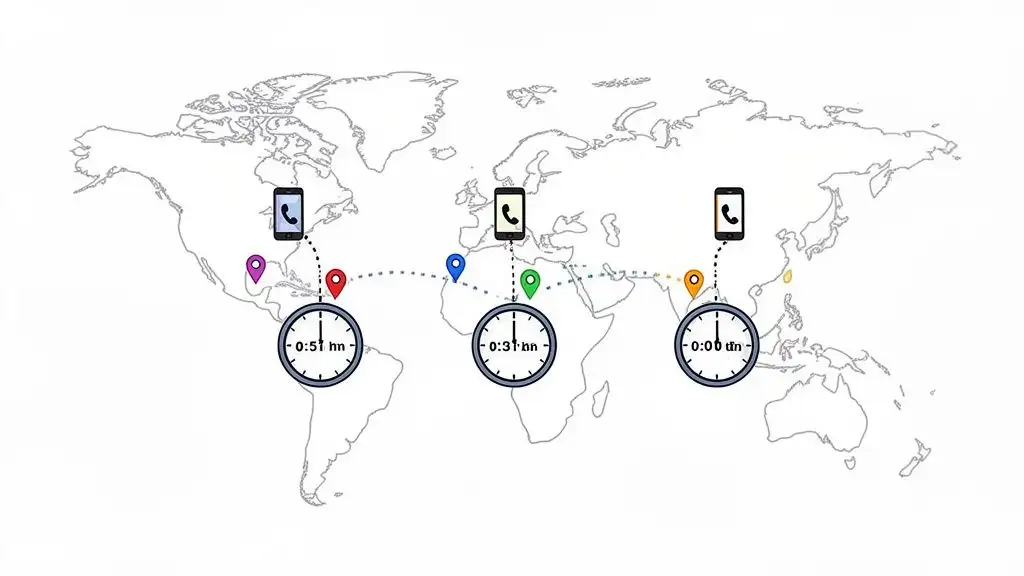
Calling a prospect in New York at 4:00 PM your time in San Francisco might seem perfect for you, but it’s a one-way ticket to their 7:00 PM voicemail. Ignoring time zones is like showing up to a party three hours after it ended; you missed the window. Geographic and time zone optimization is the art of dialing prospects during their prime business hours, not yours. This strategy is non-negotiable for teams selling across regions or continents.
This approach requires mapping your prospects' locations and building call schedules that respect their local 9-to-5. It’s a simple concept with a massive impact, turning potential after-hours annoyances into perfectly timed conversations.
How to Dominate Across Time Zones
Mastering the map isn't just for globetrotters; it's for top-performing sales reps. Here’s how to make geography your secret weapon.
-
Become an Early Bird (or a Night Owl): If you’re on the West Coast, calling East Coast prospects means starting your day at 6:00 AM PST to catch them at 9:00 AM EST. Similarly, a European team calling the US might work later to hit the 1:00 PM to 3:00 PM ET window, which falls during their evening.
-
Segment and Conquer: Don't throw all your prospects into one giant list. Use firmographic data to segment your lists by geographic location: West Coast, Central, East Coast, EMEA, APAC. Assign these lists to specific reps or create dedicated time blocks for calling each region.
-
Automate Time Zone Conversion: Manually calculating time differences is a recipe for headaches and errors. Use a dialer or CRM that automatically converts and displays the local time for each prospect. This removes the guesswork and ensures you're always calling at an appropriate hour.
Pro Tip: For global teams, identify "golden overlap" hours. The window between 8:00 AM and 11:00 AM EST is a prime example, as it overlaps with the business day in North America and the afternoon for teams in the UK and Western Europe. Schedule your most critical cross-continental calls during these high-leverage periods.
8. Seasonal and Quarterly Buying Cycle Timing
Zooming out from the daily and weekly grind reveals a bigger picture: the annual business seasons. Just like retailers prep for Black Friday, B2B buyers operate on predictable quarterly and seasonal cycles. Ignoring these macro trends is like trying to sell ice to a polar bear in winter. Aligning your outreach with these buying cycles is one of the most powerful strategies to find the best times to call for cold calling.
This isn’t about chasing holidays; it's about understanding budget allocation, fiscal year-ends, and industry-specific rhythms. Research from Forrester and Gartner consistently highlights that buying decisions are not evenly distributed throughout the year. Q1 is often a frenzy of new budget spending, while Q4 becomes a “use it or lose it” scramble. Calling a prospect with a budget problem in late November is a completely different conversation than calling them during a slow summer month.
How to Ride the Business Seasons
Timing your outreach to these macro cycles requires a strategic, calendar-based approach. It’s less about the clock and more about the fiscal calendar.
-
Map Out the Fiscal Year: Don’t assume everyone’s year starts in January. Use company data to identify the fiscal year-end for your top accounts. The 30 days leading up to and following this date are prime time for conversations about budget and planning.
-
Embrace the Quarter-End Rush: The last two weeks of any quarter are a pressure cooker for decision-makers. Frame your solution as a way to hit their quarterly goals or utilize remaining funds. Messaging like, "I know you're likely focused on hitting Q3 targets, and our tool can help you close that last 10%," is incredibly timely.
-
Plan for the Summer Slump: July and August are notoriously slow due to vacations. Instead of pushing for demos, use this time for lower-stakes relationship building. Focus on discovery calls and nurturing sequences, teeing up conversations for when decision-makers are back in September, refreshed and ready to plan for the final push of the year.
Pro Tip: Create a 12-month outreach calendar that maps the key seasonal and quarterly milestones for your top 3 target industries. This allows you to plan themed campaigns in advance, such as a "New Year, New Budget" push in January or a "Finish the Year Strong" campaign for Q4, making your outreach feel relevant and strategic.
8-Point Cold-Call Timing Comparison
| Timing Window | 🔄 Implementation Complexity | 💡 Resource Requirements | ⭐📊 Expected Outcomes | ⚡ Ideal Use Cases | Key Advantages |
|---|---|---|---|---|---|
| Tuesday to Thursday Mid-Morning (9:30 AM - 11:30 AM) | Moderate: standard scheduling & cadence | CRM/dialer, basic analytics, list hygiene | High ⭐: highest connection & callback rates (≈40–50%↑) | High-volume B2B cold outreach, first-touch dialing | Peak receptiveness, aligns with work rhythm |
| Lunch Hour Adjacent Calls (11:45 AM - 1:15 PM) | Low–Moderate: simple timing shift | Targeted lists, persona data | Medium ⭐: slightly lower answers, higher conversation quality 📊 | Warm outreach, second-touch, senior decision-makers | Less competition, better direct access to decision-makers |
| Late Afternoon (3:00 PM - 5:00 PM) | Low: easy to add to existing cadence | CRM, quick follow-up email templates | Medium ⭐: good for follow-ups and end-of-day decisions 📊 | Follow-ups, secondary buyers, time-sensitive offers | Minimal competition, good closing/decision window |
| Early Monday Morning (8:00 AM - 9:30 AM) | Moderate: needs personalization & targeting | Prospect intelligence, tailored scripts | Medium–High ⭐: high-quality conversations, smaller pool | Consultative sales, high-value targets | Reaches proactive decision-makers before weekly noise |
| Industry & Role-Specific Timing Windows | High 🔄: requires segmentation & testing | Firmographic, technographic, role data | High ⭐: improved relevance and connection by persona 📊 | Persona-driven campaigns, verticalized outreach | Timing aligned to role routines, reduced gatekeeping |
| Post-Buying Signal Timing (24–48 hrs after signal) | High 🔄: real-time detection + rapid response | Signal platform (real-time), alerting, SDR availability | Very High ⭐: conversion 2–3x higher, highest relevance 📊 | Just-in-time outreach on funding/job/tech signals | Timely, less competition, strong urgency & engagement |
| Geographic & Time Zone Optimization | High 🔄: scheduling infra + coordination | Accurate location data, distributed teams or staggered shifts | High ⭐: ~25–30% boost in connections when done right 📊 | Global prospecting, multi-region campaigns | Local-hour respect, 24-hour coverage, compliance benefits |
| Seasonal & Quarterly Buying Cycle Timing | Moderate–High: requires long-term planning | Historical sales data, fiscal calendars, campaign calendar | High ⭐: higher close rates when aligned to budgets 📊 | Quarter-end/Q-start campaigns, budget-driven offers | Aligns outreach to budget cycles and predictable peaks |
Stop Watching the Clock and Start Watching for Signals
So, we've journeyed through the sales equivalent of a time-turner, exploring the nooks and crannies of the B2B calendar to uncover the best times to call for cold calling. We've dissected the data, pinpointed the peak windows, and even considered the strange magic of calling a software engineer on a Monday morning (spoiler: don't). If you walk away with nothing else, let it be this: timing isn't just about the clock on the wall; it's about the context of your prospect's day, week, and career.
Your phone is not a blunt instrument for brute-force dialing. It’s a precision tool, and like any tool, its effectiveness depends entirely on how and when you use it. Simply hammering the phones between 9:30 AM and 11:30 AM from Tuesday to Thursday is a solid start, but it’s the sales equivalent of only knowing one power chord. It works, but you're not going to headline Madison Square Garden with it.
The Art of Layering Your Tactics
The true masters of the cold call don't just follow a static schedule. They operate like strategic DJs, blending different rhythms and beats to create a cadence that resonates. Think of the insights from this article as layers you can mix and match:
-
The Foundational Beat: Start with the statistically proven "golden hours" like late mornings and late afternoons on Tuesdays, Wednesdays, and Thursdays. This is your baseline, your 4/4 time signature that keeps everything grounded.
-
The Persona-Specific Riff: Layer on industry and role-specific timing. Are you calling a C-suite executive? Try that early morning or late afternoon window. Targeting a tech lead? Avoid Monday mornings like it's the Y2K bug. This is where you add the melody that speaks directly to your audience.
-
The Geographic Harmony: Don't forget to adjust for time zones. Calling a prospect in San Francisco at 4:00 PM your time means you're interrupting their lunch. It’s a rookie mistake that immediately signals you haven't done your homework. Getting this right is basic table stakes.
From Time-Based to Signal-Based: The Final Boss Level
Here's the pivot that separates the good from the legendary. The ultimate "best time to call for cold calling" isn't a time at all. It's a moment. It's an event. It's a signal.
Key Takeaway: While a well-timed call can get you a "hello," a signal-based call gets you a conversation. A prospect is 10x more likely to engage when your outreach is directly tied to a recent, relevant event in their world.
The clock tells you when someone is likely at their desk. A buying signal tells you they might actually need what you're selling. When a company in your target market hires a new VP of Sales, gets a fresh round of funding, or posts a job description loaded with keywords related to your solution, that’s your bat-signal. That’s your green light.
Your next steps are clear. Don't just throw this guide on a digital shelf and revert to dialing whenever you feel caffeinated. Put it into action:
-
Establish Your Baseline: Use the general time windows we discussed as your starting point for the next two weeks. Track your connection rates religiously.
-
Segment and Test: Break your list into segments by industry or role. Assign different calling blocks to each and see which persona responds best at which time. A/B testing isn't just for marketers.
-
Integrate Signals: The most crucial step. Start tracking key events. When a trigger event happens, that prospect jumps to the top of your list, regardless of the time of day. A call that starts with, "Hey, saw you just raised your Series B, congrats!" is infinitely more powerful than one that starts with, "Hi, do you have 27 seconds?"
Mastering this multi-layered approach transforms cold calling from a numbers game into a strategy game. You stop being a random interruption and become a timely, relevant advisor. You're no longer just watching the clock; you're watching the market, ready to connect at the moment of maximum impact.
Ready to stop guessing and start capitalizing on real-time buying signals? Munch is the intelligence platform that tells you exactly who to call and why you should call them now, delivering a curated feed of trigger events right to your workflow. Stop chasing clocks and start chasing opportunities by discovering the real best times to call with Munch.