The Ultimate Guide to B2B Data Enrichment Tools

By Mriganka Bhuyan
•Founder at Munch
Think of data enrichment tools as your sales team's secret weapon. They take a flimsy, half-empty lead profile and transform it into a 360-degree view of a real person, ready for a real conversation.
It's about turning a single data point, like an email, into a goldmine of actionable intel: job title, company size, location, and even the tech stack they use. This is how you make your outreach smarter, not just louder.
So, What Exactly Are Data Enrichment Tools?
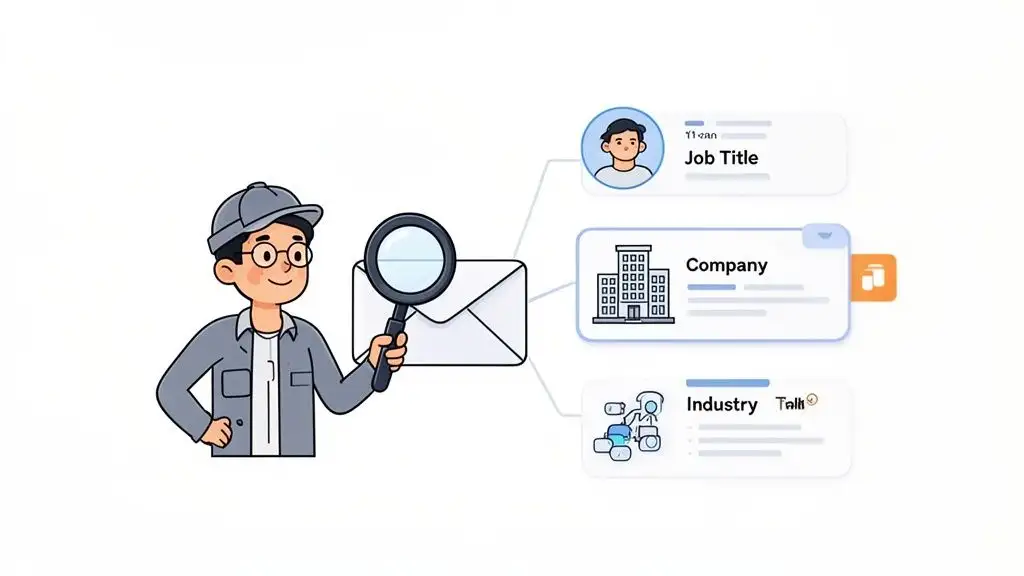
Let's say your marketing team just handed you a list of leads from a recent webinar. Awesome! Except all you have is a name and an email for each person. It’s like being a detective with a single, grainy photo and no other clues. You're basically playing Where's Waldo?, but Waldo is a VP of Engineering somewhere in North America and the book is the entire internet.
You could spend the next three days glued to your screen, manually digging through LinkedIn profiles, company websites, and press releases just to figure out who these people are. It’s tedious, soul-crushing work.
Or... you could let a machine do it for you in seconds.
That's the magic of data enrichment tools. They're your high-tech forensics kit for sales. Instead of mind-numbing grunt work, these platforms instantly take your basic lead info and flesh it out with all the juicy details you need.
Think of it this way: Data enrichment turns your CRM from a dusty old address book into a strategic goldmine. It transforms a simple list of names into a dynamic database of high-intent prospects, complete with the context you need to start a meaningful conversation.
From A Blurry Photo To A 4K Profile
Let’s get practical. You have "jane.doe@acmecorp.com" from that webinar list. Without any context, your opening line is doomed to be painfully generic. But with a good tool plugged in, the process is a breeze:
-
Initial Input: The tool grabs the email address.
-
Data Append: It scours countless public and private databases in the blink of an eye.
-
Profile Creation: A second later, it serves up a rich, detailed profile.
Suddenly, you know Jane is the VP of Marketing at a 200-person SaaS company in Austin that just landed Series A funding. Better yet, you see they use HubSpot for marketing automation, a tool your product integrates with perfectly.
Just like that, your cold, generic email becomes a warm, relevant conversation starter. If you want to dive deeper into the nuts and bolts, our guide on what is data enrichment has you covered.
To see this in action, check out how a lead's profile gets a complete makeover.
From Raw Lead to Qualified Prospect
| Data Point | Before Enrichment | After Enrichment | Why It Matters for Sales |
|---|---|---|---|
| Contact Info | jane.doe@acmecorp.com | Direct Dial: 512-555-0123 | You can actually call them. |
| Job Title | Unknown | VP of Marketing | You know they're a decision-maker. |
| Company Name | acmecorp.com | Acme Corp | You can research the company. |
| Company Size | Unknown | 200 Employees | Helps qualify the lead (ICP fit). |
| Industry | Unknown | B2B SaaS | Allows for industry-specific messaging. |
| Funding | Unknown | Series A - $10M | Signals they have budget and are growing. |
| Tech Stack | Unknown | HubSpot, Salesforce | Perfect for integration-based pitches. |
See the difference? You've gone from a faceless email to a person with real needs and a story you can connect with.
Why This Matters More Than Ever
The secret's out. Everyone wants this level of intelligence, and the market is blowing up. Valued at USD 697 million in 2024, the global data enrichment market is on track to hit USD 1,087 million by 2032.
This rocket-ship growth is fueled by the insane advantages these tools provide. Modern cloud-based platforms offer a 40% lower total cost of ownership and plug right into your existing systems, finally killing off the manual research slog. You can dig into the full market analysis on intelmarketresearch.com to see more data enrichment trends.
Ultimately, data enrichment tools give your sales team superpowers. They automate the tedious work reps hate, freeing them up to focus on what they do best: building relationships and closing deals.
Why Your Sales Team Needs Data Enrichment Right Now
Running a sales team on bad data is like trying to navigate a new city using a map from 1995. Sure, you might get somewhere eventually, but you’ll waste a ton of gas, hit every dead end, and miss all the shortcuts. Data enrichment tools are your modern-day GPS, guiding your team straight to the best opportunities without the scenic tour of wrong numbers and bounced emails.
Without this guidance, your reps are flying blind. They're stuck doing manual grunt work, digging for contact info, and sending pitches to email addresses that go straight to the digital graveyard. It’s more than just inefficient; it’s a total morale drain.
The alternative? A sales floor that’s not just busy, but productive. Good data eliminates the guesswork and frees up your reps to do the one thing you hired them for: to sell.
Stop Guessing and Start Connecting
Let’s be real: nobody responds to a generic "Dear Valued Prospect" email. It's the digital equivalent of junk mail, and it gets deleted just as fast. The secret weapon against the delete button is hyper-personalization, and it's powered by enriched data. This is how you craft messages so on-point that prospects feel like you've been reading their minds.
Picture this. Instead of a bland, copy-pasted template, your rep sends something like this:
"Hey Alex, I saw on LinkedIn you just stepped into the VP of Engineering role at Innovatech, congrats! Noticed your team is hiring for developers with AWS experience. We recently helped another SaaS company scale their cloud infrastructure, and I thought you might find our playbook interesting."
This message works because it’s timely, specific, and shows you’ve done your homework. Data enrichment tools make this level of detail possible at scale, pulling in job changes, company news, and even the tech stack they’re using. It gives your team the exact ammo they need for every single conversation. If you want to really dial this in, digging into the specifics of lead enrichment can help sharpen this process even further.
Instantly Improve Your Lead Scoring and Routing
We all know not all leads are created equal. Some are red-hot and ready to buy, while others are just window shopping. The problem is, without enriched data, they all look the same. This leads to absolute chaos, where your best leads go cold while reps chase down prospects who were never a good fit to begin with.
Data enrichment cuts through the noise by adding critical context right away.
-
Firmographics: Automatically see a company’s size, industry, and annual revenue. This lets you instantly filter out anyone who doesn't match your Ideal Customer Profile (ICP).
-
Technographics: Find out what software a company is already using. For example, knowing they use a competitor’s platform isn't a roadblock; it's a conversation starter.
-
Buying Signals: Get alerted to funding announcements or major hiring pushes. These are huge green flags that a company has both a budget and a problem to solve.
Armed with this info, you can finally build a lead scoring model that works. The system automatically flags the hottest leads and sends them straight to your top closers. It’s a simple change that dramatically speeds up your sales cycle and ensures your best reps are always working the deals most likely to close.
There's a reason the market for these tools is exploding. Global spending on data enrichment is expected to jump from USD 2.08 billion in 2024 to USD 3.94 billion by 2032. Companies are seeing real results, like an average 22% uplift in conversions from personalized campaigns. To see the numbers for yourself, you can explore the full data enrichment market report.
Bottom line: investing in data quality isn't just a "nice-to-have." It's a must for any sales team that's serious about hitting their numbers.
Let's Compare the Top B2B Data Enrichment Tools
Alright, welcome to the main event. Picking the right data enrichment tool can feel like that scene in The Matrix where Neo has to choose between the red pill and the blue pill. One promises the truth, the other blissful ignorance. The twist here is that they all promise better data, but only one is the right fit for your team's reality.
To help you make the right choice, we've pulled together a curated roundup of the top platforms for B2B sales and RevOps. We'll dive into our very own Munch, ZoomInfo, Clearbit, and Apollo. But this isn't just another boring feature list. We’re breaking down who they’re really for, where their data comes from, what makes them special, and how they charge, so you can see which one actually slots into your workflow.
This is a no-fluff, straight-to-the-point comparison. The goal is to get you to the "aha!" moment and figure out which platform will give you the best bang for your buck, minus the buyer's remorse.
This simple decision tree helps visualize why this whole data thing matters so much.
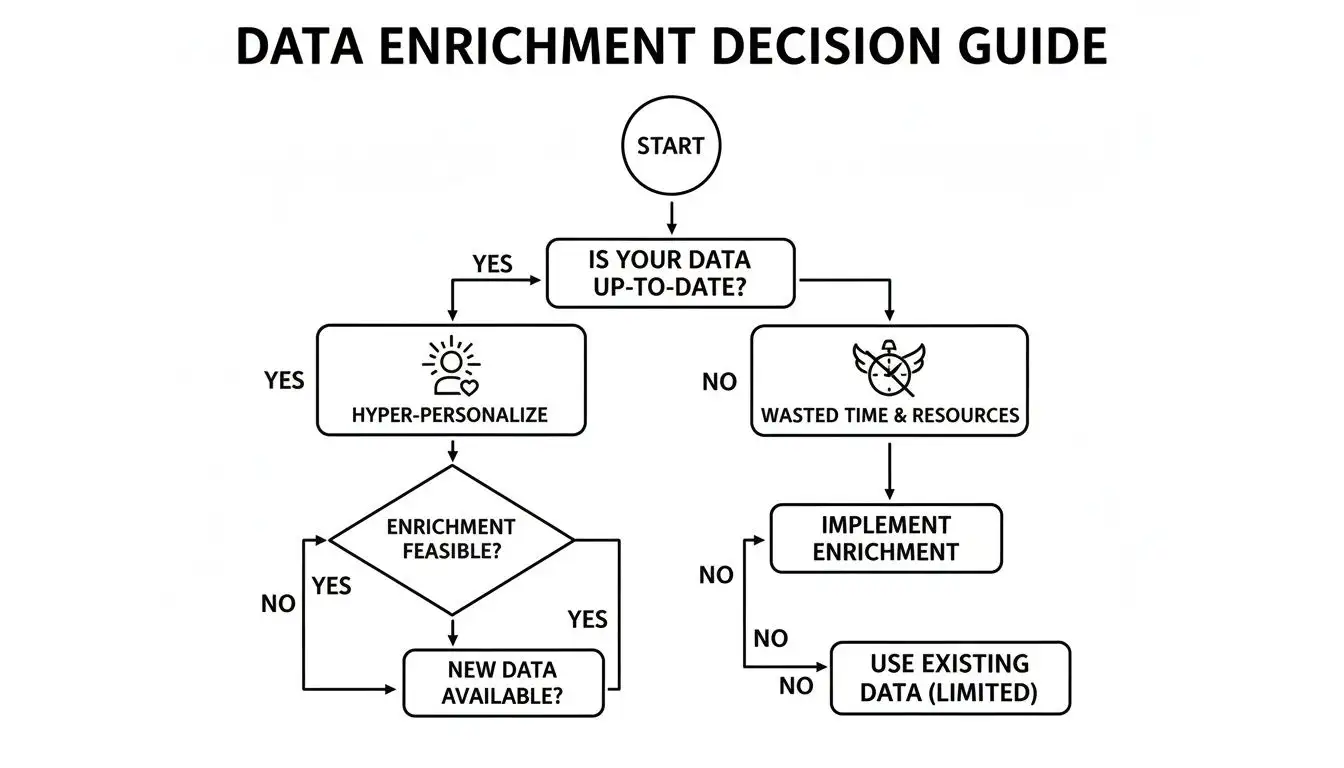
As you can see, fresh, accurate data is the launchpad for hyper-personalization that actually works. Stale data? That’s a one-way ticket to wasted time and effort.
Munch: The All-in-One for High-Intent Prospecting
Munch is built for sales teams that need to move fast but refuse to sacrifice quality. It cleverly rolls lead discovery, data enrichment, and AI-powered outreach into one seamless system. It’s less of a single-purpose tool and more of a complete outbound engine.
This platform is a godsend for growth-stage startups and lean sales teams that need to find prospects who are ready to buy now and engage them without juggling a half-dozen subscriptions. If your SDRs are suffering from tab-overload, Munch brings everything under one roof.
Munch pulls the entire top-of-funnel process together. It finds prospects dropping buying signals, fills in their profiles with verified data, and then helps you write killer personalized outreach, all from one command center.
Its secret weapon is waterfall enrichment. Instead of just pulling from one database and hoping for the best, Munch pings multiple premium data vendors in a sequence until it snags verified contact info. This approach pushes data accuracy through the roof, often hitting over 95% for emails. That means fewer bounces and more actual conversations. Many modern teams also integrate other platforms, and you can learn more about how different systems work together in our guide to top sales AI tools.
ZoomInfo: The Enterprise Data Behemoth
With a colossal database covering millions of professionals and companies, it's the default choice for massive enterprise sales teams that demand deep market intelligence and intricate account maps.
If you’re running a sales organization with hundreds of reps, complex territory rules, and a long, winding buyer's journey, ZoomInfo has the raw horsepower to support your entire operation. It doesn't just give you contact info; it delivers detailed org charts, tracks buyer intent signals, and offers advanced data governance tools.
But all that power comes with a price tag to match. ZoomInfo is one of the priciest solutions out there, and they're known for locking you into multi-year contracts. It's a serious investment, best suited for established companies with a hefty budget for their sales tech. For smaller teams, it can feel like using a sledgehammer to crack a nut.
Clearbit
Clearbit is good at identifying anonymous website visitors and beefing up inbound leads the second they hit "submit" on a form.
While its data quality is top-notch, Clearbit's pricing is tied to API calls and monthly traffic. This can get expensive, fast, for companies with a ton of website visitors or massive databases to clean. It’s a fantastic choice for marketing-led organizations looking to supercharge their inbound funnel and arm their sales team with context-rich leads.
Apollo
Apollo has exploded in popularity, especially with startups and SMBs, by bundling a huge B2B database with sales engagement tools like an email sequencer and a dialer. It's the aggressive, all-in-one player that gives you a ton of functionality for a seriously competitive price.
This platform is perfect for sales teams who need both a data source and an outreach tool but don't have the budget to buy separate best-in-class solutions. It lets reps find prospects, enrich their contact info, and launch outreach campaigns without ever having to leave the Apollo ecosystem.
So, what's the catch? While it does a lot of things, it isn't necessarily the best at any single one of them. The data accuracy might not always measure up to premium providers who use more sophisticated verification techniques. Think of Apollo as the Swiss Army knife of sales tools: versatile but maybe not the precision-crafted chef's knife you need for a critical job.
Feature Smackdown of Top Data Enrichment Tools
With so many options, a head-to-head comparison can cut through the noise. Here's a look at how our top contenders stack up on the features that matter most to B2B sales and RevOps teams.
| Tool | Ideal Use Case | Key Features | Email Accuracy | Pricing Model |
|---|---|---|---|---|
| Munch | Growth-stage startups, solopreneurs & lean sales teams needing high-intent leads and outreach tools. | Waterfall Enrichment, AI-Powered Outreach, Unified Workflow, Buying Signal Detection | Very High (95%+) | Per-user subscription |
| ZoomInfo | Large enterprises needing deep market intelligence and advanced data governance. | Massive Database, Org Charts, Buyer Intent Data, Advanced Filtering | High | Custom enterprise contracts |
| Clearbit | Marketing-led organizations focused on inbound lead conversion and website personalization. | Real-Time API Enrichment, Website Visitor De-anonymization, Form Shortening | High | Based on API calls/traffic |
| Apollo.io | SMBs and startups looking for an affordable, all-in-one data and sales engagement tool. | Large Database, Built-in Sequencer & Dialer, Chrome Extension | Good | Per-user subscription, credits |
Ultimately, the "best" tool isn't about which one has the longest feature list, but which one solves your team's specific problems without creating new ones. Use this breakdown to pinpoint the solution that aligns with your budget, workflow, and goals.
Key Features to Look For in a Data Tool
Not all data enrichment tools are created equal. Some are like a Swiss Army knife you’d buy at a gas station, loaded with flimsy gadgets you’ll never actually use. Others are like a finely crafted chef's knife, designed to do one thing perfectly. To pick the right one, you have to look past the slick marketing promises.
Think of this as your buyer's guide. We're about to break down the must-have features you should demand from any platform you’re considering. This is the checklist you bring to the dealership so you don't end up driving home a lemon.
Data Accuracy and Freshness
This is it. The big one. The absolute, non-negotiable, table-stakes feature. Bad data isn't just useless; it's a liability. It burns your reps' time, torpedoes your email deliverability, and makes your entire brand look amateurish. You need a tool that treats data accuracy like its life depends on it.
Stale data is the enemy of good sales. People change jobs more often than Taylor Swift changes musical genres. A tool that relies on an old, static database is selling you yesterday's news.
Look for providers who are upfront about their verification process. How do they do it? Do they cross-reference multiple sources? Is there a mix of AI and human checks? The best tools will proudly advertise accuracy rates of 95% or more, especially for mission-critical info like email addresses. Anything less is a red flag.
The Magic of Waterfall Enrichment
This might sound like a fancy tech buzzword, but the idea behind it is both simple and incredibly powerful. Instead of just checking one database for info, a tool with waterfall enrichment queries multiple premium data sources, one after another, until it strikes gold. It’s like asking a series of increasingly smart friends for an answer until you get the right one.
Here’s a quick look at how it works:
-
First Pass: The tool pings its primary, quickest source to find a contact's email.
-
Second Pass: If it comes back empty-handed or the result looks shaky, it automatically queries a second, completely different data vendor.
-
Final Check: This process continues down a "waterfall" of sources until it finds a verified, high-quality piece of data.
This layered approach dramatically boosts the odds of finding accurate info, especially for those hard-to-find contacts. It’s an absolute game-changer for cutting down on those dreaded email bounces. In fact, a good verification process is so important, we wrote a whole guide on how to verify email addresses to help you keep your sender reputation sparkling clean.
Seamless CRM and Tech Stack Integration
Your data enrichment tool should slide into your existing workflow like it was always meant to be there. The last thing your sales team needs is another platform to log into and another password to forget. A top-tier tool will have deep, native integrations with the big players, like Salesforce and HubSpot.
This means it should hum along quietly in the background, automatically enriching new leads the moment they land in your CRM and updating existing records without anyone lifting a finger. Look for tools that can sync data in both directions, pushing enriched info into your CRM and pulling updates back out. This creates a single source of truth and finally puts an end to the soul-crushing nightmare of manual data entry.
Compliance and Data Sourcing Transparency
In a world governed by privacy laws like GDPR and CCPA, you simply can't afford to be careless about where your data comes from. Any vendor worth their salt will be completely transparent about their data sourcing, sticking to publicly available information and ethically compiled databases.
Don't be afraid to ask tough questions:
-
How exactly do you ensure your data is GDPR compliant?
-
Where do you get your contact and company information?
-
What’s your process for handling data removal requests?
If they get cagey or hit you with vague, corporate-speak answers, run for the hills. Using non-compliant data isn't just risky; it can lead to massive fines and do permanent damage to your brand's reputation. You need a partner who takes this stuff just as seriously as you do.
So You've Got Enriched Data. Now What?
It's one thing to have a CRM bursting with fresh, detailed data. It's another thing entirely to actually do something with it. If all that information just sits there, it's nothing more than expensive digital clutter.
Think of it this way: you wouldn't buy a brand-new Ferrari just to keep it under a tarp in the garage. The real magic happens when you fire it up and hit the open road. It's time to stop admiring your data and start using it to spark more conversations and close more deals.
Segment Your Audience Like a Pro
The days of blasting your entire contact list with the same generic email are over. Thanks to enriched data, you can now slice and dice your audience into hyper-specific segments, making your outreach feel less like a megaphone and more like a one-on-one conversation.
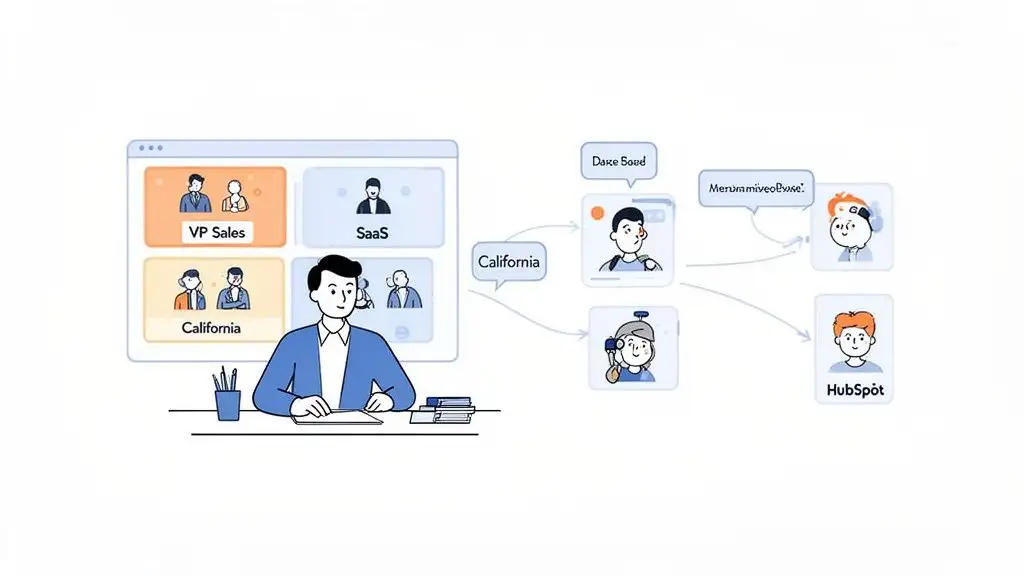
This is where you can get really creative. Start layering different data points to build your perfect customer profile. The true power of data enrichment tools is in connecting these dots.
-
Firmographics: Go beyond just company size. Target all B2B SaaS companies in California with 50-200 employees.
-
Technographics: Get nerdy with their tech stack. Find every company using HubSpot and Salesforce but not your competitor's tool.
-
Buying Signals: This is the secret sauce. Layer on timely events, like companies that just scored Series B funding or are actively hiring for sales roles.
This level of detail transforms your Total Addressable Market (TAM) from a giant, intimidating ocean into a series of small, manageable ponds, all stocked with your ideal fish.
For example, imagine creating a segment for "VPs of Sales at FinTech companies in New York that use Outreach and recently hired a new Head of RevOps." Now that's a list you can write a killer email to.
Crafting Outreach That Actually Gets Replies
Once you've got your razor-sharp segment, you can write outreach that doesn't scream, "Hello, I am a template!" Enriched data gives you the context you need to break the ice with something relevant, turning a cold shoulder into a warm conversation.
It’s time to retire "Hope you're having a great week!" and lead with something that shows you've done your homework. Buying signals are perfect for this.
-
For a recent job change: "Hey Sarah, congrats on the new Director of Marketing role at Acme Inc! Usually, when a new leader steps in, they're looking to make a quick impact. Have you started thinking about your tech stack for Q3?"
-
For a funding announcement: "Hi Mark, saw the news about your $20M Series A, that's huge! I imagine keeping your cloud infrastructure efficient is a top priority as you scale the engineering team."
-
For a new technology adoption: "Hello Alex, noticed on your site you just implemented Intercom. We have a great integration that helps teams like yours automate customer support follow-ups."
These openers work because they're based on a real event in your prospect's world. You immediately position yourself not as just another salesperson, but as an informed peer who gets their situation. Building sequences like this is easier than you think, and you can learn more by checking out our guide on how to create workflows that convert.
Fueling a Multi-Touch Sales Cadence
One personalized email is good. But a full multi-touch sequence powered by enriched data? That’s where the real pipeline is built. This info can and should fuel every single step of your outreach.
There's a reason the market for these tools is exploding; projections show it's set to hit USD 12.3 billion by 2033. This growth is all about AI and machine learning delivering better data, leading to incredible results like a 22% boost in conversions when using detailed profiles for outreach. You can read the full research about data enrichment trends on datahorizzonresearch.com.
Here’s what that looks like in a real-world, multi-touch cadence:
-
Day 1 (Email): Send that hyper-personalized email based on their buying signal.
-
Day 2 (LinkedIn): Connect with a quick note referencing your email. "Hey, just sent a note about your recent funding. Congrats again!"
-
Day 4 (Call): Pick up the phone. You already have your opening line. "Hi, this is Dave. I sent you a note the other day about your new role..."
-
Day 7 (Email): Follow up with pure value, like a case study from another company in their industry (which you know from their enriched profile).
This isn't just activity for the sake of activity. It’s a smart, coordinated approach that uses data to build familiarity and prove your value at every turn. That’s a sequence that's pretty tough to ignore.
Your Burning Questions About Data Enrichment, Answered
Alright, we've walked through the top players, but I bet you still have a few questions rattling around. Let's clear the air and tackle the most common things sales pros ask about data enrichment.
So, What's This Going to Cost Me?
Ah, the million-dollar question. Pricing for these tools is all over the map, honestly. Think of it like buying a car: you can get a reliable sedan or a tricked-out sports car, and the price tags will be wildly different.
Some tools have starter plans that kick off around $49 per month, which is a fantastic entry point for a small, scrappy team or a solo founder trying to make some noise. On the flip side, enterprise-grade platforms can easily climb into the thousands each month, often with an annual contract attached.
The final price usually boils down to how many seats you need, how many contacts you plan to enrich (your "credits"), and whether you want the fancy bells and whistles like real-time updates and deep API access. The trick is to find a plan that can scale with you, not one that forces you into a budget built for a Fortune 500 company.
Is This Stuff Even Legal with GDPR and CCPA?
This is a big one, and for good reason. The short answer? Yes, the legitimate providers are absolutely compliant. The top-tier data enrichment companies aren't just winging it; they have entire teams dedicated to navigating the tangled web of privacy laws.
They stick to publicly available information, data from trusted partners, and community-verified sources to build their databases. This keeps them on the right side of regulations like GDPR in Europe and CCPA in California.
But here's the catch: the responsibility doesn't end with them. It's on you to pick a vendor who is upfront about where their data comes from and how they stay compliant.
Think of it like hiring a contractor for your house. You're trusting them to follow the building codes so your house doesn't fall down. You have to do your homework and pick someone you trust not to steer you into a regulatory nightmare.
How Does This Actually Plug Into My CRM?
This is where the magic happens, and it's usually surprisingly painless. Most modern data enrichment tools are built from the ground up to connect seamlessly with giants like Salesforce and HubSpot. The integration is often as simple as installing a native app or copying and pasting an API key.
Once you're hooked up, you can put the tool to work in a few ways:
-
On-the-Fly: Enrich a single contact right when you need the info.
-
The Big Cleanup: Grab an entire list of dusty old leads and give them a fresh coat of paint all at once.
-
Set It and Forget It: Create rules that automatically enrich and update any new leads that hit your CRM in real time.
The best integrations just purr away in the background, making sure your data is always on point without you even thinking about it.
Realistically, How Accurate Is This Data?
Let’s be real. If a provider promises you 100% accuracy, you should run for the hills. They're probably also selling snake oil. Business data goes stale faster than a loaf of bread left on the counter because people switch jobs, companies rebrand, and phone numbers change. It's just a fact of life.
With that said, the best-in-class tools get incredibly close. By cross-referencing multiple sources and using a mix of AI and human verification, they can hit accuracy rates of over 95% for emails. When you're vetting a tool, dig into how they verify their data. The more rigorous their process, the more you can trust what they give you.
Ready to stop guessing and start selling with data you can actually rely on? Munch combines high-intent lead discovery with waterfall enrichment to deliver verified contacts right to your fingertips. See how our all-in-one platform can supercharge your outreach by clicking here.