Lead Generation For SaaS: A Modern Playbook

By Mriganka Bhuyan
•Founder at Munch

The old playbook for SaaS lead generation is about as effective as sending a fax. Too many teams are still clinging to a "spray and pray" model that feels more like yelling into the void than actually building a predictable revenue machine. This guide is all about a smarter approach: ditching the wide, sloppy net for a finely tuned sonar that finds buyers who are actually ready to talk.
Your SaaS Lead Generation Needs a Glow Up
If your current strategy is built on buying a massive, questionable list and blasting out generic emails, you’re not just wasting time. You're actively trashing your brand's reputation. It’s the sales equivalent of showing up to a party you weren't invited to and trying to sell everyone insurance. Awkward.
The modern B2B buyer is more informed, more skeptical, and has a much, much lower tolerance for noise. They don't move through a neat, predictable funnel anymore. They bounce from a LinkedIn post to a G2 review, ask for opinions in a private Slack community, and then maybe, just maybe, they'll land on your website. Your strategy has to mirror this chaotic, non-linear journey.
From Volume to Value
The big mindset shift here is moving from a game of volume to a game of value. Instead of asking, "How many dials can we cram into an hour?" the better question is, "How many relevant conversations can we start today?" This requires a complete tear-down of the traditional process.
-
Nail Your Ideal Customer Profile (ICP): Go way beyond basic firmographics like company size and industry. For example, instead of just targeting "SaaS companies," you'd target "B2B SaaS companies with 50-200 employees that use Salesforce and just hired their first Head of Sales."
-
Hunt for Actionable Buying Signals: Keep your eyes peeled for events like a fresh funding round, a key executive hire, or a competitor's well-publicized service outage. These are the moments when your prospects are most open to change.
-
Orchestrate Multi-Channel Outreach: Don't just send an email. Weave together email, LinkedIn, and other channels to create a cohesive, context-aware sequence that feels personal, not robotic.
This whole process is about being smarter, not just louder. It's a simple, four-part flow: Define your ICP, find the signals, enrich the data, and then, and only then, start your outreach.
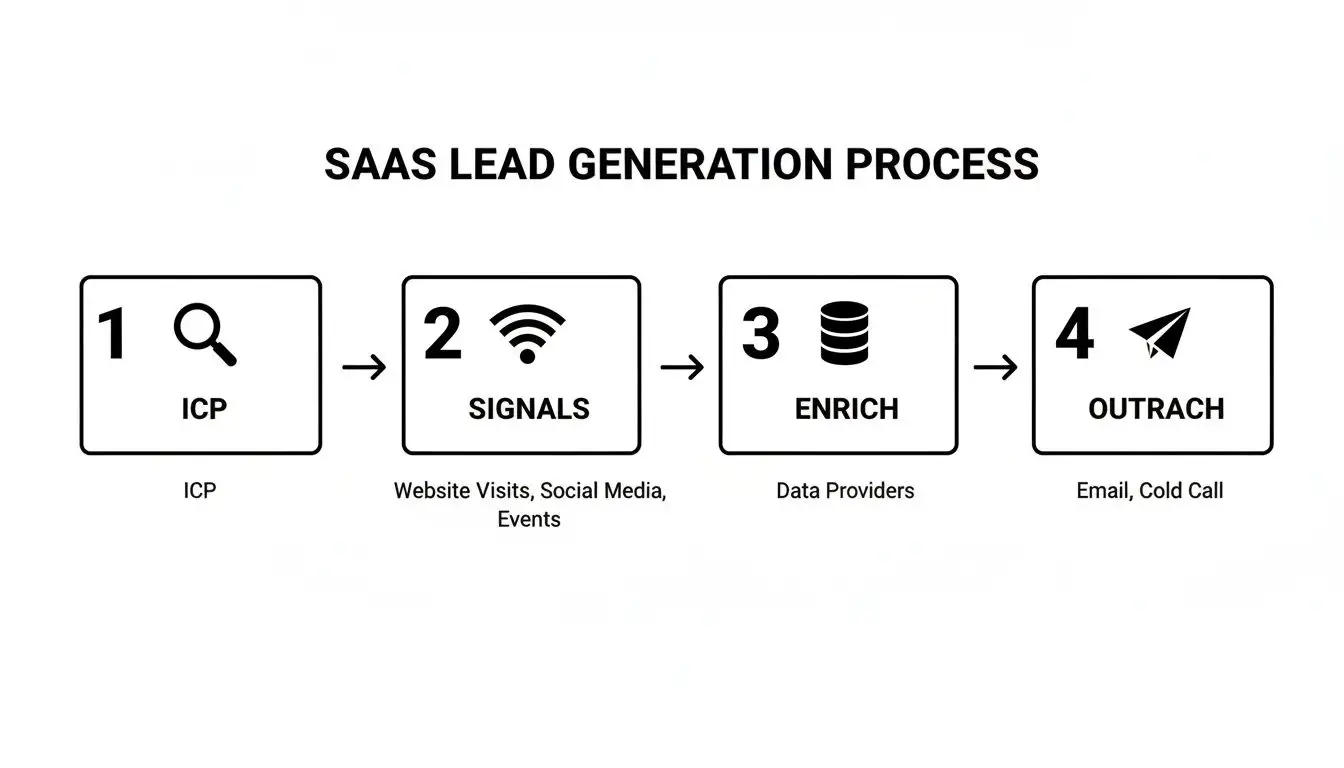
By sticking to these four pillars, you can stop chasing ghosts in your CRM and start engaging prospects who are genuinely ready to buy.
The biggest mistake in SaaS lead generation is treating it like a numbers game. It's a relevance game. Your ability to connect with the right person at the right time with the right message is your only sustainable advantage.
The Old Way vs The Smart Way in SaaS Lead Gen
To really drive this home, let's look at how the old, tired tactics stack up against a modern, signal-based approach. It’s a night-and-day difference.
| Tactic | The Old Way (Spray and Pray) | The Smart Way (Signal-Based) |
|---|---|---|
| List Building | Buying static, stale lists of thousands of unqualified contacts. | Building dynamic lists based on real-time buying signals (e.g., job changes, tech stack updates). |
| Targeting | "Anyone with a pulse in the tech industry." | Hyper-focused on a narrow ICP that perfectly matches your solution. |
| Messaging | Generic, "me-focused" templates that get instantly deleted. | Personalized outreach that references a specific trigger event or pain point. |
| Channels | Blasting the same message on email over and over. | A coordinated multi-channel sequence (email, LinkedIn, etc.) that builds familiarity. |
| Measurement | Vanity metrics like open rates and total emails sent. | Revenue-focused metrics like meetings booked, pipeline generated, and win rates. |
Seeing it laid out like this, the choice is pretty clear. The old way is a recipe for burnout and brand damage. The smart way is how you build a pipeline you can actually count on.
Even with this laser-focused approach, email remains a cornerstone of any solid outreach strategy. In fact, research shows that nurtured leads can make 47% larger purchases, and a good email program can deliver an incredible ROI of $36-42 per dollar spent. It’s no wonder that 88% of businesses still rely on it. A well-crafted plan is absolutely essential, and you can explore more lead generation strategies to build a truly robust playbook.
Forget 'Marketing Mike': Let's Define Your Actual Ideal Customer
Before you can even think about a pipeline bursting with qualified leads, you have to get brutally honest about who you’re looking for. This is where most SaaS lead gen efforts go to die. Teams either blast everyone with a pulse or create a uselessly vague persona named 'Marketing Mike' who apparently enjoys long walks on the beach and reads Forbes on weekends.
Spoiler alert: Mike isn't real, and he sure as hell isn't buying your software.
Let's ditch the fluff. Building a truly effective Ideal Customer Profile (ICP) isn't guesswork; it's a forensic investigation. You’re hunting for hard evidence, data-driven patterns, and specific traits that define your absolute best-fit customers. This isn't about being creepy, it's about being hyper-relevant. The whole point is to stop wasting time and focus only on companies with the exact problems you solve.
Beyond the Basics and Into the Good Stuff
Your investigation starts with the obvious clues: firmographics. These are the basic, easy-to-find facts about a company. Think of them as the file you pull before the real interrogation begins.
-
Industry: What specific verticals see the most value? Don't just say "tech." Get granular. Is it FinTech? HealthTech? B2B SaaS that sells to other B2B SaaS?
-
Company Size: How many employees are on the payroll? This is a great proxy for budget, organizational complexity, and how painful their buying process will be.
-
Geography: Where are they based? This matters for sales territories, compliance headaches, and even just knowing what time zone they're in.
-
Revenue: Are you chasing bootstrapped startups or publicly traded giants? Annual revenue is a solid indicator of their ability to pay you.
But here’s the thing: firmographics only tell you who a company is. They tell you nothing about what they're doing or, more importantly, what they need. To get the full story, you need to layer on two more critical dimensions of data.
Digging Deeper with Tech Stacks and Buying Signals
This is where your ICP goes from a blurry sketch to a 4K portrait. Technographics reveal the specific technologies a company already uses. If your product is a killer HubSpot integration, knowing which companies are already paying for HubSpot is, well, pretty damn important. This data uncovers compatibility, flags potential pain points with their current stack, and signals how much they're willing to invest in new tools.
Even better are the intent signals. These are the digital breadcrumbs companies leave all over the internet, basically screaming, "We are in the market for a solution right now." They're the Bat-Signal for a sharp sales rep.
Keep your eyes peeled for high-intent signals like these:
-
Recent Funding Rounds: A fresh pile of cash means they're ready to scale, and scaling requires new tools.
-
Key Executive Hires: A company just hired its first-ever "VP of Sales"? They're a prime target for a CRM. A new "Head of RevOps"? They're almost certainly evaluating automation and analytics platforms.
-
Negative Competitor Buzz: Did a rival just announce a massive price hike or suffer a major outage? Their angry customers are now your best prospects.
-
High Growth in Key Departments: If a company is hiring software engineers like crazy, they probably need a better project management tool or a new security solution.
For a clearer picture, here’s a look at how a platform like Munch flags these exact kinds of trigger events.
This dashboard doesn’t just show you a company; it pinpoints the specific event, a new key hire, that makes them a perfect prospect to contact today.
The real secret to SaaS lead gen isn't finding more leads. It’s about finding the right leads at the right time. Intent signals are your crystal ball, showing you who’s ready for a conversation before they’ve even started looking.
When you combine all three layers (firmographics, technographics, and intent signals) you build an ICP that’s both dynamic and actionable. You're no longer chasing static, outdated lists. Instead, you’re engaging with businesses that are actively showing signs of pain and a readiness to buy.
This targeted approach is the bedrock of a predictable sales motion, which is crucial when you're learning how to build a sales pipeline that actually closes deals. At the end of the day, this level of precision means your sales team spends its time having meaningful conversations, not just shouting into the void.
From Signals to Sign-ups: Building a Prospect List That Actually Works
Alright, you’ve nailed down your ideal customer and you know exactly which buying signals light up like a Bat-Signal. Fantastic. Now for the part where most sales dreams go to die: actually finding the people.
Nothing kills momentum faster than an email list that bounces harder than a rubber ball. This is where data enrichment saves the day. It’s the magic of taking a basic profile, like that new CTO at a company that just installed a complementary tech, and layering on the rich, verified contact details you need to have a real conversation.
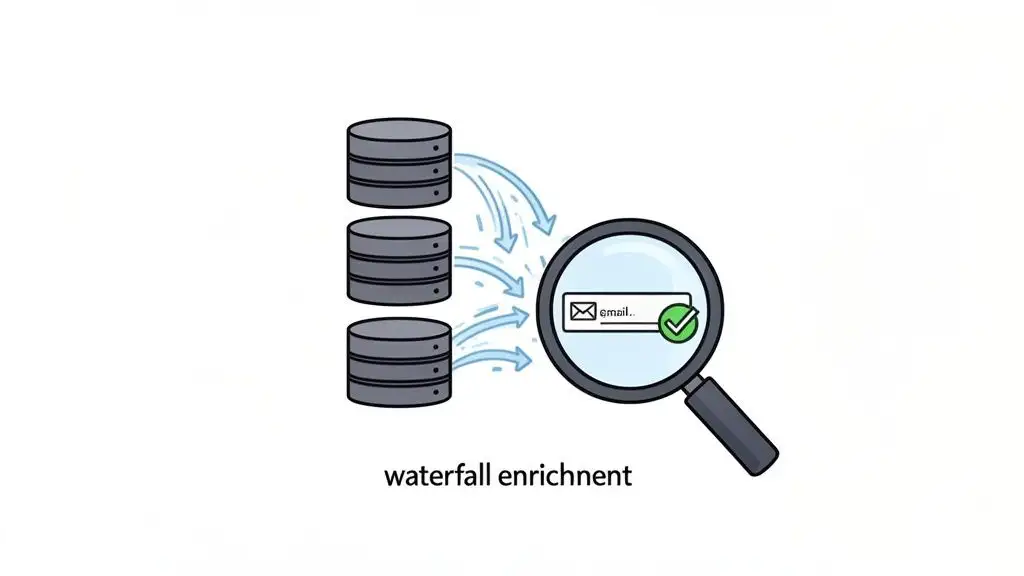
The Secret Sauce: Waterfall Enrichment
The smartest way to handle this is with a technique called waterfall enrichment. It sounds fancy, but the concept is brilliantly simple.
Imagine you need to find out where the after-party is. You text Friend A. No reply? You immediately text Friend B, then Friend C, until someone finally sends you the address. That’s a waterfall.
In the sales world, it’s an automated, sequential hunt for the best data:
-
First, your system pings its top-tier, most reliable data provider to find that CTO’s contact info.
-
If that comes up empty or the data looks sketchy, it automatically moves to the next provider in the chain. No questions asked.
-
This cascade continues down your list of data sources until it snags a verified, deliverable email and phone number.
This automated "waterfall" is a total game-changer. It jacks up your chances of finding the right contact info, often pushing email accuracy above a stunning 95%. Think of all the soul-crushing hours your team saves by not having to manually dig through LinkedIn or guess email formats.
Pro Tip: You can use Munch to enrich your lead data in a waterfall motion.
Why You Can’t Afford to Mess This Up
Chasing down contacts is a grind, but the penalty for getting it wrong is steep. Every bounced email is a tiny dagger to your domain’s reputation.
Seriously. Email providers like Google and Microsoft are watching. Send too many duds, and they start flagging your entire domain as spam. It’s like getting a bad credit score for your sales team. Once your reputation is shot, even your perfectly crafted emails will get dumped in the junk folder. Your outreach efforts become worthless.
The quality of your prospect list is a direct reflection of the quality of your outreach. A clean, enriched list doesn't just improve deliverability; it gives your sales team the confidence to execute their plays without worrying if they’re shouting into a digital void.
By investing in a solid enrichment process, you’re not just buying data. You’re buying deliverability, protecting your brand, and giving your messages a fighting chance. If you're looking for the right platform, you can explore a variety of lead enrichment tools to find a fit for your stack.
What a Killer Enrichment Process Gets You
A top-notch enrichment process delivers way more than just an email address. It builds a complete, 360-degree view of your prospect, arming your reps with the intel they need to stop sounding like robots.
Here’s the kind of gold a robust waterfall enrichment process can dig up:
-
Verified Contact Info: We're talking direct-dial phone numbers and corporate emails with sky-high deliverability.
-
Deep Firmographics: Accurate employee counts, revenue estimates, industry codes, and office locations.
-
Key People Details: Job titles, seniority levels, and LinkedIn profiles for the actual decision-makers.
-
The Technographic Holy Grail: A snapshot of their current tech stack, revealing juicy integration opportunities or a competitor’s weak spots.
Armed with this kind of detail, your team can finally stop guessing. They can reference a prospect’s tech stack, congratulate a new hire, and tailor their pitch to a company’s specific reality. And that’s how you turn a cold outreach into a warm, relevant conversation.
Writing Outreach That Actually Gets Read
So you've built the perfect prospect list. A thing of beauty. But here's the cold, hard truth: that list is totally worthless if your outreach sounds like it was written by a sleepy robot on a Monday morning.
A generic, "Hey, I saw your company does X..." email is the digital equivalent of junk mail. It goes straight into the trash folder, and you’ve just wasted a perfectly good lead.
The real game isn't just about outsmarting the spam filter. It's about bypassing the prospect's internal "this is a generic template" filter. We need to craft messages so sharp and relevant they feel like they were written for an audience of one. This is where we go way beyond just plugging in a {FirstName}.
Ditch the Generic Guesses for Signal-Based Hooks
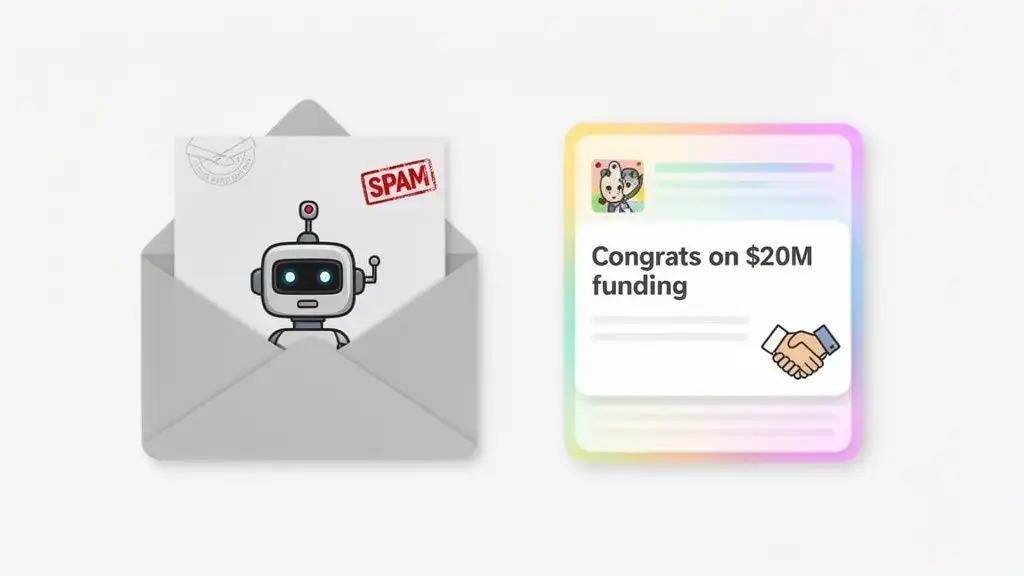
Remember those buying signals we worked so hard to find? That's your secret weapon. Instead of opening with some vague compliment, lead with the exact event that put them on your radar. This instantly shows you've done your homework and aren't just machine-gunning a list of 10,000 strangers.
The difference is night and day.
-
The Bad: "Hi Sarah, I noticed you're the VP of Engineering at a fast-growing tech company. I’d love to show you how our platform can help." (Yawn. Delete.)
-
The Good: "Hi Sarah, Congrats on the recent $20M funding round! As you scale the engineering team for those new roadmap goals, our platform helps automate cloud security, just like we did for [Similar Company]."
See? The second one hits different. It's grounded in a real, timely event. It proves you understand their world and frames your solution as the answer to a problem they're actually facing right now. It’s not a cold email; it’s the start of a smart conversation.
The Anatomy of a Can't-Ignore Message
A great outreach message, whether it’s an email or a LinkedIn note, has a few essential ingredients. Think of it less like a rigid template and more like a recipe you can riff on.
-
The Signal-Based Hook: Kick things off by referencing that specific buying signal. This is your "why you, why now" moment.
-
The Problem Hypothesis: Draw a direct line from that signal to a probable pain point. For example, a big funding round means hiring headaches, and a new CMO means they're probably itching to review the marketing stack.
-
The Value Prop Punch: Quickly explain how you solve that specific problem. Keep it short, sweet, and focused on the outcome, not the nerdy features.
-
The Credibility Drop: Casually mention a similar company you've helped or a killer stat. This tells them you're the real deal and lowers their perceived risk.
-
The Low-Friction CTA: End with a simple, easy next step. For the love of all that is holy, avoid the dreaded "Got 15 minutes to chat?" Instead, try an interest-based question like, "Is automating cloud security a priority for you folks this quarter?"
Personalization isn't just using their name. It's showing you get their world. The best outreach makes your prospect feel seen and understood, not just targeted.
Never, Ever Stop Testing
In SaaS lead gen, assumptions are the most expensive things you can own. You might think your clever subject line filled with movie quotes is pure genius, but if no one opens it, it’s just a failed stand-up routine dying in their inbox. This is why A/B testing is completely non-negotiable.
You should be pitting every part of your outreach against each other, cage-match style.
-
Subject Lines: Test a direct, benefit-driven line against a more personal, question-based one.
-
Calls to Action: Which gets more replies: an interest-based question or a direct ask for a meeting?
-
Message Length: Does a short, punchy message beat a slightly longer one that includes a mini-case study?
Every single send is a data point. Over time, you’ll trade your gut feelings for a rock-solid playbook on what actually gets your ideal customer to hit "reply."
Of course, all this outbound wizardry is just one side of the coin. It’s crucial to remember the inbound side of the house, too. When you pair targeted outreach with great content marketing and SEO, you create an unstoppable force. Companies that consistently publish high-value content can pull in 300% more leads. Plus, for 35% of sales teams, SEO delivers the highest-quality leads of any channel. We’re talking the difference between a 1.7% close rate for outbound and a much tastier 14.6% for leads coming from search.
And hey, remember that all your clever personalization and relentless testing mean nothing if your emails end up in the spam folder. To make sure you’re always landing in the primary inbox, check out our guide on how to improve email deliverability. Nail both the strategy and the technicals, and you’ll have an outreach machine that not only gets seen but gets results.
It's Go-Time: Running Your Sales Plays and Tracking What Actually Matters
Alright, let's get down to business. You've done the hard work: you've got a killer prospect list humming with intent signals, and your outreach templates are ready to roll. Now, we execute. This is where we weave everything together into a multi-channel sequence that builds real momentum, not just digital noise.
Think of this part less like a one-off campaign and more like a carefully choreographed dance. You aren't just blasting emails into the void and hoping something sticks. You're creating a series of well-timed, interconnected touches across different platforms. The whole point is to build familiarity and relevance. When your name finally pops up in their inbox, they don't see a total stranger; they see someone who's already been on their radar.
Mapping Out Your Multi-Channel Sequence
Just firing from the hip won't cut it. You need a structured sales play, a game plan that guides your actions over a specific period. This creates a predictable rhythm and makes sure no high-intent lead ever falls through the cracks. It's the difference between a calculated strategy and just winging it.
Let's walk through a sample sequence. This is a 10-touch play spread over 21 days, designed to be persistent without driving anyone crazy.
-
Day 1: LinkedIn Profile View. That's it. Simple, subtle. You’re just a blip on their screen. It’s the digital equivalent of making eye contact across the room before you walk over.
-
Day 2: Personalized Connection Request. Send a brief, non-salesy request on LinkedIn. A quick mention of a mutual connection or something they recently posted goes a long way.
-
Day 4: The First Email. Now you land in the inbox. This is your signal-based message, the one that references that funding round or new C-level hire. Keep it short, sweet, and focused on one clear call to action.
-
Day 7: Engage on LinkedIn. Drop a thoughtful comment or a "like" on one of their posts. Again, it’s all about building that familiarity.
-
Day 9: Follow-Up Email. A short, friendly nudge on your first message. Maybe you add a little extra value, like a link to a relevant case study.
-
Day 12: Another LinkedIn Profile View. Just a gentle reminder that you exist.
-
Day 14: The Second Follow-Up Email. This one can be a bit more direct. Reiterate the problem you solve and ask a clear, interest-based question.
-
Day 17: LinkedIn Message. If you're connected, now's the time for a quick message referencing your email. Something casual like, "Hey, just sent a note your way..." works wonders.
-
Day 21: The Breakup Email. A final, friendly email that closes the loop. Acknowledging they're busy and backing off is surprisingly effective at getting responses.
This kind of structure provides a framework for consistent action, turning your SaaS lead generation efforts into a repeatable, scalable process.
Stop Chasing Vanity Metrics—Track What Counts
Here’s the part that separates the pros from the amateurs: measuring what actually matters. Far too many sales teams get obsessed with vanity metrics. Open rates? Clicks? They're like getting a "like" on your prom picture from a distant aunt. It feels nice, but it doesn't mean you're getting a date.
In sales, activity is not achievement. The only metrics that can pay the bills are the ones that directly correlate with revenue. Everything else is just noise.
Your dashboard shouldn't be a cluttered mess of feel-good numbers. It needs to be a ruthless, honest scoreboard tracking the KPIs that build a predictable pipeline.
Seriously, just focus on these three things:
-
Positive Reply Rate: What percentage of prospects are actually responding with interest? This is the purest signal you have for whether your messaging is hitting the mark.
-
Meetings Booked: How many of those positive replies are turning into actual demos or discovery calls on the calendar? This tracks your ability to turn a flicker of interest into a real conversation.
-
Pipeline Generated: What's the total potential deal value of the opportunities you've created? This is the number your CEO and your board actually care about.
When you zero in on these metrics, you can diagnose problems in a snap. A low reply rate means your messaging or targeting is off. A high reply rate but no meetings means your call to action is weak or your follow-up is fumbled. This laser focus helps you double down on what works and kill the duds without mercy.
Understanding how to weigh these signals is a core part of building a solid system. If you want to dive deeper into evaluating prospect actions, check out these lead scoring best practices. This data-driven approach is what truly separates a modern SaaS lead generation engine from just a series of hopeful, one-off campaigns.
Got Questions? Let's Get Them Answered
Diving into this modern, signal-based world of lead generation for SaaS can feel like you just traded in your trusty old car for a spaceship. It's exciting, a bit overwhelming, and you probably have a few questions before you hit the "launch" button. Let's clear up some of the most common ones.
So, How Long Until I See Real Results?
This isn't one of those instant-ramen-for-sales kind of deals, but you're also not planting a tree and hoping for shade in ten years. While you can absolutely start booking meetings in the first few weeks, building a repeatable, predictable engine takes a minute to warm up.
Think of it as a 60-90 day runway to get this plane properly off the ground.
-
Your First 30 Days: This is all about laying the groundwork. You're locking in your ICP, pulling together your first lists based on those juicy intent signals, and firing off the initial outreach sequences. It's pure setup and launch.
-
The Next 30-60 Days: Welcome to the lab. Now you’re collecting data and seeing what actually works in the wild. Which messages get replies? Which signals consistently lead to great conversations? This whole period is about tweaking, testing, and iterating.
-
By Day 90: The fog should have cleared. You ought to have a solid grasp on your conversion rates, from spotting a signal to booking a meeting and pushing it into the pipeline. This is the point where you can start making forecasts that aren't just wishful thinking.
It’s a marathon, not a sprint, for sure. The upside? You’re in the driver’s seat. You control the inputs and can adjust your strategy way faster than, say, waiting for Google to notice your blog.
What's More Important: Lead Quality or Lead Quantity?
Quality. Always. It’s not even a fair fight.
Chasing a massive list of names is like boasting about how many ingredients you have in your kitchen instead of what you can actually cook. A laser-focused list of 100 prospects who are the perfect fit and are showing real buying intent is a million times more valuable than a stale, generic list of 10,000 contacts you scraped from who-knows-where.
The biggest mental shift you can make for efficient SaaS growth is to obsess over lead quality, not quantity. It cuts out the noise, protects your brand from looking spammy, and leads directly to more closed-won deals.
When you put quality first, you stop being an interruption and start becoming a helpful expert. Your sales reps have better conversations, your close rates climb, and you avoid getting a reputation that's as annoying as the dial-up modem sound from 1998. The whole point of using buying signals is to force this very focus on quality, which is the real secret to scaling smart.
Can a Small Team or Even a Solo Founder Actually Pull This Off?
You bet. In fact, this hyper-targeted, signal-driven playbook is practically built for small teams and solo founders. It's the ultimate David vs. Goliath slingshot.
Think about it. You don't need a huge team of reps carpet-bombing the market. Instead, a single person can use a smart, unified platform to automate the most soul-crushing parts of the job. For instance, tools can help find the right leads, enrich their data, and even craft personalized outreach.
By zeroing in on a smaller, more potent list of prospects who are actively looking for a solution, you can jump straight to meaningful conversations. You get to punch way, way above your weight class, competing with the big guys without needing their headcount or budget. It’s all about working smarter, and letting technology handle the grunt work. This is exactly how you build a scalable engine for lead generation for SaaS, even if you’re starting from scratch.
Ready to stop chasing ghosts and start engaging buyers who actually want to talk? Munch brings lead discovery, data enrichment, and AI-powered personalization together in one place, so you can build a predictable pipeline without the manual headache. Find your next customer today.