12 High Impact B2B Lead Generation Strategies for 2026

By Mriganka Bhuyan
•Founder at Munch

The modern sales floor isn't about blasting a million generic emails and hoping for a reply; it’s about precision, intelligence, and finding prospects who actually want to hear from you. The difference between hitting your quota and hitting the 'unsubscribe' button is knowing which lead generation strategies cut through the digital noise. Forget the old playbook that feels as outdated as a dial-up modem. Your buyers are smarter, your competition is faster, and your CRM is probably full of more ghosts than the Haunted Mansion.
This isn't another article filled with vague advice like "be authentic" or "add value." We're not serving platitudes here. Instead, this is a tactical roundup of 12 battle-tested B2B strategies that combine smart data, clever outreach, and a little bit of digital wizardry. We will show you exactly how to implement them, what to measure, and how to use modern tools to turn faint buying signals into closed deals. Think less 'Glengarry Glen Ross' and more 'The Matrix': it's time to see the code behind the prospects.
From pinpointing buyers showing active intent to leveraging job changes and funding events, each strategy is a self-contained playbook. You'll learn how to build hyper-personalized email sequences, master LinkedIn without being spammy, and launch targeted Account-Based Marketing campaigns that get results. We're getting straight to the point with actionable steps, real-world examples, and the specific KPIs you need to track. So, grab your coffee. It's time to stop chasing phantoms and start engaging real, qualified leads. Let's get started.
1. Intent-Based Lead Scoring
Tired of chasing leads who treat your emails like a U2 album on their iPhone: unwanted and automatically deleted? Intent-based lead scoring is your secret weapon. It ditches vanity metrics like email opens and instead focuses on external buying signals, acting like a psychic for your sales pipeline. This strategy analyzes real-world actions, such as a target company receiving new funding, hiring for a key role, or switching up their tech stack.
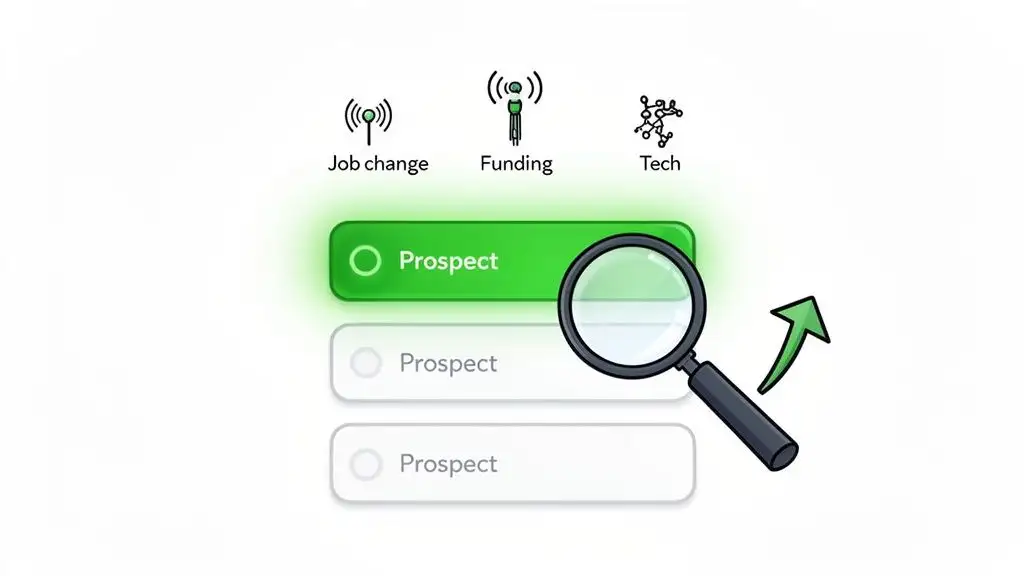
Think of it as the difference between someone window-shopping and someone walking into a store with a fistful of cash. Platforms like Munch monitor these digital footprints, allowing you to prioritize prospects who are actively looking for a solution right now. Instead of guessing, you’re engaging with precision.
How to Implement It
-
Combine Your Triggers: Don't just rely on one signal. For example, if you sell HR software, create a potent scoring cocktail by combining triggers like a recent Series B funding round, a new Chief People Officer hire, and a spike in online research about your competitors. This multi-layered approach gives you a much clearer picture of genuine intent.
-
Set Up Automated Alerts: Use sales intelligence tools to get real-time notifications for these high-intent triggers. When a prospect’s intent score skyrockets, your team should be the first to know, enabling rapid, relevant outreach before your competition even wakes up.
-
Sync with Your CRM: Integrate intent data directly into your CRM. This creates a single source of truth, empowering your entire sales team with the context they need to personalize their approach and have more meaningful conversations. For a deeper dive into optimizing your system, explore these lead scoring best practices.
2. Email Outreach with Personalization
Still using email templates so generic they sound like a Nigerian prince asking for a small loan? It’s time to upgrade. Personalized email outreach is the difference between a thoughtful, handwritten letter and a flyer you find stuck under your windshield wiper. This strategy uses prospect research, company data, and buying signals to craft messages that feel like they were written by a human, not a robot having a bad day.
Think of it as the B2B equivalent of your favorite barista remembering your ridiculously complex coffee order. Tools like Munch use AI to generate hyper-personalized email sequences, while platforms like Outreach.io and Salesloft help you scale that one-to-one feeling across your entire pipeline. Instead of a mass blast that screams "I bought your email address," you're starting a genuine conversation based on real context, making it one of the most effective lead generation strategies available.
How to Implement It
-
Lead with Hyper-Personalization: Ditch the "Hi [First Name]" and call it a day. Reference a specific buying signal in your opening line, like "Saw your company just launched a new integration with Salesforce…" or "Congrats on the recent promotion to Head of Sales." This shows you've done your homework.
-
Automate, Don't Abdicate: Use AI-powered tools to generate personalized drafts, but always give them a final human review. The goal is to combine the speed of automation with the nuance and authenticity of a personal touch.
-
Focus on Deliverability: A perfectly crafted email is useless if it lands in spam. Use tools to ensure you have 95%+ verified email addresses and follow best practices to keep your sender reputation pristine. For a full breakdown, you can explore how to improve email deliverability.
-
Follow-Up with a Purpose: Most replies happen after the first email. Plan a 5 to 7-step follow-up sequence that offers new value in each message. For instance, your first follow-up could share a relevant case study, the next could ask a different question, and a third could reference another trigger event you noticed.
3. LinkedIn Prospecting and Engagement
Still treating LinkedIn like a dusty digital resume you only update during a quarter-life crisis? Big mistake. It's a goldmine for direct B2B prospecting, a virtual town square where your ideal customers are actively discussing their pain points. Forget cold calling into the void; this strategy is about building genuine connections with decision-makers through strategic outreach, content engagement, and personalized messaging.
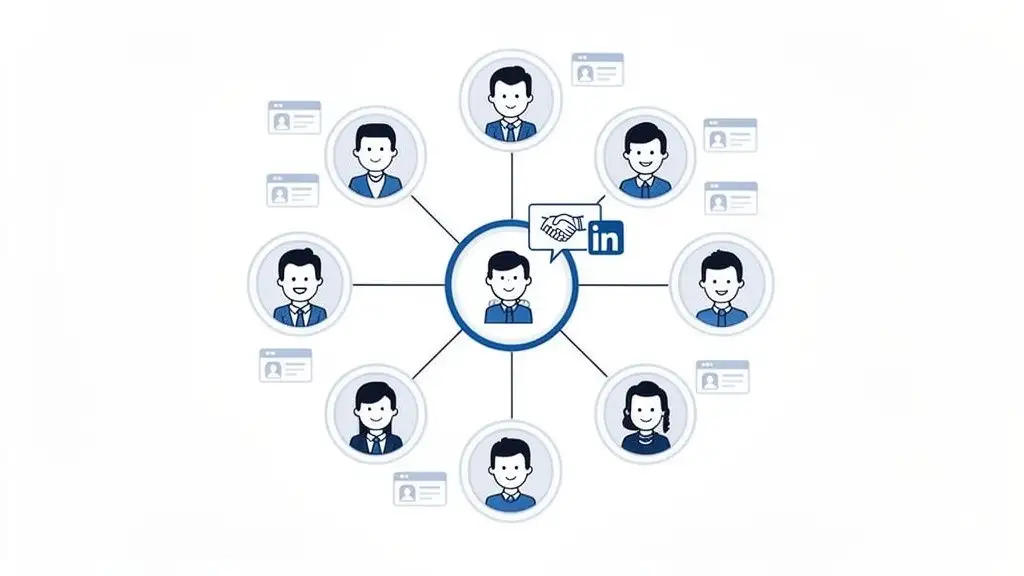
This is more than just smashing the "connect" button. It's about using tools like LinkedIn Sales Navigator to find prospects who fit your ideal customer profile with laser precision. By engaging with their content and sending value-first messages instead of a sales pitch, you transform from an annoying interruption into a welcome expert. It’s one of the most effective lead generation strategies for B2B sales teams who want to build real relationships.
How to Implement It
-
Customize Your Connection: Never send a generic connection request. Reference a recent post they shared, a mutual connection, or a buying signal like a recent job change. A simple, "Hey [Name], saw your company just launched X, impressive stuff!" is a thousand times better than the default.
-
Warm Up Before the Pitch: Don't slide into the DMs with a hard sell. For example, if your target prospect posts an article about marketing automation, leave a thoughtful comment asking a follow-up question. Do this for a few days to build familiarity before sending a connection request.
-
Combine with Email: Create a powerful multi-channel sequence by combining LinkedIn messages with targeted emails. This approach increases your touchpoints without being spammy, keeping you top of mind. For a full playbook, check out these advanced techniques for prospecting on LinkedIn.
4. Account-Based Marketing (ABM)
Account-Based Marketing (ABM) flips the script where instead of marketing to the masses, ABM treats each high-value target account as its own market. It’s less like a shotgun blast and more like a sniper strike, aligning your sales and marketing teams to deliver personalized, coordinated campaigns that speak directly to an entire buying committee.
Think of it as the B2B equivalent of assembling the Avengers. You’re not just talking to one hero; you’re engaging the whole team, from the C-suite decision-maker to the end-user, with a unified message. This approach is perfect for enterprise SaaS companies targeting Fortune 500 accounts, where platforms like Terminus and 6sense orchestrate multi-channel outreach that feels less like a sales pitch and more like a VIP consultation. This is one of the most effective lead generation strategies for high-ticket sales.
How to Implement It
-
Create Your 'Most Wanted' List: Don't try to boil the ocean. For example, a cybersecurity firm might identify 15 large financial institutions that are prime targets for their new fraud detection software. Focus on quality over quantity.
-
Map the Buying Committee: For each target account, build a detailed map of the key players. Identify everyone from the economic buyer (like the CFO) to the technical influencer (like the Head of IT Security). Use sales intelligence tools to find contact details and understand their roles and priorities.
-
Coordinate a Multi-Channel Attack: Align your outreach across different channels. For instance, time your personalized emails to the CFO to land shortly after the Head of IT Security engages with a targeted LinkedIn ad about fraud prevention. This synchronized approach reinforces your message and keeps you top-of-mind.
5. Data Enrichment and Verification
Ever tried to contact a lead only to find their email bounces back faster than a check at a rubber chicken convention? Data enrichment is your bouncer at the door of bad data, ensuring only high-quality, accurate information gets into your CRM. It’s the process of taking a basic lead (like a name and company) and beefing it up with verified contact details, firmographics, and tech stack information.
Think of it as giving your lead list a "Queer Eye" makeover. You start with a drab, incomplete profile and end up with a polished, confident contact ready for personalized outreach. Instead of wasting hours on manual research that feels like a digital scavenger hunt, you get a complete picture instantly. Platforms like Munch, ZoomInfo, and Apollo.io use advanced techniques to cross-reference and verify data, pushing your email accuracy rates to 95% or higher.
How to Implement It
-
Use Waterfall Enrichment: Don't settle for a single source of truth. A waterfall approach checks multiple data providers in sequence until it finds verified information, dramatically increasing your hit rate and accuracy. It’s the data equivalent of getting a second, third, and fourth opinion.
-
Verify Before You Send: Always run your contact lists through an email verification tool before launching a campaign. This simple step protects your sender reputation, improves deliverability, and stops you from shouting into the digital void.
-
Integrate and Automate: Connect your enrichment tool directly to your CRM. This creates an automated flow where new leads are instantly enriched, saving your team from soul-crushing manual data entry and ensuring everyone works with the same reliable information. To get started, you can explore these practical tips for how to find business emails.
Pro Tip: Use Munch to build your prospect lists with whatever filters you can imagine and then enrich their data in a waterfall motion.
6. Job Change Targeting
Ever notice how people get a new job and suddenly have the budget and authority to make big changes? It's like they've just been handed the Infinity Gauntlet of corporate spending. Job change targeting is one of the most powerful lead generation strategies because it catches decision makers at this exact moment of maximum influence and minimum loyalty to legacy vendors. They're looking to make a splash, and you can be the tidal wave they ride in on.
This strategy focuses on a potent buying signal: a key prospect starting a new role. They bring fresh eyes, new priorities, and often a mandate to shake things up. Since they are 5x more likely to switch vendors during these transitions, ignoring this signal is like leaving money on the table. Platforms like Munch, Apollo.io, and even LinkedIn Sales Navigator are your spotters for these career moves, letting you engage when your solution can become their first big win.
How to Implement It
-
Strike While the Iron is Hot: Timing is everything. Your goal is to be one of the first, most relevant messages in their new inbox. Set up automated alerts using a sales intelligence tool to track job changes within your target accounts and ideal customer profile. Aim to reach out within the first 30 days.
-
Frame the Transition as Your Angle: Don't just congratulate them. Directly connect their new role to your value proposition. A great opening line might be, "Saw you just started as the new VP of Marketing at [Company Name]. Typically, when leaders step into this role, one of their first priorities is fixing [common pain point]. Is that on your radar?"
-
Leverage Past and Present Context: Research their previous company and their new one. For example, if they used a competitor's product before, your outreach could be: "I see you used [Competitor] at your last company. We help VPs like you achieve [outcome] without the [known competitor weakness]." This shows you've done your homework and makes your outreach impossible to ignore.
7. Technology Adoption Tracking
Ever wish you could peek into a company's toolbox to see if they're using a rusty hammer when you're selling a brand new nail gun? Technology adoption tracking lets you do just that. It's like having a digital mole that tells you when a target account installs, uninstalls, or upgrades a specific piece of software. This strategy turns a company’s tech stack into a treasure map, leading you directly to prospects who are actively modernizing and open to new solutions.
Think of it like seeing your crush just broke up with their partner on Facebook. It’s a prime opportunity to swoop in. Platforms like BuiltWith, Clearbit, and Munch's technographic integrations monitor these digital changes, signaling that a company is either unhappy with a competitor or investing heavily in a new area. This is one of the most powerful lead generation strategies because it reveals a clear, present need.
How to Implement It
-
Track Complementary Tech: Focus on technologies that play well with your own. If you sell a marketing analytics tool, create a target list of companies that recently adopted HubSpot or Marketo. Your outreach can then be hyper-relevant, focusing on seamless integration and enhanced functionality.
-
Target Competitor Churn: Set up alerts for when a prospect uninstalls a direct competitor's software. This is a five-alarm fire of a buying signal. Your team can then engage immediately with a message like, "Saw you moved on from [Competitor]. We help companies like yours solve [problem] without the headaches."
-
Focus on Upgrade Cycles: Identify companies using outdated versions of key software in their stack. For example, a company still on an old version of Salesforce might be a perfect target for your new data migration tool, positioning your product as the upgrade they didn't know they needed.
8. Funding Event Prospecting
Is there a better buying signal than a company suddenly getting a boatload of cash? Targeting recently funded companies is less like prospecting and more like showing up to a party right after the host announces an open bar. These organizations have fresh capital, ambitious growth targets, and an urgent need for tools and services to scale effectively, making them prime targets for your lead generation strategies.
Think of a funding announcement as a giant, flashing neon sign that says, "We're buying!" Platforms like Crunchbase, PitchBook, and Munch's funding event detection are your VIP tickets to this spending spree. They allow you to pinpoint companies that have just closed a round, giving you a direct line to decision-makers with approved budgets and a mandate to grow, grow, grow.
How to Implement It
-
Time Your Outreach: The golden window is within the first 30-60 days of a funding announcement. Get in early while their strategic plans are still being finalized and budgets are being allocated. Hesitate, and you’ll be fighting for scraps with every other vendor.
-
Connect Funding to Pain: Don't just congratulate them. Do your homework. Read the press release or news articles to understand how they plan to use the funds. If they mention expanding their sales team, your pitch should focus on how you help new reps ramp up faster.
-
Target the Right People: New funding often means new hires and expanding departments. If a company announces funding to expand internationally, identify the newly hired VP of International Sales. They have problems to solve and the budget to do it.
9. Content-Driven Lead Generation
Are you still cold-calling prospects and getting the conversational equivalent of a dial tone? Content-driven lead generation flips the script. Instead of interrupting prospects, you create valuable resources that pull them into your orbit like a tractor beam. This strategy is about becoming the go-to expert in your niche, offering up ebooks, webinars, and case studies that solve real problems for your ideal customer.
Think of it as setting a delicious trap. You're not chasing people down; you're laying out a five-star meal of information, and they're happily giving you their contact details for a seat at the table. Companies like HubSpot built their empires on this exact principle, proving that one of the best lead generation strategies is to stop selling and start helping. By answering your audience's biggest questions, you build trust and capture leads who are already invested in finding a solution.
How to Implement It
-
Solve, Don't Sell: Create content that directly addresses your Ideal Customer Profile's (ICP) most painful challenges. A detailed whitepaper on "Reducing Customer Churn for B2B SaaS" is infinitely more valuable than a brochure about your software's features. Focus on their problems, not your product.
-
Gate Your Premium Goods: Offer high-value assets like in-depth guides, original research reports, or ROI calculators behind a simple form. This separates the curious from the committed, ensuring you collect contact information from prospects who are serious about finding a solution.
-
Amplify Across Channels: Don't just publish your content and pray for visitors. For example, promote your webinar on "AI in Sales" across LinkedIn, in targeted email newsletters to sales leaders, and in relevant industry forums. Then, repurpose the recording into blog posts, social media snippets, and a downloadable guide to maximize its reach.
10. Multi-Channel Sequencing
Still sending email after email and wondering why you’re getting ghosted harder than a first date who mentioned their crypto portfolio? Relying on a single channel is like trying to win a fight with one hand tied behind your back. Multi-channel sequencing is your full-contact sport, coordinating outreach across email, LinkedIn, and phone calls to create a surround-sound effect your prospects can’t ignore. It’s a strategic, persistent approach that respects their space while maximizing your visibility.
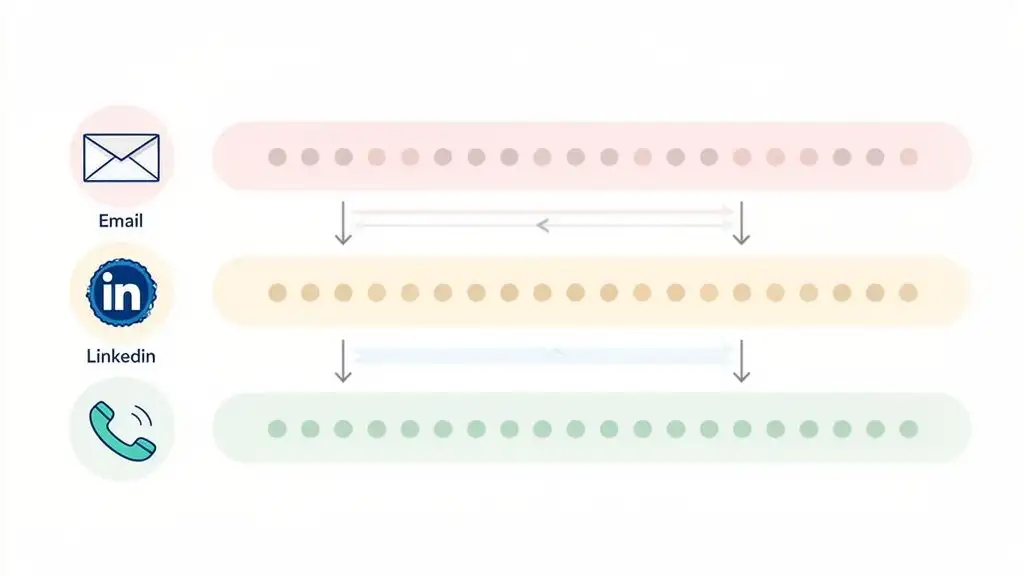
This isn’t about spamming people everywhere. It’s about creating a cohesive narrative. A prospect might ignore your email, but then see your LinkedIn connection request and a thoughtful comment on their post, which gives your next email the context it needs to get opened. Platforms like Munch, Outreach.io, and Salesloft automate these cadences, ensuring your messaging is timely, relevant, and consistently applied, turning your outreach from a solo act into a full orchestra.
How to Implement It
-
Vary Your Messaging: Don't just copy-paste your email into a LinkedIn message. A practical sequence might look like this: Day 1, send a personalized email. Day 3, send a short, conversational LinkedIn connection request referencing the email. Day 5, make a brief, value-driven phone call.
-
Space Your Touchpoints: Give your prospects room to breathe. Spacing your outreach every 3-5 days prevents you from looking desperate and gives them time to consider your message. Any less and you risk immediate burnout; any more and you risk being forgotten.
-
A/B Test Everything: Continuously test subject lines, opening hooks, and calls-to-action across all channels. One of the most effective lead generation strategies is learning what resonates with your audience and doubling down on it. For a deeper look at optimizing your outreach, check out these sales cadence best practices.
11. Competitor Customer Targeting
Ready to ethically poach your competitors' customers? This isn't corporate espionage; it's one of the smartest lead generation strategies out there. Competitor customer targeting is like being a talent scout at another team's championship game. You identify their star players (customers) who might be unhappy with their contract, underserved by the features, or simply ready for a change.
This strategy laser-focuses on a pool of prospects who are already solution-aware and have a budget allocated for your product category. You're not educating them from scratch; you're simply showing them a better way. Think of how Salesforce famously targeted legacy Oracle/SAP users or how Slack positioned itself against clunky internal email systems. You're entering a conversation that's already happening, armed with a superior alternative.
How to Implement It
-
Build Your Hit List: Use sales intelligence tools to identify companies using your competitor's tech stack. Look for firmographic data, case studies, and even job postings that mention their software. This gives you a clear, actionable list of accounts to target.
-
Time Your Attack: Monitor for contract renewal periods or public complaints on review sites like G2 or Capterra. A perfectly timed outreach email that addresses a known pain point is far more effective than a random cold call.
-
Craft "Why We're Better" Messaging: Don't just say you're a good option; pinpoint your competitor's specific weaknesses and highlight how your solution solves them. For example, if your competitor is known for poor customer support, your messaging can highlight your 24/7 dedicated support and high customer satisfaction scores.
12. Referral and Partnership Lead Generation
Why cold call when your biggest fans can do the selling for you? Referral and partnership lead generation turns your existing customers and allies into a high-powered sales force. It’s like having an army of Wingmen, except instead of helping you at a bar, they’re introducing you to pre-qualified leads who are already sold on your value. This strategy taps into the ultimate social proof: a trusted recommendation.
Think of Dropbox’s iconic “get more free space” campaign or HubSpot’s partner program. These companies didn't just find customers; they built ecosystems that self-propagate. By incentivizing happy clients and strategic partners to spread the word, you get warm introductions to leads who are more likely to convert and less likely to ghost you. It's one of the most effective lead generation strategies because it’s built on trust, not ad spend.
How to Implement It
-
Make Referring Effortless: Design a referral process so simple your users can do it in one click while waiting for their coffee. Complicated forms and multi-step sign-ups are referral killers. Give them a unique link or a simple email template and watch the introductions roll in.
-
Create Tiered Incentives: Treat your partners like the VIPs they are. A one-size-fits-all reward is boring. Instead, offer tiered incentives that grow with the volume and quality of referrals. A partner bringing in enterprise deals deserves more than a one-time gift card.
-
Equip Your Champions: Don't send your partners into battle unarmed. Provide them with a full arsenal of marketing collateral: case studies, one-pagers, presentation decks, and co-branded materials. When they look professional, you look professional.
12-Point Lead Generation Strategy Comparison
| Strategy | 🔄 Complexity | ⚡ Resources | 📊 Expected outcomes | ⭐ Effectiveness & ideal use cases | 💡 Key tips |
|---|---|---|---|---|---|
| Intent-Based Lead Scoring | High: requires data pipelines, modeling, tuning | High: intent data subscriptions, engineers, tooling | Faster qualification, higher conversion on ready-to-buy accounts | ⭐⭐⭐⭐ : Best for B2B/mid‑market & enterprise where signal quality exists | 💡 Combine job changes, funding & technographic signals; sync to CRM |
| Email Outreach with Personalization | Medium: template design + personalization logic | Medium: ESP, verification tools, copy/AI tooling | Higher reply rates; scalable outreach with measurable metrics | ⭐⭐⭐ : Effective across industries for volume engagement | 💡 Use 95%+ verified lists; test subject lines and follow-up cadence |
| LinkedIn Prospecting and Engagement | Medium: mix of manual and tool-driven workflows | Medium: Sales Navigator/subscription + time for engagement | High-quality relationships and access to decision-makers | ⭐⭐⭐⭐ : Ideal for executive/enterprise relationship building | 💡 Engage with content before messaging; personalize connection notes |
| Account-Based Marketing (ABM) | High: research, content and cross-team coordination | High: dedicated ABM stack, creative, sales/marketing alignment | Larger deal sizes, higher win rates on targeted accounts | ⭐⭐⭐⭐⭐ : Best for strategic accounts and enterprise deals | 💡 Start with 10–20 accounts; map buying committees and value props |
| Data Enrichment and Verification | Low–Medium: integrations and validation workflows | Medium: enrichment providers, API integrations | Fewer bounces, improved targeting, higher deliverability | ⭐⭐⭐⭐ : Useful for any outbound program needing accurate contacts | 💡 Use waterfall enrichment and regular refresh cycles |
| Job Change Targeting | Low–Medium: real-time feed integration and routing | Medium: job-change data feeds and alerting systems | Very high intent leads with natural personalization angles | ⭐⭐⭐⭐⭐ : Strong for quick outreach to newly empowered buyers | 💡 Automate alerts and reach out within 30 days of change |
| Technology Adoption Tracking | Medium–High: technical detection and context mapping | Medium–High: specialized technographic providers | Signals modernization and integration/opportunity windows | ⭐⭐⭐⭐ : Best for integration partners and competitive displacement | 💡 Target complementary tech and track upgrade cycles |
| Funding Event Prospecting | Low–Medium: feed ingestion and prioritization | Medium: funding data sources and outreach resources | Clear budget indicator and expansion opportunities | ⭐⭐⭐⭐ : Effective for targeting companies with new capital | 💡 Focus on Series A/B; reach out within 30 days and cite use-of-funds |
| Content-Driven Lead Generation | Medium–High: content creation & nurture workflows | Medium–High: writers, designers, SEO and promotion spend | Long-term inbound pipeline, brand authority, nurtured leads | ⭐⭐⭐ : Best for top-of-funnel and thought leadership strategies | 💡 Gate premium assets, promote via LinkedIn/email, repurpose content |
| Multi-Channel Sequencing | High: orchestrating timing, messages and channels | High: sequencing platforms, compliance, channel tools | Higher response rates by meeting prospects where they are | ⭐⭐⭐⭐ : Effective for prioritized accounts needing repeated touches | 💡 Vary tone by channel, space touches 3–5 days, A/B test sequencing |
| Competitor Customer Targeting | Medium: competitive intel and renewal tracking | Medium: contract/firmographic data and sales playbooks | Shorter sales cycles with strong buy intent but competitive field | ⭐⭐⭐⭐ : Good for displacement campaigns and product-differentiation | 💡 Track renewals, use battle cards and focus on feature gaps |
| Referral and Partnership Lead Generation | Medium: program design and partner enablement | Medium: incentives, partner management, tracking systems | Highest conversion and lowest CAC from warm introductions | ⭐⭐⭐⭐⭐ : Best for scaling quality leads and long-term growth | 💡 Make referrals frictionless, reward partners, track top sources |
Unify Your Strategy and Start Winning
We've just sprinted through a dozen powerful lead generation strategies, from decoding buyer intent to masterfully navigating LinkedIn like a digital Sherlock Holmes. It’s a lot to take in. You might feel like you've just binge-watched every season of a complex TV show and now need a detailed flow chart just to remember who’s related to whom. But here’s the secret: these aren’t twelve separate, isolated islands you have to visit one by one.
They are interconnected puzzle pieces. The most successful sales teams don't just pick one strategy and hope for the best; they build a cohesive, intelligent system where each tactic strengthens the others.
Think of it this way: tracking a job change is a great signal, but it’s 10x more powerful when you combine it with hyper-personalized email outreach. An Account-Based Marketing (ABM) campaign is a fantastic idea, but it falls flat without accurate, enriched data to ensure you’re talking to the right people. Multi-channel sequences aren't just about sending more messages; they're about creating a persistent, valuable presence that surrounds your prospect without being creepy.
The Symphony of Sales: From Disparate Notes to a Masterpiece
The real magic happens when you stop thinking in terms of siloed activities and start orchestrating a symphony.
-
Intent Data (Strategy #1) becomes the sheet music, telling you who is ready to listen and what they want to hear.
-
Data Enrichment (#5) is your instrument tuning, ensuring every note is pitch-perfect and reaches the right audience member.
-
Personalized Outreach (#2) and LinkedIn Prospecting (#3) are your lead violin and cello, carrying the main melody with precision and emotional connection.
-
Multi-Channel Sequences (#10) are the entire orchestra playing in harmony, creating a full, immersive experience that captivates your audience.
This is the fundamental shift from simply doing lead generation to mastering it. It’s about moving from a chaotic garage band of disparate tactics to a finely tuned philharmonic orchestra. Each instrument, or strategy, plays its part, contributing to a single, compelling performance that results in closed deals. The era of brute-force, one-size-fits-all prospecting is over. It’s inefficient, it annoys your future customers, and frankly, it’s just not very fun.
Your Actionable Blueprint for Dominating the Pipeline
So, what’s next? Don't get paralyzed by the sheer number of options. Start by building a unified foundation. The core takeaway from this entire guide is that integration is your ultimate competitive advantage. Instead of duct-taping ten different tools together and spending half your day manually copy-pasting data, the modern approach is to centralize your intelligence.
Platforms designed for this new era of sales, like Munch, are built to connect these dots for you. They help you discover high-intent leads from signals like job changes and funding events, enrich that data with verified contact information, and launch AI-powered, personalized sequences across multiple channels from a single command center.
This isn’t about replacing your skill as a salesperson; it’s about amplifying it. It’s about automating the robotic, time-sucking tasks so you can spend your precious time doing what humans do best: building relationships, understanding nuanced problems, and closing deals. By embracing a unified approach to these lead generation strategies, you stop being a manual data entry clerk and start becoming a strategic revenue architect. Now, go build your empire.
Ready to stop juggling tabs and start building a world-class sales engine? Munch unifies lead discovery, data enrichment, and AI-powered outreach into a single, intuitive platform, turning the strategies in this article into your daily reality. See how Munch can transform your pipeline today.