The Ultimate Guide To Sales AI Tools That Boost Revenue

By Mriganka Bhuyan
•Founder at Munch
Sales AI tools aren't some far-off, futuristic concept anymore. They're the new standard, the engine humming beneath the hood of today's sharpest revenue teams.
These aren't just fancy gadgets; they're the difference between using a flip phone and an iPhone 15. This is the upgrade you need if you're serious about sales. AI platforms are here to obliterate manual tasks, personalize outreach at a scale that was once impossible, and serve up the kind of insights that help reps close deals faster.
Why Your Sales Team is Crying Out for AI
The old way of selling? It’s dead. It’s a dial-up modem in a fiber-optic world.
Your sales reps are grinding away, manually building lists, taking wild guesses at personalization, and spending way too much time updating the CRM. It’s a recipe for burnout and missed opportunities. Sales AI flips the script, moving your team from mind-numbing grunt work to smart, strategic selling.
This is about making your reps smarter, not just faster. For example, instead of your rep cold-calling a random list, they get an alert the moment a target company announces a new funding round. Seconds later, they send a perfectly tailored message hitting on a key pain point the AI just uncovered. That’s the difference between shouting into an empty room and starting a real conversation.
Turning Sales Reps into Superheroes
The real magic of these tools? They transform your sales development reps (SDRs) from data-entry clerks into revenue-generating superheroes. When you automate the soul-crushing parts of their job, you unleash their true potential: building relationships, understanding customer needs, and closing those big, complex deals.
-
Smarter Prospecting: AI acts like a scout, scanning countless sources for buying signals (think job changes, new tech stacks, or big company announcements) and delivers a hot list of high-intent leads right to your team.
-
Personalization That Actually Works: Forget the lame
[First Name]merge tag. AI algorithms craft messages that understand context, leading to a massive spike in reply rates. -
Coaching on Autopilot: Conversation intelligence tools listen in on sales calls, figure out what your top performers are doing right, and turn those insights into a winning playbook for everyone else.
This isn't just a trend; it's a fundamental shift. More than 50% of all corporate AI budgets are now flowing directly into sales and marketing automation. Why? The proof is in the numbers, with companies seeing revenue jump by 13–15% after getting AI on board. You can dig into the full Sopro report on AI in B2B sales for all the details.
This is about more than just shaving a few hours off the workweek. It's about building a smarter, more effective sales motion. By automating the low-value stuff, you free your team up for the high-impact activities that actually drive revenue.
If you want to go deeper on this, check out our guide on what sales automation really means and how it empowers your team. Ultimately, this transition is how you build a predictable, scalable revenue machine.
Find Your Next Customer Before They Know You Exist
Prospecting without AI is like trying to find a needle in a haystack... if the haystack was the size of Texas and the needle kept moving. You might stumble upon a good lead eventually, but you'll burn through a ton of time, energy, and morale just to do it. This is where AI tools for lead discovery and enrichment completely change the game. They're your treasure map to high-intent buyers.
These platforms aren't just about handing you a bigger, fatter list of names to cold call. Let's be honest, nobody wants that. They’re about giving you the right list. Instead of throwing darts in the dark, they use real buying signals like recent job changes, big funding announcements, or shifts in a company's tech stack to point you directly to accounts that are actually primed for a conversation.
Putting the Pieces Together for Smarter Prospecting
The truly powerful sales AI tools don't just find one signal; they weave multiple, seemingly unrelated signals into a single, actionable insight. It’s like assembling a crack team of specialists. One tool might be your expert on company funding, another is constantly monitoring key job postings, and a third keeps a hawk-eye on the tech a company just adopted or, even better, just dropped.
AI is the mission director that brings all this intelligence together.
Imagine your AI flags a company that suddenly checks all these boxes:
-
Big Money: They just landed a $20 million Series B funding round. Translation: they have fresh cash and are ready to invest in growth.
-
New Sheriff in Town: They just posted a job for a "VP of Sales Operations." That's a huge sign they're scaling the sales team and almost certainly re-evaluating their tools.
-
Competitor Out: You see they recently removed a competitor's software from their website. That’s not just an opening; it’s a wide-open door.
When your sales rep gets this lead, they aren't just getting a name and a number. They're getting the whole story. They know exactly why it’s the perfect moment to reach out, transforming a cold call into a warm, relevant conversation that’s way more likely to go somewhere.
The impact here isn't just theoretical; it shows up on the bottom line.
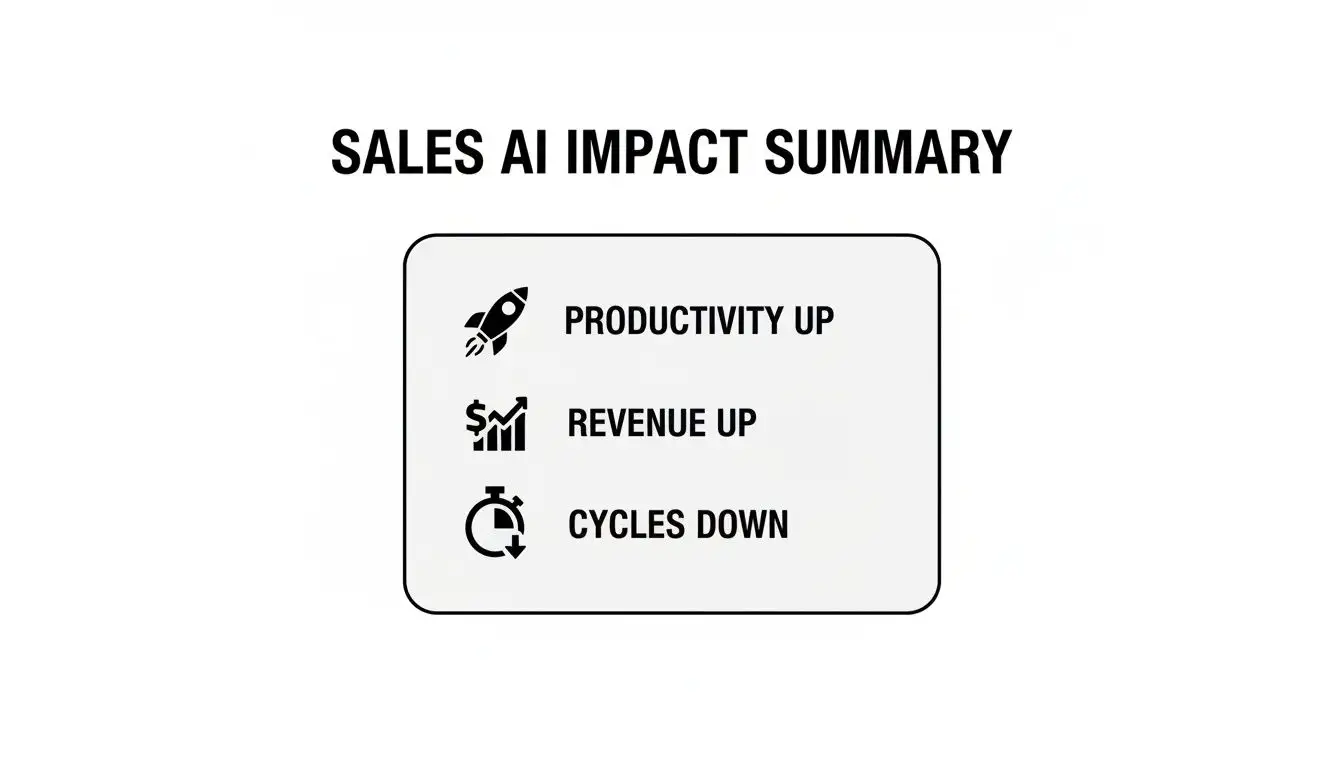
As the numbers show, sales teams using AI are seeing real lifts in productivity and revenue, all while closing deals faster. It’s a win-win-win.
Beyond the Company Name: Data Enrichment in Action
Okay, so you've found the perfect company. Great. That's only half the battle. Now you need to find the right person inside that company and get their actual contact info. This is where data enrichment steps in. Think of AI enrichment tools as your team of private investigators, but way faster and without the trench coats.
Once your AI has identified a target account, these tools automatically dig up the key decision-makers and fill in all the crucial details.
Forget spending hours manually hunting through LinkedIn profiles. Your reps can now focus their energy on crafting the perfect message because the AI has already done the grunt work, serving up verified emails, direct-dial numbers, and social profiles with 95%+ accuracy.
This whole process has to start with a solid foundation: your ideal customer profile (ICP). Your ICP is the blueprint the AI uses to find these perfect-fit customers. If that blueprint is vague or sloppy, the AI will just bring you a bunch of junk leads. To make sure your AI is working for you, not against you, learn how to build a rock-solid blueprint with our ideal customer profile template.
Choosing Your Prospecting Power-Up
Not all tools are created equal. They each have their own flavor and focus. Some are all about providing a massive, all-encompassing database. Others zero in on data compliance and phone-verified mobile numbers, a non-negotiable for teams selling into regions with strict privacy laws like GDPR.
Then you have platforms like Munch, which are built to unify the entire process from start to finish. Munch doesn't just find high-intent accounts based on buying signals; it also runs waterfall enrichment to guarantee data accuracy and then uses AI to help you generate personalized outreach for every single prospect. It’s a seamless handoff from discovery straight through to engagement.
Here's a quick look at how some of the top players stack up.
Top Lead Discovery and Enrichment Tools
This table gives you a head-to-head comparison of some of the best AI tools out there for finding and qualifying B2B leads, highlighting their core strengths and who they're built for.
| Tool | Best For | Key Feature | Pricing Model | Key Integration |
|---|---|---|---|---|
| Munch | All-in-one prospecting: signal discovery to personalization | Unified workflow, AI-generated outreach | Per user/seat | Most CRMs |
| ZoomInfo | Teams needing the largest possible contact database | Massive data volume, company insights | Custom/Tiered | Most CRMs |
| Cognism | Sales teams in GDPR regions needing compliant mobile numbers | Diamond Data® (phone-verified) | Per user/seat | Salesforce, HubSpot |
| Clay | Tech-savvy teams building highly custom enrichment workflows | Waterfall enrichment, 50+ integrations | Usage-based/Credit | Google Sheets, Airtable |
| Apollo | Startups and SMBs looking for an affordable, broad feature set | All-in-one platform, generous free tier | Per user/Tiered | Most CRMs |
Choosing the right tool ultimately comes down to understanding your team's unique needs and sales process.
When you're weighing your options, ask yourself these three critical questions:
-
What signals matter most to us? Are we hunting for job changes, funding rounds, new tech installs, or something else entirely?
-
What's the trade-off between data accuracy and sheer volume? Do we need millions of contacts, or is a smaller, hyper-verified list more valuable?
-
Will this thing actually play nice with our CRM? A tool that doesn't integrate smoothly is just another data silo waiting to happen, and that’s a headache no one needs.
The end goal is simple: give your team a tool that helps them spend less time digging and more time talking to people who actually want to buy.
Stop Writing Outreach That Gets Sent Straight to Spam
Let's be honest. If your cold outreach sounds like it was ripped from a generic 90s sales script, it’s going straight to the trash folder. We've all seen them. The days of blasting a thousand prospects with the same one-size-fits-all template are dead and gone.
Today, real personalization isn't just about dropping a [First Name] tag into a sentence. It’s about crafting a message so relevant and insightful that it feels like it was written by a human who actually did their homework.
This is exactly where AI-powered personalization and sequencing tools come into play. Forget simple mail merges; think of these tools as your co-pilot, helping you create context-aware messages based on real-time buying signals. These platforms analyze everything from a prospect’s recent LinkedIn activity and company news to their specific pain points, arming you with what you need to build outreach that genuinely connects.
This isn't just theory. The shift from mass blasting to hyper-personalization has a massive impact on performance. Teams that truly nail personalization are seeing 40-50% response rates on their cold emails, a number that's pretty much a fantasy with generic templates. AI makes this level of detail possible at scale, saving your reps from the soul-crushing grind of manual research.
Beyond the First Name: The Anatomy of AI Personalization
So, how does this magic actually happen? AI message generators don't just pull words out of thin air. They plug into the data you gathered during the discovery and enrichment phase to generate truly unique outreach for every single person on your list.
Let’s say your AI flags a prospect whose company just brought on a new VP of Sales. A basic template might cough up something like, "Hi [Name], congrats on the new hire!" An AI-powered tool, however, digs much deeper.
Here’s a practical example:
-
The Signal: Your target company hired a new VP of Sales who has a background in scaling inside sales teams.
-
The AI Insight: The AI cross-references this with the company's tech stack and spots that they’re using an outdated, clunky CRM.
-
The Personalized Snippet: "Saw your new VP of Sales, Sarah Jones, just came aboard. With her track record at [Previous Company] scaling inside sales, I'd bet she's already looking to upgrade the team's toolkit to move faster than your current CRM allows."
Boom. That one sentence transforms a cold email into a strategic conversation starter. It shows you've done your research, you understand their potential challenges, and you have a relevant solution. This is how you book meetings.
The goal isn't to trick someone into thinking you spent an hour researching them. It's to use AI to find that one crucial piece of information that makes your outreach impossible to ignore. It’s the difference between a random knock on the door and a scheduled appointment.
Of course, even the most brilliantly personalized email is worthless if it lands in the spam folder. Getting your messages delivered is the first and most critical hurdle. If you're worried about your domain's health, it's worth checking out our guide on how to improve email deliverability to make sure all this hard work doesn't go to waste.
Building Smart Sequences Across Channels
Let's face it: great outreach rarely works on the first try. It takes a thoughtful, multi-step approach that weaves together different channels. This is where AI sequencing tools really shine. They help you build and automate entire campaigns that intelligently combine email, LinkedIn messages, and even phone calls.
And these platforms are far more than just glorified schedulers. They use AI to fine-tune the entire process.
-
A/B Testing on Autopilot: You can throw different subject lines, CTAs, and value props into the mix. The AI analyzes what gets the most opens, clicks, and replies, and then automatically starts favoring the winners. No more guesswork.
-
Intelligent Follow-ups: The AI can detect when a prospect opens your email multiple times or clicks a link, then trigger an immediate and relevant follow-up task for your rep. It's like having a digital assistant who taps you on the shoulder and whispers, "Hey, this person is interested. Reach out now."
-
Cross-Channel Coordination: A solid sequence might kick off with an email, followed by a LinkedIn connection request two days later, and then another email referencing a piece of content they engaged with. AI orchestrates this whole dance so it feels natural and timely, not robotic and annoying.
Pro Tip: Munch researches your lead's LinkedIn posts and their company's recent news and writes personalized outreach messages that nail it.
Choosing Your Outreach Co-Pilot
The market for these sales AI tools is crowded, but they generally fall into a few camps. Some are laser-focused on one thing: helping you write better emails. They act as a real-time coach in your inbox, analyzing your tone, clarity, and length to help you get more replies.
Others are full-blown sales engagement platforms that manage the entire sequencing process across multiple channels.
Then you have unified platforms like Munch. Munch brings everything together under one roof, starting with identifying high-intent buying signals, enriching the contact data, and then using its AI to generate that personalized first-touch message. This creates a seamless workflow from prospect discovery all the way through to launching your multi-channel sequence, saving you the headache of stitching together a bunch of different tools.
The right choice really just depends on where the biggest bottleneck is in your current process.
Give Your Revenue Operations an AI Upgrade
Think of Revenue Operations (RevOps) as the central nervous system of your entire sales machine. It’s the hidden wiring that gets sales, marketing, and customer success all pulling in the same direction. And if RevOps is the nervous system, AI is the upgrade that gives it lightning-fast reflexes.
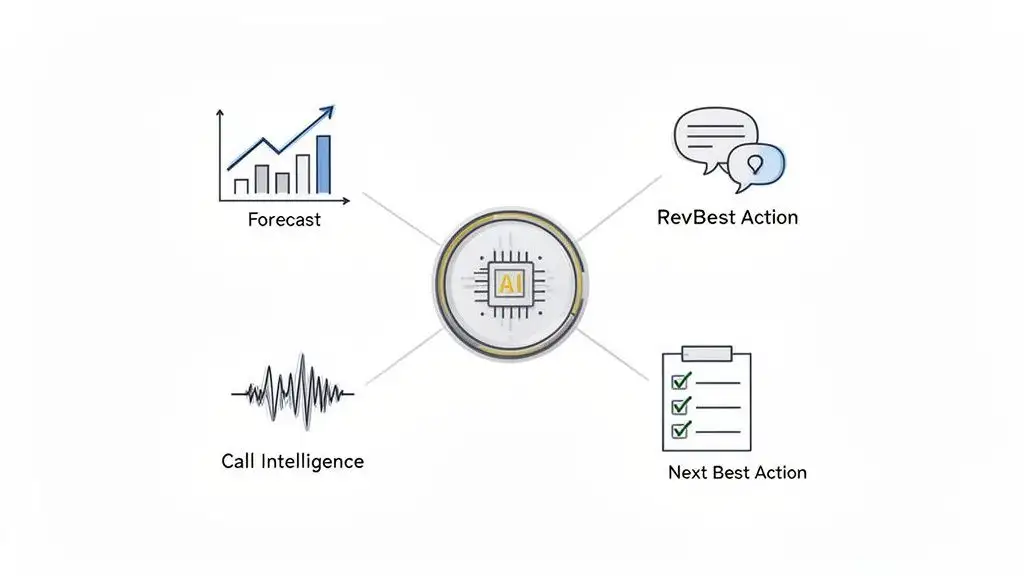
We're moving past gut feelings and messy spreadsheets. The right sales ai tools are built to tune up the whole revenue engine, from spotting trends to closing deals. This is about building a revenue machine that's predictable and scalable. It’s like Neo finally seeing the code in The Matrix: instead of falling green text, you see your pipeline with absolute clarity.
The money pouring into this space is mind-boggling. The global AI market is on track to blow past $800 billion by 2030, and AI-powered sales are projected to hit a whopping $1.3 trillion by 2032. More importantly, predictive AI is already delivering 20–30% bumps in conversion rates by helping teams zero in on the deals most likely to close. If you want to go down the rabbit hole, Digital Silk has a ton of fascinating stats on this.
Uncover Winning Plays with Conversation Intelligence
Your team's sales calls are an absolute goldmine of information. The problem? Most of that gold just vanishes into thin air the second the call ends. Conversation intelligence platforms are like a personal game-tape analyst for your team, recording, transcribing, and dissecting every single conversation.
These tools do way more than just track talk time. They pinpoint the exact phrases, questions, and conversational detours your top reps use to seal the deal.
-
Spot "Aha!" Moments: The AI can flag every time a prospect mentions a key competitor or a specific pain point. Suddenly, you have hard data on what messaging actually lands.
-
Clone Your Top Performers: Stop guessing what makes your star rep so good. AI shows you their winning habits, creating a playbook you can use to train the rest of the team on what really works.
-
Get New Hires Up to Speed, Fast: Imagine giving new reps a curated playlist of the "greatest hits" from your best closers. Their ramp-up time gets slashed.
Think about it. A new rep asks their manager, "What do I say when a prospect complains we're too expensive?" Instead of getting a vague pep talk, the manager can send them three call recordings where a veteran rep navigated that exact objection like a pro. That’s coaching that sticks.
See the Future with AI Forecasting Tools
Sales forecasting used to feel like a dark art, a weird cocktail of wishful thinking and last-minute panic. AI forecasting tools inject some serious science into the mix, delivering scarily accurate predictions that let you plan with real confidence.
These platforms plug right into your CRM and analyze hundreds of signals a human could never hope to track. They look at everything from deal velocity and historical close rates to the sentiment hidden in email exchanges.
The result is a brutally honest, unbiased view of your pipeline. AI doesn't have "happy ears" or commission breath. It just looks at the data and tells you which deals are solid, which are on life support, and which are pure fantasy.
This isn't just about hitting a number; it’s about smart, strategic planning. When you know with 95%+ accuracy what your quarter is going to look like, you can make way better calls on hiring, budgets, and where to point your resources. A great starting point is making sure your AI has quality data to chew on, which is where solid lead scoring best practices come into play.
The AI Co-Pilot in Your CRM
The final piece of this RevOps puzzle is weaving AI directly into your team's day-to-day grind. The best CRMs and sales platforms now come with AI assistants that act as a co-pilot for every rep, nudging them with the next best action to keep a deal moving.
These AI-driven suggestions are based on what's happening right now and can completely change a rep's productivity.
Here’s what that looks like in the real world:
-
The Sound of Silence: AI notices a key decision-maker hasn't opened your last three emails. Ping. It prompts the rep to switch it up with a LinkedIn message or a direct call.
-
The Gentle Nudge: A deal has been sitting in the pipeline way too long. The AI might suggest sending over a relevant case study or a new feature announcement to spark the conversation again.
-
The Buying Signal: The moment a prospect revisits your pricing page for the third time in a week, the AI fires off an alert to the rep, telling them to follow up immediately.
This isn't about micromanaging your team. It’s about giving them timely, data-backed nudges that prevent deals from dying on the vine. It clears out pipeline bottlenecks and ensures no opportunity falls through the cracks just because someone forgot to follow up. By combining these different sales AI tools, you give leaders the visibility they need to build a revenue engine that’s not just powerful, but also predictable.
Build Your Ultimate Sales AI Tech Stack
Let’s be honest, putting together a sales tech stack can feel a lot like playing Jenga. You add one wobbly piece, and the whole thing comes crashing down into a tangled mess of data silos and ticked-off sales reps. We're here to make sure that doesn't happen. The goal isn't to grab every shiny new AI tool that hits the market; it's about building a lean, mean, integrated machine that actually solves problems in your sales process.
Forget the "Franken-stack," that horrifying creature you stitch together from a dozen incompatible apps that ends up creating more work than it saves. What we're after is a smart, strategic lineup of sales AI tools that actually play nicely together.
The Lean Stack: For Solo Founders and Scrappy Startups
When you're just starting, your budget is tight and your time is gold. You need the biggest bang for the fewest bucks. Your tech stack shouldn't feel like a sprawling enterprise system; it needs to be a Swiss Army knife.
The game here is all about efficiency and automation. You need tools to handle the soul-crushing grunt work, such as prospecting and follow-ups, so you can pour your energy into what truly matters: talking to potential customers and, you know, building your company.
A killer lean stack could look something like this:
-
Prospecting and Outreach: An all-in-one platform like Munch is a godsend here. They bundle lead discovery, data enrichment, and sequencing into one affordable package. You can find high-intent leads and spin up personalized campaigns without juggling three different subscriptions.
-
CRM: A free or low-cost CRM like HubSpot Starter is a total no-brainer. It keeps your pipeline from turning into chaos and plugs in beautifully with most sales tools.
-
Scheduling: A simple, brilliant tool like Calendly or Cal.com takes the pain out of booking meetings. No more endless "what time works for you?" email chains.
This setup gives you a surprisingly powerful, automated sales engine without the eye-watering enterprise price tag. It covers all the bases, from finding a lead to getting that first meeting on the calendar.
The Growth Stack: For Scaling SDR Teams
Once your team starts to grow, the game changes. You’re shifting out of survival mode and into optimization mode. Your tech stack has to scale right along with you, delivering deeper insights, better coaching, and more sophisticated automation for your crew of Sales Development Reps (SDRs).
At this stage, integration isn't just a nice-to-have, it's a must-have. Your CRM becomes the sun, and every other tool needs to orbit around it without a hitch.
Your growth stack is all about specialization. Instead of one tool that does everything okay, you start investing in best-in-class tools for each part of the sales motion, all feeding into a central system of record.
Here’s a blueprint for a seriously robust growth stack:
-
Lead Discovery and Enrichment: This is where you double down on high-quality data. A platform like Cognism gives you compliant, phone-verified mobile numbers (a huge win), while a tool like Clay lets you build incredibly powerful, custom enrichment workflows. Getting this right is critical; our detailed guide on the best lead enrichment tools can help you nail down the perfect data foundation.
-
Sales Engagement: A dedicated platform like Outreach or Salesloft becomes non-negotiable. These powerhouses are built to manage complex, multi-channel sequences and give you the nitty-gritty analytics on what messaging is actually landing.
-
Conversation Intelligence: You can't fix what you can't see. A tool like Gong or Rilla records and analyzes your team's sales calls, uncovering the gold needed to clone your top performers and coach everyone else up.
-
CRM: Your CRM is still the heart of the operation. You’ll likely level up to a more advanced tier like Salesforce Sales Cloud or HubSpot Professional to handle more complex reporting, forecasting, and automation.
All-in-One Platform vs. Point Solutions
This is the big question every sales leader eventually faces: Do you go with a single all-in-one platform or stitch together a custom stack of specialized "point solutions"? There's no single right answer; it all comes down to your team's size, stage, and sanity.
The All-in-One Argument:
Platforms like Munch are built for speed and simplicity. You get a unified workflow, a single bill, and zero integration headaches. For startups and smaller teams, this is often the smartest move. It's like buying a pre-built gaming PC; you just plug it in and start playing.
The Point Solution Argument:
As you scale, you might find you need the absolute best-of-the-best for each specific job. This approach gives you maximum firepower but costs more and requires a dedicated person (usually in RevOps) to keep all the pipes connected. This is like building your own custom PC: it's way more powerful, but you'd better know what you're doing.
Ultimately, the best tech stack is the one your team actually uses and loves. Start by identifying your single biggest bottleneck, find a tool that crushes it, and build out from there.
Your Burning Questions About Sales AI, Answered
Let's be honest, diving into the world of sales AI can feel like you're trying to drink from a firehose. To cut through the noise, we've gathered the questions we hear all the time from sales leaders and reps, and we’re giving you the straight-up, no-fluff answers.
Are Robots Coming for My SDRs' Jobs?
Not a chance. Think of AI as giving your sales reps a super-powered sidekick, not showing them the door. Sales AI tools are built to handle the soul-crushing, repetitive tasks that everyone hates. We're talking manual data entry, sifting through mountains of prospect data, and trying to align calendars. The real grunt work.
This frees up your team to do what they do best: build genuine relationships, dig into the nuances of a customer's problems, and get creative with solutions. The whole point is to make your team more efficient and turn your good SDRs into absolute legends. It’s all about amplification, not replacement.
How Much Cash Should I Actually Set Aside for This Stuff?
The price tag on these tools can swing wildly, from around $50 per user per month for a simple tool to several hundred bucks a head for a full-blown enterprise platform. The real trick is to stop thinking about cost and start thinking about ROI.
You have to ask yourself: what am I getting back for every dollar I put in?
A good starting point is to figure out exactly how much time a tool will save your team and how many more deals you could realistically close because of it.
For example, if a $100-per-month tool saves a rep 10 hours of prospecting and helps them book two extra meetings that turn into a $10,000 deal... well, you can do the math. The tool pays for itself many, many times over. Find your biggest bottleneck and start there.
What's the Number One Mistake People Make with Sales AI?
The biggest pitfall we see is treating AI like some kind of magic wand. A company gets excited, buys a shiny new tool, and then… crickets. They haven't thought through how it actually plugs into their day-to-day sales motion.
This usually leads to a few predictable headaches:
-
Zero Training: Reps are handed new software with a "good luck" and no real guidance on how to make it work for them.
-
Fuzzy Goals: No one can clearly state what success is supposed to look like with the new tool.
-
Shelf-Ware: The result is abysmal adoption, a lighter wallet, and a team that's more confused than empowered.
To avoid this all-too-common tragedy, start with a specific, painful problem you want to solve. Get your reps involved from the beginning, since they’re the ones who will live in the tool, and roll it out with a crystal-clear plan for training, integration, and measuring its impact on the numbers that matter.
Ready to stop guessing and start selling smarter? Munch brings high-intent lead discovery, data enrichment, and AI-powered personalization together in one place. Find your next customer and launch outreach that actually gets replies. Start your journey with Munch today!