Your Guide To A B2B Sales Intelligence Platform

By Mriganka Bhuyan
•Founder at Munch
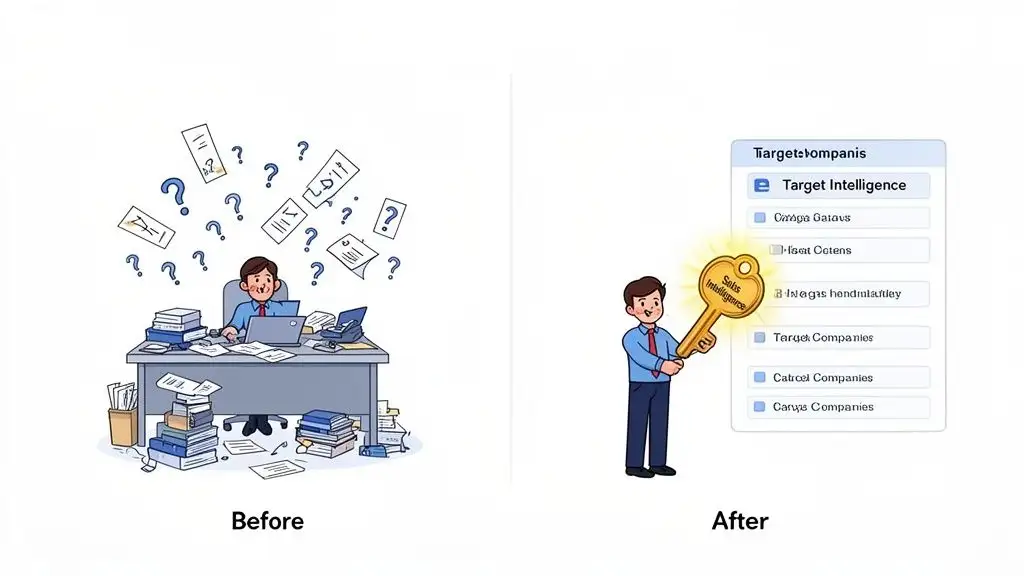
Picture this: your sales team is drowning. They're buried under a mountain of manual research, endless LinkedIn scrolling, and dead-end cold calls. It’s a grind. They spend more time digging for information than they do actually selling.
Now, imagine giving them a key. One that unlocks a door to a room filled with every ideal customer, complete with a detailed profile on who they are, what they need, and exactly when they need it.
That key is a B2B sales intelligence platform.
From Guesswork to Gameday Ready
Let's cut through the jargon. At its core, a B2B sales intelligence platform is your team's ultimate competitive advantage. It’s a sophisticated tool that tells you who to talk to, what to say, and precisely when to say it.
Think about the old way of selling. It’s like trying to find a specific person at a huge music festival just by wandering around and shouting their name. You might get lucky, but you'll probably just end up with a sore throat and zero results.
Now, let's inject some intelligence into that process.
Imagine your team gets a real-time alert: a fast-growing tech company just landed a massive funding round and is hiring aggressively. The platform doesn't just give you the company name. It serves up the direct-dial number for the VP of Sales, shows you they're actively evaluating new CRM software, and even points out that the CRO you're about to email is a huge fan of your favorite sports team.
Instead of a generic, "Hi, wanna buy our stuff?" email that gets instantly deleted, your rep can craft a message that actually lands. Something like, "Congrats on the Series B! As you scale your sales team, getting your tech stack right is critical. Also, go Lakers!"
That’s the game-changer. It's the difference between shouting into the void and having a meaningful conversation.
The Old Way vs. The New Way
The shift from manual drudgery to data-backed strategy is profound. Let's break down what this looks like in the day-to-day grind.
Sales Prospecting Before and After an Intelligence Platform
| Sales Activity | The Old Way (Manual) | The New Way (With Sales Intelligence) |
|---|---|---|
| Finding Leads | Manually searching LinkedIn, company websites, and news articles. | Getting a curated list of ideal-fit companies showing buying signals. |
| Finding Contacts | Guessing email formats ("john.d@company.com"?) and hunting for phone numbers. | Accessing verified, direct-dial phone numbers and email addresses instantly. |
| Outreach | Sending generic, one-size-fits-all cold emails and scripts. | Crafting hyper-personalized messages based on a prospect's role, needs, and recent activities. |
| Timing | Reaching out randomly, hoping to get lucky. | Engaging a prospect at the exact moment they are researching a solution like yours. |
| CRM Data | Stale, incomplete, and often inaccurate contact information. | Automatically updated and enriched records, ensuring data is always fresh. |
This isn't just about making things easier; it's about making them smarter. The results speak for themselves.
Why This Isn't Just a Trend
This isn't some fleeting fad. It’s a fundamental evolution in how sales gets done. The B2B sales intelligence market is on a rocket ship, projected to soar from $5.37 billion in 2026 to a whopping $12.45 billion by 2034. Why? Because companies that don't adapt get left behind.
A sales intelligence platform doesn’t just give you a list of names. It delivers the context behind the names, turning a cold lead into a warm conversation waiting to happen. It's the difference between having a map and having a GPS with live traffic updates.
A huge part of this magic is data enrichment, the process of automatically fleshing out your sparse contact records with accurate, up-to-date details. This is the engine that runs in the background, turning your messy CRM into a goldmine of opportunity and freeing your reps to do what they do best: build relationships and close deals.
The Core Features That Power Your Pipeline
If a B2B sales intelligence platform is your team’s souped-up race car, then its core features are the engine, transmission, and GPS working in perfect harmony. These aren't just flashy add-ons; they're the guts of the machine, turning mountains of raw data into a sales pipeline you can actually count on.
Let's pop the hood and look at the four pillars that make these platforms a game-changer.
Lead Discovery: Your Sales GPS
Think of lead discovery as the Waze for your sales team. Forget about aimlessly scrolling through LinkedIn, hoping to stumble upon a decent lead. This feature lets you punch in your destination (your Ideal Customer Profile or ICP) and get the fastest route there.
You get to set the rules. Define the criteria that matter to you, like company size, industry, location, or even the specific tech stack a company is using. The platform then zips through its massive database and hands you a curated list of accounts and contacts that fit your query perfectly.
- Here's how it works: A sales rep for a cybersecurity firm needs to find Series B tech companies in North America with 100-500 employees that just hired a new Chief Information Security Officer. Instead of burning a week on manual research, they plug those filters in and get a list of 50 qualified companies in minutes. Flat.
This turns prospecting from a guessing game into a precision strike. You stop searching for needles in a haystack and instead get a map that leads you straight to a pile of them.
Data Enrichment: The Makeover Montage
You know that part in every '90s teen movie where the nerdy character takes off their glasses, gets a new haircut, and suddenly becomes the star of the show? That’s exactly what data enrichment does for your sad, anemic contact list. You might have a name and a company, but that's not enough to build a real relationship.
Data enrichment swoops in and automatically fills in all the crucial blanks. It takes that basic contact info and fleshes it out with the details you actually need.
A B2B sales intelligence platform transforms your CRM from a digital rolodex into a living, breathing dossier on your most important prospects. It provides the context needed to move beyond a generic pitch and start a genuine conversation.
Enrichment typically adds goodies like:
-
Verified direct-dial phone numbers and email addresses (say goodbye to
info@company.comforever) -
Firmographic data like annual revenue and employee numbers
-
Technographic data showing the software and tools they’re already using
-
LinkedIn profile URLs for an easy social selling angle
Suddenly, your contact record goes from a grainy black-and-white sketch to a full-color portrait. When evaluating a B2B sales intelligence platform, it's crucial to understand the key features that will drive your sales pipeline, offering capabilities like document tracking and analytics. To explore this topic further, check out our guide on top-tier data enrichment tools.
Buyer Intent Signals: The Spidey-Sense
The absolute best time to reach out to a prospect is right when they're already thinking about a solution like yours. Buyer intent signals are your sales team's spidey-sense, tingling to let you know who is actively shopping around. These platforms scan millions of online sources for triggers that scream, "This company is ready to buy!"
This isn't mind-reading; it's just smart data analysis. The platform flags activities like:
-
A company is suddenly researching your competitors online.
-
Key decision-makers keep visiting your pricing page.
-
The business just posted job openings for a role your product supports.
-
They just landed a new round of funding (which means fresh budget to spend!).
These signals let your team prioritize who to call first and engage prospects with impeccable timing. You get to swoop in with a solution the very moment they realize they have a problem.
AI-Powered Personalization: The Human Touch, at Scale
Finally, all this amazing data is useless if you don't do anything with it. AI-powered personalization helps your team craft outreach that doesn't sound like it was written by a clunky robot from a bad sci-fi movie. Instead of blasting out generic templates, the AI analyzes all that enriched data and intent signals to generate relevant, context-aware messages for each person.
For example, the AI can draft an email intro that references a prospect's recent promotion, their company's latest funding announcement, or a shared connection you both have on LinkedIn. This gives your sales reps the power to connect on a human level, even when they're reaching out to hundreds of people. It’s the ultimate tool for scaling genuine relationships.
Pro Tip: Use Munch AI to research all your leads and craft personalized outreach messages at scale!
So, What Does This Look like in the Real World?
Theory is great, but let's talk about what actually changes when a sales intelligence platform becomes part of your team's daily hustle. Let's ditch the abstract and walk a mile in the shoes of Alex, a Sales Development Representative (SDR) staring down a pretty intimidating quarterly quota.
Before this tech came along, Alex's day was pure chaos. It was an endless, soul-crushing cycle of manual LinkedIn stalking, guessing at email formats, and blasting generic messages into the abyss. Honestly, it felt less like selling and more like playing scratch-off lottery tickets, just hoping for a random win.
Now, with a proper sales intelligence tool, Alex's workflow is a thing of beauty, a masterclass in precision and efficiency.
Step 1: Defining the Battlefield with an ICP
Alex's day no longer kicks off with a vague, "Alright, who am I bothering today?" Instead, the first move is to plug the Ideal Customer Profile (ICP) directly into the sales intelligence tool. This isn't just some fuzzy idea scribbled on a whiteboard; it’s a specific set of commands telling the machine exactly who to find.
For instance, Alex's company sells project management software to marketing agencies. So, the ICP filters are set to pinpoint:
-
Agencies in North America with 50-200 employees.
-
Companies that already use HubSpot as their CRM.
-
Businesses that recently posted job openings for a "Project Manager."
In an instant, the platform sifts through the entire market and serves up a curated, high-potential list. Alex just went from hunting with a blindfold to targeting with a laser sight.
Step 2: Uncovering High-Intent Leads
With the ICP locked and loaded, the platform's real magic kicks in. Think of it like a smoke detector for sales opportunities, sending out real-time alerts whenever it sniffs out a buying signal. Alex isn't just looking for companies that might be a good fit anymore; the game is now about finding companies that are screaming, "We're ready to buy now!"
Just yesterday, two golden alerts popped up:
-
Funding Announcement: A creative agency named "Innovate & Scale" just closed a $5 million Series A funding round. Fresh cash means a new budget, and they'll be looking for tools that fuel growth.
-
Job Change Signal: Over at another target account, "Pixel Perfect," the Head of Operations just left. A new leader walking in almost always means a complete review of existing tools and processes.
These aren't cold leads. They're warm, juicy opportunities handed over on a silver platter, each with a perfect, built-in reason to start a conversation.
This simple flow chart shows how sales intelligence connects the dots from discovery all the way to a personalized pitch.
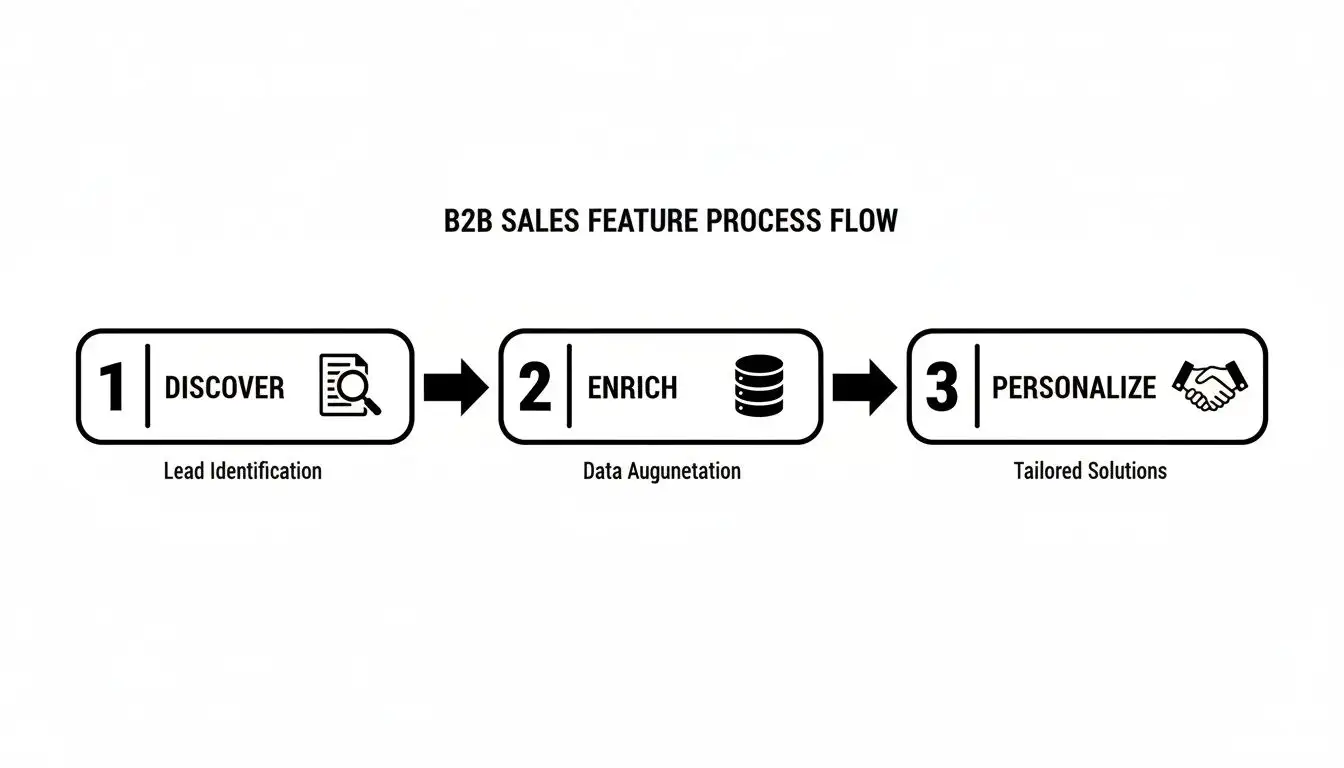
As you can see, discovery, enrichment, and personalization aren't just separate chores. They're part of a connected, streamlined process that builds momentum straight into a successful outreach.
Step 3: Launching a Hyper-Personalized Campaign
Now for the knockout punch. Alex zeroes in on the new VP of Operations at Pixel Perfect, grabbing their verified direct-dial number and email from the enriched contact list. Instead of dusting off some stale, generic template, Alex uses the platform's AI to help draft a hyper-personalized message.
The platform pulls all the relevant context and suggests an opener like: "Saw you just made the move to Pixel Perfect, huge congrats! As you get settled and start looking at your team's project workflows, I noticed..."
That opener is worlds away from the classic "Hi, my name is Alex." It’s relevant, it’s timely, and it proves Alex did their homework, even though the platform did all the heavy lifting. This shift from manual grunt work to a sharp, data-driven strategy is what modern sales is all about. To see how these systems really tick, check out our guide on how to create workflows that save time and get results.
By the end of the day, Alex has reached out to 30 highly qualified prospects, each with a custom-tailored message tied to a real buying signal. Suddenly, that quota doesn't seem so scary anymore.
The Measurable ROI of Smarter Sales Data
Alright, let's talk about the real reason we're all here. Forget the slick features and the cool tech for a second. At the end of the day, sales leaders and founders have one question that echoes like Jerry Maguire screaming into the phone: "Show me the money!"
A B2B sales intelligence platform isn't just another line item on your expense report; it's a revenue-generating machine. It’s an investment that pays for itself by plugging the leaks that are quietly sinking your sales ship, like wasted time and bad data.
From Cost Center to Profit Driver
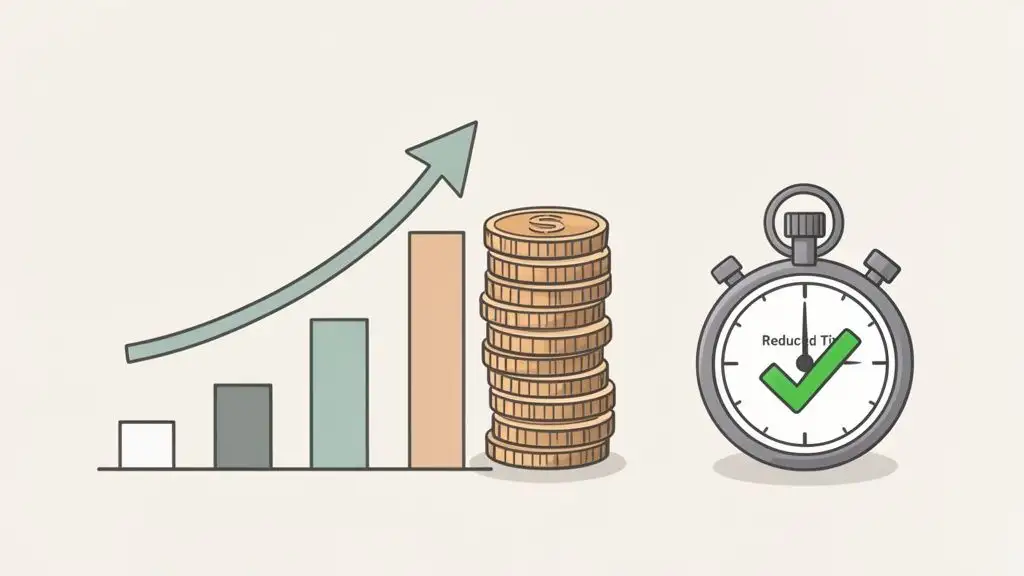
The financial impact here isn't a rounding error; it's substantial. The data shows companies using accurate intelligence achieve 66% higher conversion rates and see a 25% jump in sales team productivity. Meanwhile, sticking with inadequate data can slash your revenue by up to 20%. It’s the hidden cost that keeps you wondering why your team is running so hard just to stand still.
Think about it this way. A good platform doesn't cost money; it makes money by transforming how your team operates.
Boosting Sales Team Productivity
Every minute an SDR spends manually digging for a phone number or verifying an email address is a minute they aren't selling. It's the sales equivalent of trying to stream a 4K movie on dial-up internet: painful, slow, and ultimately pointless.
A B2B sales intelligence platform automates this grind. It gives reps back the hours they were losing to tedious research, allowing them to focus on high-value activities.
-
Less Research, More Outreach: Instead of spending half their day playing detective on LinkedIn, reps can hit their outreach goals faster and with better information.
-
Reduced Onboarding Time: New hires can ramp up in weeks instead of months because they have a ready-made map to the best leads, no guesswork required.
This efficiency boost means more at-bats for your entire team. More conversations lead to more meetings, and more meetings lead to more closed deals. Simple math.
Bad data is the silent killer of sales productivity. It clogs your pipeline with bounced emails, wrong numbers, and conversations with people who left the company six months ago. A sales intelligence platform is the cure.
Shortening the Sales Cycle
Timing is everything. A sales intelligence tool helps your team connect with prospects at the exact moment they’re most receptive. By flagging buying signals, like a company hiring for a key role or researching your competitors, it turns a cold call into a perfectly timed, highly relevant conversation.
For example, reaching out to a company the week they announce a new round of funding is infinitely more effective than calling them three months later. You solve their problem right when they have the budget to fix it. This precision dramatically shortens the time it takes to move a deal from "Hello" to "Closed-Won."
Ultimately, this isn't just about finding more leads. It's about finding the right leads at the right time and empowering your team with the data to win. When you look at the numbers, the business case becomes crystal clear. You can learn more about the crucial metrics to watch by reading our guide to key lead generation KPIs.
How Different Roles Win with Sales Intelligence
A B2B sales intelligence platform isn't like a one-size-fits-all band t-shirt you got at a concert you barely remember. It’s a specialized tool, and its value is all about who’s using it. Different roles have different problems, and this tech provides a specific, game-changing solution for each one.
Let’s look at how four key players can turn their daily grind into a highlight reel of wins.
The Sales Development Representative (SDR)
For the SDR on the front lines, life before sales intelligence is a special kind of purgatory. It’s a slog of manual data entry, bounced emails, and spending half the day guessing which "J. Smith" at some massive company is the right one. Honestly, it feels less like selling and more like being a low-paid private investigator.
A B2B sales intelligence platform completely flips that script. It’s like upgrading from a flip phone to the latest iPhone overnight.
-
Goodbye, Manual Labor: Instead of spending hours hunting for phone numbers, the SDR gets verified, direct-dial contacts served up on a silver platter. That means more time actually calling and way less time cursing at outdated spreadsheets.
-
Hello, Relevant Conversations: The platform flags buying signals, like when a target account suddenly hires a dozen new engineers. Now, the SDR can open with, "Saw you're scaling up the dev team..." instead of the tired, "Do you have 15 minutes to chat?"
The result? An SDR who is less of a cold-calling robot and more of a strategic consultant. They're armed with the right context to have meaningful conversations that actually book meetings.
The Sales Leader
Sales leaders live and die by their pipeline. They crave predictability, accurate forecasts, and a team that consistently hits its numbers. Without solid data, they're basically navigating a ship in a thick fog, just hoping they don't hit an iceberg.
This is where a B2B sales intelligence platform becomes their command center, giving them the visibility they need to steer the team effectively.
A sales leader with a sales intelligence tool can finally answer the board’s toughest questions with confidence. They can stop saying, "I think we’ll hit our number," and start saying, "Here's how we'll hit our number."
The platform provides a real-time, data-backed view of the entire pipeline. They can see which lead sources are actually performing, identify where deals are getting stuck, and coach their reps based on hard data, not just gut feelings. It transforms a chaotic, unpredictable sales cycle into a well-oiled, revenue-generating machine.
The Startup Founder
For a startup founder, especially in the early days, resources are painfully scarce. Every minute and every dollar is critical. The mission is simple but brutal: find the first 100 customers before the runway runs out. Manual prospecting is like trying to fill a swimming pool with a leaky bucket: slow, frustrating, and probably doomed.
A sales intelligence platform is the founder's ultimate cheat code. It automates the hunt for those crucial first clients, letting a team of one prospect like a team of ten.
-
Find Your Tribe, Fast: Founders can pinpoint their exact audience with surgical precision. For instance, a founder selling a new fintech tool can instantly get a list of every Series A company that just hired its first CFO.
-
Punch Above Your Weight: Armed with enriched data and AI-powered messaging, a founder can send outreach that is just as sophisticated and personalized as a major corporation's.
It’s the most efficient way to validate a market and build a predictable pipeline from scratch, turning a founder’s ambition into actual revenue. To start, you need to deeply understand who you're selling to, which is why we recommend checking out our guide on creating an ideal customer profile template.
The Agency Owner
Agency owners are constantly juggling client work with the never-ending need to find new business. Prospecting often takes a backseat until things get quiet, leading to a feast-or-famine cycle that kills growth.
A B2B sales intelligence platform helps agencies build a consistent, scalable client acquisition system. It allows them to find new clients who are actively looking for their services right now. For example, a marketing agency can set up alerts for companies that have recently hired a new CMO, a classic trigger that a marketing budget is about to be deployed.
This lets the agency reach out with a perfect pitch at the perfect time, ensuring their own pipeline never runs dry.
Choosing Your Platform: A Practical Checklist
Alright, you’re convinced. You see the value of a B2B sales intelligence platform and you’re ready to stop prospecting like it’s 1999. But diving into the market can feel like trying to pick a new show on Netflix; there are way too many options, and they all look vaguely the same at first glance.
Choosing the right platform is less about finding the one with the most bells and whistles and more about finding the one that fits your team's actual workflow. Let’s break down the essential checklist items to help you avoid a serious case of buyer’s remorse.
Data Accuracy and Sourcing
This is the big one. A platform is only as good as its data. If it's feeding your team bad phone numbers and emails for people who left their jobs during the dot-com bust, you're just paying for a fancier way to fail.
Ask any potential vendor some tough questions:
-
Where do you get your data? Look for providers who are transparent about sourcing from multiple, verified channels.
-
How often is the data refreshed? Business data decays at an alarming rate. You need a platform that’s constantly updating its records, not just once a quarter.
-
What is your email accuracy guarantee? Top-tier platforms should offer accuracy rates of 95% or higher. Anything less means your SDRs will be battling bounce-backs.
Bad data is the junk food of sales; it feels easy at the moment but will absolutely tank your performance long-term.
Integration Capabilities
Your new B2B sales intelligence platform needs to play nicely with the tools your team already uses every single day. If it doesn't sync seamlessly with your CRM, it becomes an isolated data island, and your reps will hate the extra work of manually transferring information. It's a deal-breaker.
A smooth integration means data flows automatically, keeping records enriched and saving your team from soul-crushing copy-paste tasks.
A platform that doesn’t integrate with your CRM is not a tool; it’s a project. And your sales team doesn't have time for another project.
Ease of Use and Scalability
Finally, consider the human element. Can your team actually use this thing without needing a PhD in data science? A powerful platform with a clunky, confusing interface will just gather digital dust. Always ask for a team demo, not just a slick presentation.
Also, think about your future. The platform should fit your budget and needs today while having the capacity to grow with you. Look for flexible pricing plans that allow you to add users and features as your team expands. You want a partner for the long haul, not a tool you’ll outgrow in six months.
To help you stay organized during your evaluation, we've put together a simple checklist. Think of it as your scorecard for comparing different options head-to-head.
B2B Sales Intelligence Platform Evaluation Checklist
| Evaluation Criteria | What to Look For | Why It Matters |
|---|---|---|
| Data Quality | >95% email accuracy, frequent data refresh cycles, transparent sourcing methods | Accurate data is the foundation of effective outreach. Bad data wastes time and hurts your brand's reputation. |
| Integration Power | Native, bi-directional sync with your CRM (e.g., Salesforce, HubSpot), sales engagement tools, and marketing automation | Seamless integration eliminates manual data entry, prevents data silos, and ensures a single source of truth for your customer info. |
| Core Features | Advanced search filters, company and contact data enrichment, intent signals, techographics | The platform must have the specific features your team needs to find, understand, and engage your ideal customers. |
| User Experience (UX) | Intuitive interface, minimal learning curve, responsive support team, comprehensive training resources | If the tool is hard to use, your team won't adopt it. A good UX drives adoption and, ultimately, ROI. |
| Scalability & Pricing | Flexible pricing tiers (per-user, credit-based), ability to add features or users easily | The platform should support your company's growth, not hinder it. Avoid getting locked into a plan that won't scale. |
| Privacy Compliance | Clear adherence to GDPR, CCPA, and other regional data privacy regulations | Using a non-compliant tool puts your business at significant legal and financial risk. This is non-negotiable. |
Using this checklist will help you cut through the marketing fluff and focus on what truly matters: finding a tool that empowers your sales team to close more deals, faster.
Got Questions? We've Got Answers.
Still scratching your head about a few things? Totally understandable. Picking new tech for your sales team can feel like trying to assemble IKEA furniture without the instructions. Let's clear up some of the most common questions about B2B sales intelligence platforms.
How Is This Different from a CRM?
Great question. Think of your CRM (like Salesforce) as your Rolodex. It’s where you keep tabs on everyone you already know and track every conversation, deal, and detail related to those relationships.
A sales intelligence platform, on the other hand, is the private detective you hire to find the right people to add to that Rolodex. It's all about discovery and intelligence before they ever become a contact in your CRM.
Your CRM is the party. Sales intelligence is the expert promoter who finds all the A-listers and makes sure they get an invitation.
Is This Data Compliant with Privacy Rules Like GDPR?
Yes, any platform worth its salt is built with privacy regulations like GDPR and CCPA baked into its DNA. The key is that these tools focus on publicly available, business-centric information, like a VP's work email, their company's tech stack, or their LinkedIn profile. They aren't digging for personal secrets.
That said, always do your due diligence. A good provider will be completely transparent about their data sources and compliance measures. If they get dodgy when you ask about privacy, that’s a massive red flag. Run.
Can a Small Business Actually Benefit from Sales Intelligence?
Absolutely. You could even argue they need it more than the big guys. For a small team or a solo founder, time is the one resource you can't afford to waste. A sales intelligence platform automates the soul-crushing grunt work of researching and list-building.
Instead of spending days manually scraping together a list of potential leads, a founder can build a hyper-targeted one in minutes. This tech doesn't just save time; it levels the playing field, letting smaller companies punch way above their weight and prospect with the same precision as a corporate giant.
Ready to stop guessing and start selling with surgical precision? Munch brings lead discovery, data enrichment, and AI-powered personalization together in one place. Find your ideal customers and close more deals, faster. Discover your next customer today.