The Ultimate Guide To Prospecting Tools Sales

By Mriganka Bhuyan
•Founder at Munch
Sales prospecting tools are your secret weapon for finding, connecting with, and ultimately winning over potential customers. Think of them as a massive upgrade from the old-school rolodex and phone book, automating the grunt work so you can focus on building real relationships. They're all about working smarter, not just harder.
Stop Selling Like It's 1999
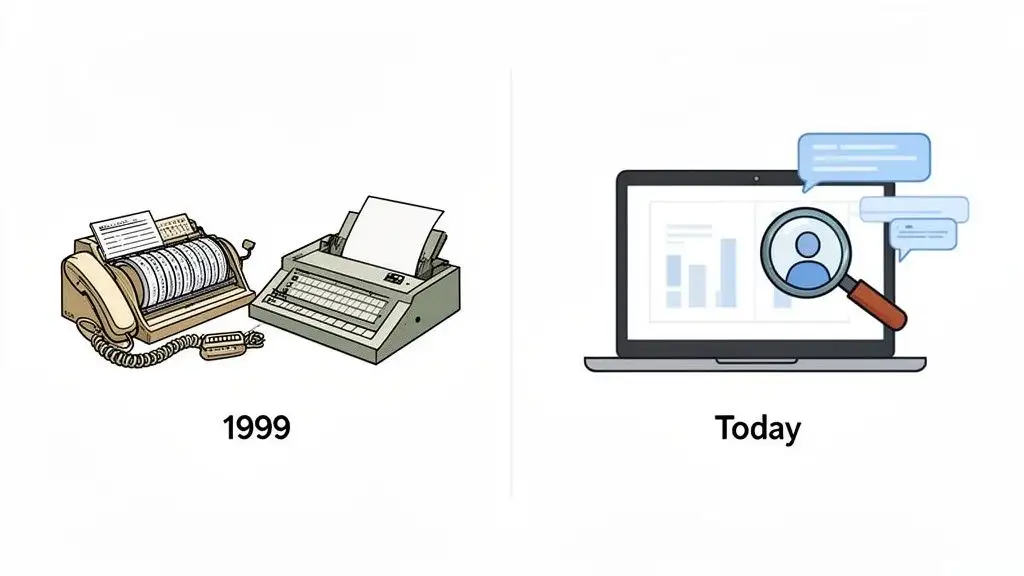
Remember when sales was all about a hefty rolodex, a trusty landline, and the sheer grit to cold call your way through the Yellow Pages? Thankfully, those days are over, along with dial-up modems and Blockbuster Video. Trying to sell that way today is a one-way ticket to an empty pipeline.
The modern buyer is savvy, overloaded with information, and has zero patience for generic, irrelevant pitches. The old "spray and pray" method of blasting out thousands of identical emails is officially dead. Buyers don't want to be pitched; they want help solving their problems.
The Great Sales Evolution
This isn't just a minor shift. It's a complete reinvention of the sales game. The tools modern reps use aren't just fancy new toys; they are essential for survival. They are the difference between knowing a prospect's job title and knowing they just landed a new round of funding, hired a new CMO, and are actively looking for a solution just like yours.
Let's break down just how much things have changed.
The Evolution of Sales Prospecting
| Metric | Manual Prospecting (The Old Way) | Tool-Assisted Prospecting (The Smart Way) |
|---|---|---|
| Lead Sourcing | Phone books, trade show lists | Curated databases, social media signals |
| Research Time | Hours of manual digging per lead | Seconds to pull up company details |
| Contact Info | Guessed emails, gatekeeper numbers | Verified direct-dials & emails |
| Personalization | "Dear [First Name]" | AI-driven insights, trigger events |
| Success Rate | Painfully low | Dramatically higher |
The new playbook is all about relevance at scale. It’s about turning what used to be a cold, unwelcome interruption into a timely, helpful conversation. You're no longer a random salesperson: you're an informed advisor showing up at the exact right moment.
Why Every Sales Team Must Adapt
This isn't just about hype; it's about cold, hard results. Teams that embrace modern prospecting tools see incredible returns. In fact, a whopping 79% of companies report they're able to expand into new markets faster, all thanks to better lead generation.
These tools are no longer out of reach, with many priced to be affordable for any team. The impact is immediate. For example, they can cut down the time spent on manual research by a staggering 70%.
At the end of the day, ignoring this shift means you're choosing to work harder for worse results. While your competitors are using data to start meaningful conversations, you'll be stuck in voicemail purgatory. Updating your outbound sales strategies isn't just about being more efficient; it's about staying in the game.
Finding Your Needle in a Digital Haystack
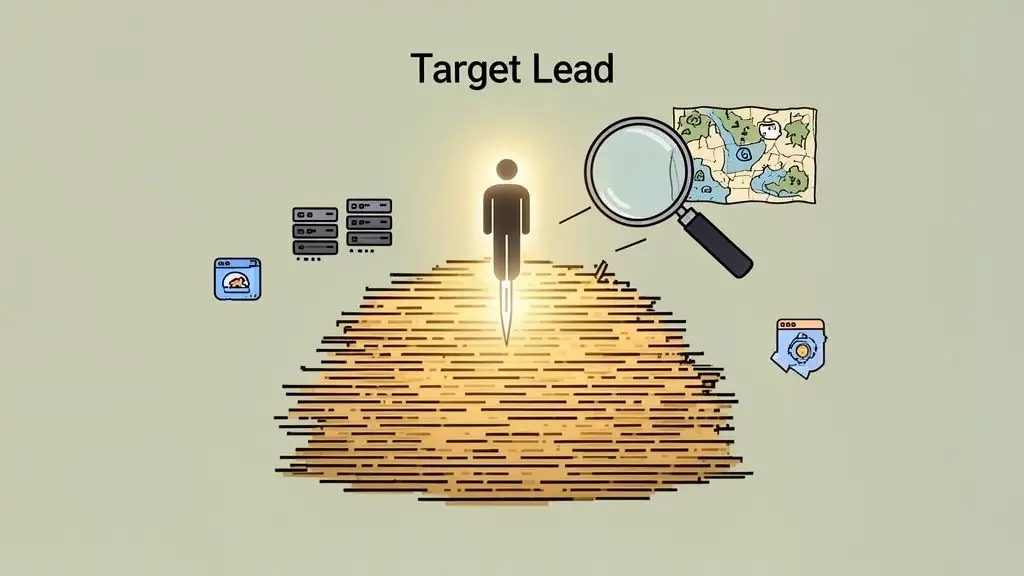
Before you can nail the perfect pitch, you have to find the right people to pitch to. Lead discovery tools are your secret weapon for this, helping you zero in on qualified prospects without spending your life manually scrolling through LinkedIn until your eyes cross.
Think of it like this: prospecting without these tools is like trying to find a specific fan in a sold-out stadium. You’re just yelling into the void. With a discovery tool, you get a direct line to that person’s seat number and a megaphone to speak right in their ear.
These platforms are essentially massive, searchable databases of companies and the people who work at them. They’re what separate a vague, hopeful guess from a concrete, actionable list of high-potential contacts.
Your Digital Rolodex on Steroids
At their core, lead discovery tools exist to do one thing and do it exceptionally well: build hyper-targeted lists with surgical precision. They give you access to gigantic B2B databases that you can slice and dice using dozens of different filters.
Imagine building a list of every single VP of Marketing at a SaaS company in California with 50-200 employees that uses HubSpot. Trying to do that by hand would be a nightmare. With the right prospecting tools sales teams swear by, it's a task that takes minutes, not weeks. The sheer amount of available B2B lead generation tools makes this more accessible than ever.
Picking the right discovery tool is the first, and most important, step. A killer prospect list makes every other part of your sales process, from enrichment to outreach, wildly more effective. If you mess this up, you're building your house on a shaky foundation, and we all know how that ends.
Turning Basic Contacts Into Rich Profiles
Alright, so you’ve used a discovery tool and now you're sitting on a promising list of names and companies. High five! You’ve cleared level one. But let’s be real, a list of names is just that: a list. It’s like showing up to a party knowing only the host’s name and nothing else. You're flying blind, and that's no way to make a connection. You need the inside scoop. You need to know their favorite 90s movie or that they just adopted a golden retriever named Sir Reginald.
This is where data enrichment swoops in to save the day. It’s the process of taking a bare-bones contact record (think: name, company) and layering on all the juicy details that transform it into a rich, actionable profile. For example, it turns a simple Jane Doe, Acme Corp entry into a full profile with her verified email, direct phone number, job title, and even the software her company uses. This isn't just about snagging an email address; it’s about genuinely understanding the person and their business.
Think of enrichment tools as the private investigators in your sales tech stack. They scour public records, social media profiles, and massive databases to unearth verified emails, direct-dial phone numbers, company details (like size and revenue), and even what tech they're using. This is the intel you need to craft outreach that feels personal and relevant, not like another email destined for the trash folder.
The Power of Waterfall Enrichment
Here's a hard truth: not all data is created equal. Some enrichment tools pull their info from a single source, which is a bit like betting your entire paycheck on one roll of the dice. If that one source is out of date, you’re left with bad data, bounced emails, and a whole lot of wasted time. It’s the equivalent of asking just one friend for directions instead of firing up your GPS.
This is exactly why the top-tier prospecting tools sales teams swear by a method called waterfall enrichment.
Waterfall enrichment is a fancy term for a simple, brilliant idea: checking multiple data providers in a specific order to find the most accurate info. If the first source comes up empty or the data looks sketchy, the system automatically "falls" to the next provider in line, and the next, until it strikes gold with a verified match.
This multi-layered approach sends your data accuracy through the roof. Instead of putting all your faith in one source, you're cross-referencing information from several different databases. The result? Data you can actually trust, leading to fewer bounced emails and way more meaningful conversations. If you want to get into the nitty-gritty, you can learn more about the best data enrichment tools and how they really work.
Putting Your Outreach on Autopilot
Alright, you’ve got your hit list. It’s packed with high-quality leads and all the juicy details you need to make a real connection. Now what? Time to actually reach out.
But let's be real. Manually firing off hundreds of personalized emails and LinkedIn requests is a one-way ticket to burnout city. It’s like trying to text every single one of your friends individually to organize a party instead of just, you know, starting a group chat. That’s where sales engagement platforms come in.
Think of these tools as your personal sales assistant: one that never sleeps, never forgets to follow up, and can juggle hundreds of conversations at once without breaking a sweat. They are the engines of modern sales, letting you build and automate multi-step outreach campaigns, or sequences, across email, LinkedIn, and even phone calls. This is the secret to scaling your outreach without sounding like a glitchy robot from a bad sci-fi movie.
Building Your Outreach Machine
The big idea here is simple: automate the boring, repetitive stuff so you can focus on the human side of selling. An SDR can cook up a sequence that starts with a personalized LinkedIn connection request. If the prospect accepts but goes quiet, the system automatically sends a follow-up email three days later, maybe mentioning a recent company announcement you found.
Still crickets? No problem. A final "bump" email gets scheduled for the following week. This whole thing runs on its own, ensuring you’re persistent and timely without having to live in your inbox. It’s a follow-up machine that would be flat-out impossible to manage by hand.
What makes this magic happen?
-
Smart Templates: You can create email and message templates with custom fields that automatically pull in a prospect's name, company, or job title for a personal touch.
-
A/B Testing: Not sure which subject line will land? Test a few different versions, along with different calls to action, to see what actually gets a response from your audience.
-
Advanced Analytics: Get a clear picture of what’s working and what’s not. Track your open rates, click-through rates, and reply rates to constantly fine-tune your game.
Knowing Exactly When to Strike
In sales, timing isn't just everything; it's the only thing. Reaching out the moment a prospect is actually thinking about a problem you solve is the difference between being a welcome advisor and an annoying interruption. This is where intent data tools come in, giving you a superpower that feels an awful lot like mind-reading.
These platforms are built to spot companies that are actively researching solutions like yours right now, long before they’ve ever heard of you. Imagine seeing a company raise its hand in a packed auditorium, signaling they need help, while all your competitors are still just scanning the crowd. This insight turns a cold shot in the dark into a warm, relevant conversation.
Decoding the Buying Signals
So, how does this voodoo work? These specialized prospecting tools sales teams rely on don't just guess. They monitor the entire digital universe for specific "buying signals," clues that a company is shifting into a buying cycle.
Think of yourself as a detective. You're not looking for one single piece of evidence; you're piecing together multiple clues that all point to the same conclusion: this company is ready to have a conversation.
Key buying signals include:
-
Spikes in Online Research: People at a target company suddenly start binge-reading articles and guides on a specific topic, like "customer relationship management" or "cybersecurity solutions." The tool sees this surge of activity coming from their corporate network.
-
Job Changes and New Hires: A business just brought on a new VP of Sales. That's a massive signal they might be shaking things up and are open to new tools. Or maybe a key decision-maker you know just moved to a new company, giving you an easy way in.
-
Funding Announcements: A startup just closed a $20 million Series B round. You can bet your bottom dollar they have cash to spend on tech that will help them scale. This is a blinking neon sign that says, "Sell to us!"
-
Technology Usage Changes: A tool flags that a company just stopped using one of your direct competitors. Now’s the perfect time to slide in and show them a better way.
By keeping an eye on these signals, you can prioritize who you talk to with terrifying accuracy. Instead of blasting your entire list and hoping for the best, you can focus your energy only on the accounts that are most likely to listen.
Tools That Give You X-Ray Vision
Tapping into intent data isn't something you can do manually; it requires specialized tools built to capture and interpret these subtle signals. They essentially connect to the web's firehose of data and filter it down into a neat, actionable list of hot prospects.
One of the heavy hitters in this space is Bombora. It tracks billions of online interactions to pinpoint which businesses are showing a sudden, intense interest in specific topics. It can tell you, for example, that five different people at Acme Corp have been reading articles about "project management software" just this week.
By leveraging these signals, you stop asking, "Who should I talk to?" and start asking, "Who should I talk to today?" This subtle shift in focus is what separates good sales teams from great ones.
This level of insight lets you craft outreach that's almost spookily relevant. Your generic "Hi, let's connect" message becomes, "Saw your team is ramping up research around project management. We help companies like yours streamline their workflows." The reply rates on messages like that are in a completely different league. Mastering this is a key part of our recommended lead scoring best practices, as it bubbles the most engaged leads right to the top of your list.
Unifying Your Sales Tech Stack
Let's be honest, juggling a bunch of different sales tools feels like a chaotic circus act. You've got one app for finding leads, another for digging up their contact info, and yet another for actually reaching out. It’s a clunky, expensive mess of browser tabs and data-syncing nightmares that makes you wonder if you’re a salesperson or a professional copy-and-paster.
This fractured approach is a massive productivity killer. Your reps end up spending half their day wrestling with software instead of actually selling. It’s the sales equivalent of trying to cook a gourmet meal using a separate kitchen for each ingredient. You spend more time running between rooms than you do cooking.
The Smarter, Not Harder, Approach
This is where a unified platform completely flips the script. Instead of duct-taping three or four different subscriptions together and praying they play nice, an all-in-one solution brings all that power into a single, seamless workflow. Think less chaotic garage band, more perfectly harmonized orchestra.
An integrated system kills the constant app-switching and banishes the data-syncing demons that plague fragmented stacks. Having a single source of truth for all your prospecting tools sales activities, from discovery right through to engagement, means your data is always fresh, accurate, and ready to go.
Meet Your All-In-One Sales Engine
This is the exact problem we built Munch to solve. We bundled the most critical prospecting functions into one powerhouse platform. Munch scans over 100 different sources to find companies showing real buying signals, automatically enriches those leads with 95%+ email accuracy, and then uses a slick AI engine to craft hyper-personalized outreach that actually gets replies.
This diagram breaks down how Munch connects the dots, turning scattered intent signals into perfectly timed outreach.
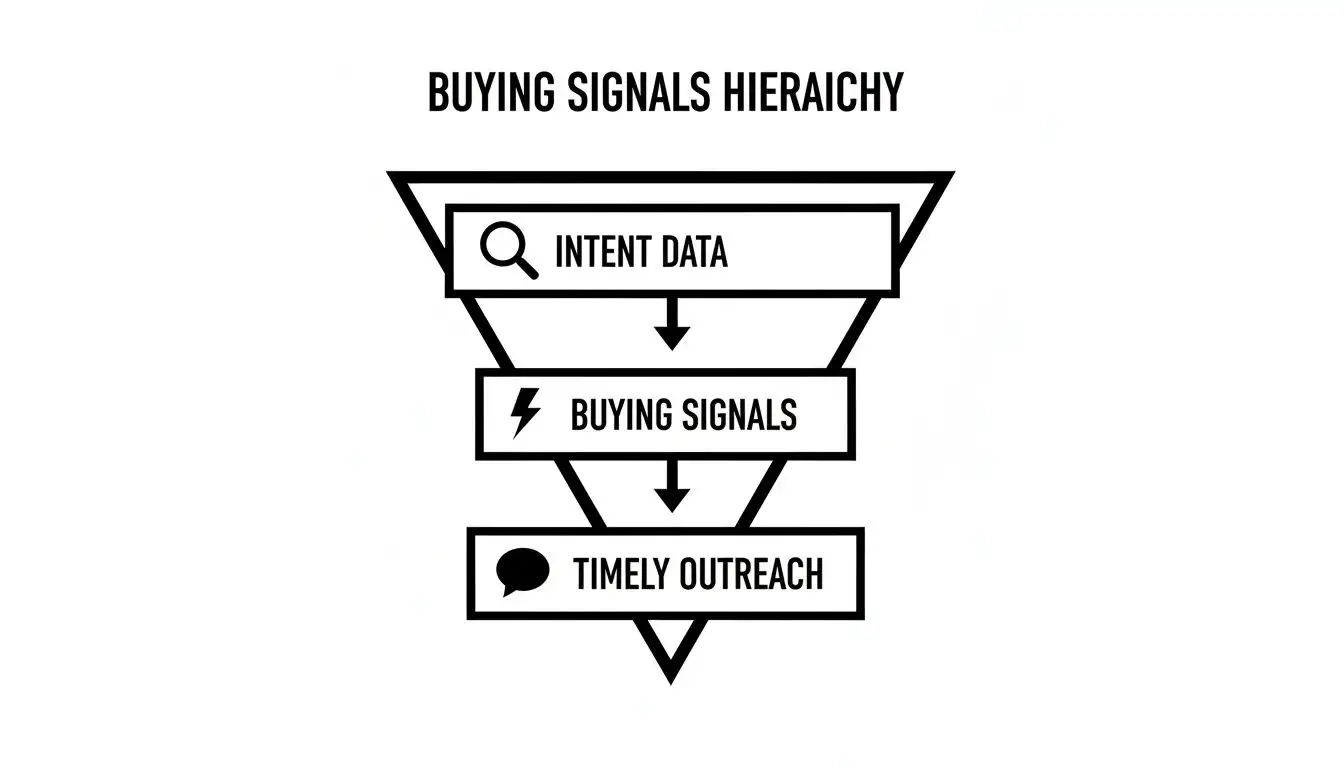
As you can see, it maps out a clear path from spotting a need to delivering a relevant message. By bringing all these steps under one roof, you eliminate the friction that lets hot leads turn ice-cold.
For startups and solo founders, this is a total game-changer. You get an enterprise-grade toolkit without the enterprise price tag or the soul-crushing complexity. It’s like getting a Ferrari for the price of a Ford Fiesta.
The cost and complexity of the old way of building a sales stack just doesn't make sense anymore. Take a look at how the numbers stack up.
Building Your Sales Stack The Old Way vs. The Munch Way
| Capability | Fragmented Stack (Multiple Tools) | Unified with Munch |
|---|---|---|
| Lead Discovery | Lead Database Subscription ($150-$500/mo) | Included |
| Data Enrichment | Enrichment Tool ($100-$300/mo) | Included (95%+ email accuracy) |
| Sales Engagement | Outreach Platform ($75-$150/mo per user) | Included (AI Personalization) |
| Intent Data | Intent Data Provider ($1,000+/mo) | Included (Scans 100+ sources) |
| CRM Integration | Complex, often requires Zapier ($50+/mo) | Seamless, native integrations |
| Total Monthly Cost | $1,375 - $2,000+ | Starts at $99/mo |
| Complexity | High (Multiple logins, data sync issues) | Low (Single platform, one login) |
By replacing three to four separate subscriptions, you’re not just slashing costs. You're getting back your most valuable asset: time. No more troubleshooting broken integrations or second-guessing if your data is up to date. Everything just works, freeing your team to stop managing tools and start building relationships. It’s the ultimate "work smarter, not harder" upgrade for your entire sales process.
Got Questions? We've Got Answers
So, you're diving into the world of prospecting tools and your head is spinning? Totally normal. Let's tackle some of the big questions that pop up when you're trying to move beyond endlessly scrolling through LinkedIn.
How Much Should I Actually Budget for This Stuff?
This is the big one, isn't it? The good news is, you don't need a venture-backed budget to get started. The cost can be anything from a couple of fancy lattes a month to a serious line item on your P&L, and it all boils down to your strategy.
For instance, unified platforms built for small-but-mighty teams, like Munch or Apollo.io, often kick off around $49 per user per month. But if you go the à la carte route and build a "fragmented stack," you're paying for each piece separately. A lead database ($50-$150/mo), an enrichment tool ($50-$200/mo), and an engagement platform ($100-$150/mo) can quickly stack up to $200-$500 per user.
And for the big players? Enterprise-grade beasts like ZoomInfo can easily climb past $15,000 a year. The smartest play for most is to start with an all-in-one tool that bundles the essentials. You get more bang for your buck that way.
Will These Tools Make My Research Skills Obsolete?
Not a chance. They'll just kill about 80% of the soul-crushing, mind-numbing parts of it. This frees you up for the critical 20% that actually requires a human brain. Think of it like having a super-smart intern who does all the grunt work for you.
A tool can instantly flag that a target company just landed a new round of funding and hired a CMO. But it's still on you to take five minutes, read the press release, and figure out what their growth goals are. That's how you go from a generic "congrats!" to a pitch that’s genuinely strategic. These tools don't replace your thinking; they just put it on overdrive.
What's the Real Difference Between Lead Discovery and Data Enrichment?
It’s like the difference between spotting someone interesting across the room and having their best friend whisper their entire life story in your ear.
-
Lead Discovery: This is step one, the initial spotting. It's about finding the names and companies that fit your ideal customer profile. You get a list of the "who."
-
Data Enrichment: This is the juicy intel. It takes that basic list and layers on the good stuff: a verified email, a direct-dial phone number, and maybe even the tech they’re already using. This gives you the "why you need to call them right now."
How Do I Know if My Tools Are Actually Making Me Money?
Measuring the ROI on your prospecting tools sales stack isn't just a good idea; it's essential. You have to know if your tech is paying for itself or just a cool-looking expense.
Your tools should do more than make you feel productive. They should directly lead to more meetings in the calendar and more deals signed. If you can't draw a straight line from your software to your revenue, it's just an expensive hobby.
Here are the metrics that matter:
-
Time Saved: How many hours are your reps not spending on manual drudgery? Multiply that by their hourly rate.
-
Increased Output: Are you booking more qualified meetings this month than last month?
-
Better Connections: Are your email bounce rates dropping? Are you getting more positive replies?
-
Pipeline Velocity: How fast are leads from these tools moving from "hello" to "closed-won"?
Ready to stop juggling a dozen tabs and start closing deals? Munch brings lead discovery, data enrichment, and AI-powered outreach together in one clean platform. Find your next customer today.