Artificial Intelligence Sales: Boost Your Close Rate with Smart Prospecting

By Mriganka Bhuyan
•Founder at Munch

Artificial intelligence in sales isn't about some robot taking over your best rep's job. It’s about giving them superpowers. Think less The Terminator and more J.A.R.V.I.S. from Iron Man: a genius assistant handling the grunt work so your team can focus on what they do best: building relationships and closing deals.
The AI Sales Revolution Is Here (And It's Not Skynet)

Let's be real for a second. So much of traditional sales feels like a throwback to the dial-up era. Your reps sink hours into manually digging up prospect info, taking wild guesses at which leads are actually hot, and blasting out generic emails that land straight in the trash. It’s a high-effort, low-reward cycle that burns out even the most seasoned pros.
AI in sales flips that script completely. Instead of a human slogging through LinkedIn profiles for hours, an AI can chew through thousands of data points in seconds. It becomes the ultimate assistant, working 24/7 to uncover those golden opportunities your team would otherwise miss.
So, What Does AI Actually Do for Sales Teams?
At its heart, AI in a sales context is all about using smart algorithms to crush repetitive, data-heavy tasks with mind-boggling speed and accuracy. This frees up your reps to do what they do best: connect with other humans.
Here’s what that looks like in the real world:
-
It finds the right people: AI constantly scans the web for buying signals. For example, it can spot a company's funding announcement, a new executive hire, or a competitor's price hike to pinpoint prospects who are ready to have a conversation right now.
-
It enriches lead data on autopilot: The tool automatically finds and verifies contact information, fleshes out company details, and pulls in recent news. Say goodbye to manual data entry forever.
-
It personalizes outreach at scale: Imagine drafting a unique, context-aware email for a prospect who just posted about needing a new CRM on LinkedIn. Now imagine doing that for hundreds of similar prospects at once. AI makes it happen, ensuring every single touchpoint feels relevant and thoughtfully researched.
This isn't just a fleeting trend; it's a massive market shift. The global artificial intelligence market is on track to explode to USD 375.93 billion by 2026, with machine learning alone grabbing a 40.00% share. North America is leading the charge, which is exactly why top-performing sales teams are scrambling to adopt these technologies just to keep up.
The goal of AI in sales isn't to remove the human element. It's to remove the mind-numbing work that stops your team from being more human and strategic in their approach.
Take a look at how this changes the day-to-day for a sales rep.
A Day in the Life of a Sales Rep Before and After AI
This table breaks down just how dramatically AI tools can overhaul the daily grind, turning manual drudgery into automated efficiency.
| Sales Task | The Old Way (Manual Grind) | The New Way (AI-Powered) |
|---|---|---|
| Prospecting | Hours spent manually searching LinkedIn, company websites, and news articles for potential fits. | AI surfaces high-intent leads in minutes based on real-time buying signals like job postings or tech stack changes. |
| Lead Scoring | Relies on gut feelings or a basic points system (e.g., opened email = 5 points). Highly inaccurate. | AI analyzes thousands of data points including behavioral, firmographic, and intent data to accurately predict who is most likely to buy. |
| Data Enrichment | Reps waste time hunting down emails, phone numbers, and company details. Often find outdated info. | Contact and account data is automatically found, verified, and updated in the CRM. Always fresh and accurate. |
| Outreach | Sending generic, one-size-fits-all email templates to a massive list and hoping something sticks. | AI drafts personalized, context-aware emails for each prospect, referencing their specific pain points or recent company news. |
The difference is night and day. AI transforms tasks that used to eat up half the day into something that's done in minutes.
Ultimately, this technology gives your team an unbeatable edge, letting them pour their energy into the high-value conversations that actually drive revenue. For a deeper dive, check out our guide on the best AI sales tools available today.
How AI Uncovers Your Next Best Customer
Remember the bad old days of buying a lead list? You'd get a static spreadsheet full of people who probably changed jobs six months ago. It was the sales equivalent of trying to navigate a new city with a blurry, outdated map.
AI sales platforms completely flip that script. Instead of digging through dead data, they act like master detectives, scanning hundreds of sources in real time to catch prospects at the exact moment of need. It’s like trading in your old paper map for a live GPS that practically shouts, "Turn left now! Your ideal customer is right there!"
This whole process is driven by what we call buying intent signals. Think of them as the digital breadcrumbs prospects leave all over the internet, clues that hint they're getting ready to make a purchase.
Spotting Clues in a Sea of Noise
Imagine AI as your team’s personal Sherlock Holmes. It doesn't just glance at a company's size or industry. No, it connects the dots between seemingly random events to build a rock-solid case for why you should reach out. It’s always on the lookout for critical clues.
So, what kind of high-value signals are we talking about?
-
Key Personnel Changes: When a company hires a new VP of Sales or a Chief Marketing Officer, it’s a massive signal. New leaders almost always arrive with fresh budgets and a burning desire to shake things up with new tools and strategies.
-
Company Funding Events: A fresh round of Series A or B funding means one thing: growth. That cash is often earmarked for scaling up, and they'll need new software and services to support that rapid expansion.
-
New Technology Adoption: Did a target account just start using Salesforce? They might be in the market for a compatible data analytics tool. AI tracks a company’s tech stack, flagging these perfect complementary opportunities for you.
AI doesn’t just find these signals; it instantly scores them against your Ideal Customer Profile (ICP). This is key. It ensures you only spend time on prospects who are not just a good fit, but a good fit right now.
Artificial intelligence in sales isn't about finding more leads. It's about finding the few perfect leads who are actively showing signs they are ready to buy.
This shift is a game-changer in a crowded market. The U.S. AI market alone was valued at USD 146.09 billion in 2024, with North America leading the charge. As private investment in generative AI continues to skyrocket, using smart tools to find high-intent prospects isn't just a nice-to-have, it's essential for survival. You can learn more about the booming AI market and what it means.
Once a high-intent lead is identified, the system gets to work preparing it for your team. It automatically gathers and verifies contact details, a process we dive into in our guide to data enrichment. This means your reps get prospects delivered on a silver platter: qualified, scored, and enriched, all ready for a meaningful conversation.
No more chasing ghosts from a stale list.
Crafting Outreach That Actually Gets Replies
Let's be honest. Kicking off an email with "Hi {first_name}" isn't personalization. It's the bare minimum, and in a crowded inbox, it's the sales equivalent of a limp handshake. It screams "I know nothing about you" and is a one-way ticket to the trash folder.
Real personalization, the kind that gets a "wow, they actually did their homework," is about creating a moment of genuine connection. It makes the person on the other end feel like you get them. This is where Generative AI changes the game, taking you from lazy mail merges to truly thoughtful communication.
Beyond the Basic Name Drop
Think of Generative AI as a tireless research assistant who’s already read the entire internet. It can scan a prospect's latest LinkedIn post, dive into their company’s press release about a new funding round, and even connect the dots with a recent industry trend.
Then, it pulls all that intel together to craft a killer opening line that's impossible to ignore. Suddenly, your outreach isn't just another generic blast; it's a conversation starter.
Let's see this in action. Here’s a quick comparison of the old way versus the new way.
Generic Blasts Versus AI-Personalized Hooks
| Outreach Element | Generic Template | AI-Personalized Example |
|---|---|---|
| Opening Line | "Hi Jane, I see you work as a VP of Marketing at Acme Corp. I'd love to show you how our tool can help your team." | "Hi Jane, saw your post on LinkedIn about the challenges of measuring B2B influencer ROI. It’s a tough nut to crack, especially after Acme Corp's recent expansion into the APAC market." |
The generic example is all about you. The AI-powered one is all about them. It doesn’t just sell; it opens a dialogue by showing you understand their specific world. This is what modern sales strategy is all about, and it's a key part of our guide on cold email best practices.
Pro Tip: Use Munch to research all your leads and craft personalized outreach messages at scale!
Building Instant Rapport at Scale
The magic here isn't just about saving a few minutes of research. It's about building instant rapport and getting the kind of replies that kick off real business conversations. You're not trying to fool anyone; you're using technology to be more thoughtful and relevant than anyone else competing for their attention.
And this isn't some niche trend, it's quickly becoming the new standard. The AI market is exploding, with software holding a 61.35% revenue share and generative AI rocketing forward at a 46.25% CAGR. This growth is perfectly timed for B2B sales reps using platforms like Munch to craft these context-aware messages and get ahead. You can dig into more of the global artificial intelligence market trends if you're a data nerd like me.
The best AI-powered outreach doesn't sound like a robot. It sounds like the most prepared, insightful, and helpful version of you.
This level of detail makes each prospect feel seen. Instead of being just another name on a spreadsheet, they become the focus of a message crafted just for them. And that, right there, is how you skyrocket your reply rates.
Building Your AI-Powered Sales Playbook
Alright, let's move past the theory. It's one thing to know that AI can dig up leads and write emails, but it's a whole other ball game to actually make it happen. So, how do you go from reading about artificial intelligence sales to putting it to work? You build a playbook.
Forget those overly complicated, 50-page strategy documents. Think of this as your simple, four-step recipe for getting started. This isn’t about becoming a tech guru overnight. It's about giving your AI a clear set of instructions, kind of like teaching a new puppy the basic commands before you expect it to fetch your slippers.
Step 1: Define Your Ideal Customer Profile
Before you let the AI off its leash, you need to tell it exactly who to hunt for. Your Ideal Customer Profile (ICP) is your North Star here. It’s a super-specific description of the perfect company you want to sell to, covering everything from size and industry to the tech they use.
Don't just say "tech companies." That's way too broad. You need to get granular.
For instance, your ICP might look something like this:
-
B2B SaaS companies in North America.
-
They have between 50 and 250 employees.
-
They've just closed a Series A or B funding round in the last six months.
-
They’re actively hiring for sales or marketing roles.
-
They use Salesforce as their CRM.
When you feed these sharp details into a platform like Munch, you stop hoping for good leads. You’re literally programming the AI to cut through all the noise and only serve up the accounts that perfectly fit your criteria.
Step 2: Set Up Your Buying Signal Alerts
Okay, so your AI knows who to look for. The next move is telling it when to pounce. This is where buying signal alerts are your secret weapon. These are real-time triggers that scream, "Hey, this company is probably ready to buy something!"
Think of it like setting up notifications for your favorite band's concert tickets. You want to know the second they go on sale, not a week later. It's the same idea here: you want to be the first to know when a target account makes a move.
Here are a few powerful signals to track:
-
Funding Rounds: Get an alert for any company on your ICP list that raises over $10 million. That's fresh cash they're looking to spend on growth.
-
Executive Hires: A brand-new VP of Sales or CMO is almost guaranteed to review their department's entire tech stack. That's your window of opportunity.
-
High-Growth Indicators: Set an alert for companies that have boosted their headcount by 20% or more in the last quarter. Growing pains often lead to new purchases.
Step 3: Build a Multi-Channel Sequence
Now that you have a steady stream of high-intent leads flowing in, it's time to actually talk to them. A simple, multi-channel sequence ensures you’re not just another one-and-done email that gets instantly archived. The best part? Your AI can automate and personalize this whole dance.
This is basically how the AI turns a pile of data into a real conversation.
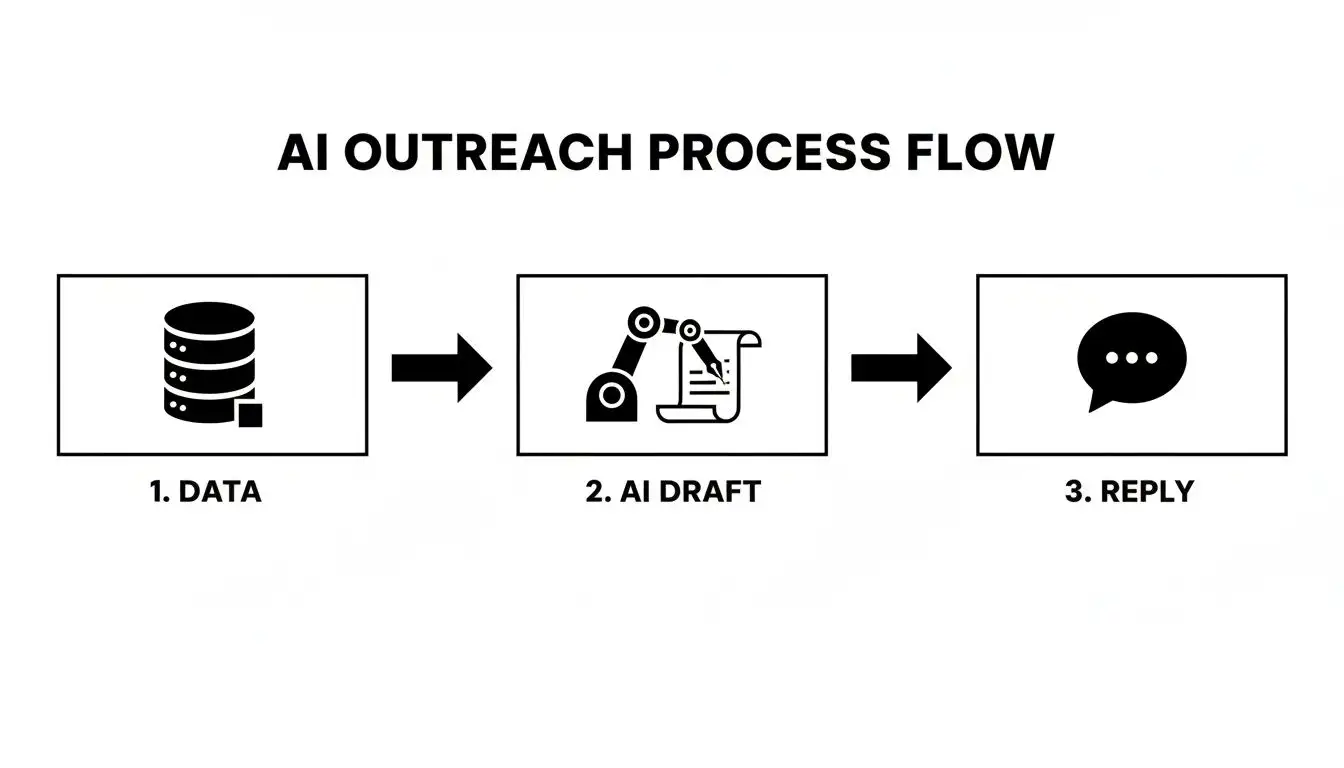
Here's what a simple but effective playbook sequence could look like:
-
Day 1: An AI-personalized email lands in their inbox, calling out the specific buying signal (e.g., "Saw the news about your Series B funding, congrats!").
-
Day 3: An automated LinkedIn connection request goes out with a short, personalized note.
-
Day 5: A follow-up email arrives that offers something genuinely useful, maybe pointing to a recent blog post or case study from their company.
Step 4: A/B Test and Optimize
Finally, remember that no playbook is perfect right out of the gate. The last and most important step is to treat your outreach like a science experiment. Use your AI tool's analytics to A/B test everything: different subject lines, opening hooks, and calls to action.
The beauty of an AI-powered playbook is that it learns and improves over time. What starts as a good strategy can become a nearly unstoppable engine for generating pipeline.
Keep a close eye on metrics like reply rates and meetings booked for each version. If "Version A" is crushing it, make it the new champion and test something else against it. This cycle of constant optimization is what separates the good sales teams from the truly great ones. You can dig deeper into this in our article on automatic lead generation.
Measuring Success When AI Is Your Copilot
So, you’ve brought an AI sidekick into your sales process. Fantastic. But let's be real: if you can't prove it's actually pulling its weight, it’s just a shiny, expensive new toy. In the world of AI in sales, obsessing over vanity metrics like open rates is like judging a car by its paint job; it looks great, but tells you nothing about what’s under the hood.
To prove your AI is more of a secret weapon than a costly distraction, you have to track the numbers that scream "revenue." This isn't about looking busy. It’s about making a tangible impact. Your boss doesn't care about the volume of emails sent; they care about the number of deals signed.
Key Performance Indicators That Actually Matter
When you add AI to the mix, your old dashboard just won't cut it anymore. It's time to ditch the fluff and zero in on the metrics that prove your AI-powered strategy is actually winning. The whole point is to show that your new copilot is helping you fly higher and faster.
Here’s what you should be laser-focused on:
-
Reply Rate: This is your first real sign of life. A jump in reply rates means your AI-driven personalization is connecting with people and starting real conversations, not just getting dumped in the trash folder.
-
Meeting Booked Rate: Getting a reply is a great start, but getting a demo on the calendar is what pays the bills. This metric shows you if those initial sparks of conversation are turning into legitimate sales opportunities.
-
Lead-to-Opportunity Conversion Rate: Are the leads your AI served up on a silver platter actually moving through your pipeline? This is the ultimate gut check for your AI’s lead scoring and intent detection accuracy.
If your AI is doing its job, you'll see a noticeable lift in these three areas. It's the difference between throwing darts in the dark and having a heat-seeking missile locked on your best prospects.
Proving the ROI to Your Leadership
Once you're tracking the right numbers, you can build a rock-solid case for your investment in AI. The final step is tying all these performance boosts back to what everyone really cares about: the bottom line.
Take a hard look at your sales cycle length. What if deals that started with an AI-identified buying signal are closing 20% faster than your average? That's not just a small victory; it's a massive win. You aren’t just closing more deals; you’re closing them faster, which has a direct impact on your cash flow and revenue forecasting.
When you walk into a meeting with a dashboard showing climbing reply rates, more booked meetings, and a shorter sales cycle, you're not just showing activity. You’re proving that AI is a true revenue-generating machine. For a closer look at what to track, check out our deep dive into the most important lead generation KPIs.
Common AI Traps and How to Sidestep Them
Jumping into AI for sales without a solid plan is a bit like letting a toddler cook dinner. You know the intention is good, but you're probably going to end up with a huge mess and a smoke alarm going off. While the upside of AI is massive, a few common slip-ups can turn your shiny new tech investment into a costly headache.
The good news? These mistakes are entirely avoidable if you see them coming. Let's walk through how to dodge these issues so your AI program gets off the ground smoothly and actually does what you hired it to do.
Over-Automating and Sounding Like a Robot
This is the big one. It's the most common and most cringeworthy mistake people make. It’s treating AI like a magic "set it and forget it" button. When you let the AI run wild without a human gut check, you end up with generic, soulless outreach that makes potential customers feel like they're being spammed by a chatbot from a bad sci-fi movie.
-
The Problem: An AI can spit out a technically perfect email that completely whiffs on the subtle cues of human conversation. For example, it might reference a company's recent funding announcement with an overly formal tone that just feels weird and out of place. The result? Outreach that’s cold, impersonal, and screaming "delete me."
-
The Fix: You absolutely need a human-in-the-loop. Think of AI as your brilliant, but socially awkward, first-draft writer. It does the heavy lifting, and then your reps swoop in to add their personality, tweak the tone, and make it sound like a real person. This simple step gives you the best of both worlds: AI's speed and your team's irreplaceable human touch.
Going 100% AI for outreach is like sending a breakup text. Sure, it gets the message across, but you've torched any chance of building a real relationship.
Relying on Bad or Stale Data
Ah, the classic "garbage in, garbage out" dilemma. Your AI is only as smart as the information you feed it. If your CRM is a digital graveyard of outdated contacts and half-filled-out profiles, your AI's predictions and recommendations are going to be just as useless.
Imagine an AI confidently flagging a lead as “hot” based on a job title they left two years ago. Your rep wastes a whole afternoon chasing a ghost. This doesn't just kill productivity; it completely shatters your team's trust in the new system they were so excited about.
To avoid this disaster, you have to treat data quality as your top priority. Make sure you’re using a sales intelligence tool with built-in data enrichment and verification. This keeps your AI working with fresh, accurate info, giving your team the confidence they need to actually act on its insights.
Still Got Questions About AI in Sales? Let's Talk.
Got a few lingering questions about bringing AI into your sales process? You're not alone. Let's tackle some of the most common ones so you can move forward with confidence.
Is AI Going to Steal My SDRs' Jobs?
Not a chance. Think of AI as the ultimate sidekick for your sales team, not a replacement. It’s like giving every single one of your reps a super-powered research assistant who works 24/7.
The AI handles all the tedious, soul-crushing tasks, like digging for contact info and sifting through data, so your team can focus on what they were hired to do: connect with people, build relationships, and close deals. The AI provides the intel; your reps provide the irreplaceable human touch.
Is This AI Stuff Going to Be a Nightmare to Set Up?
It used to be. Early AI tools felt like they required a PhD in computer science and a whole lot of prayer to get working. But those days are long gone. Modern platforms are built for actual humans. Seriously, you can often get everything up and running in a single afternoon.
The secret is to find an all-in-one tool that handles everything from finding leads and enriching their data to launching the outreach. When it all lives in one place, the technical headaches just disappear, letting you get back to selling.
How Can I Stop AI-Generated Messages from Sounding Like a Robot Wrote Them?
This is where the magic happens. The best way to do this is with a "human-in-the-loop" approach. Let the AI do the heavy lifting and generate a solid first draft that’s about 90% of the way there.
Then, your sales rep steps in to add that final 10%: the personal story, the witty observation, the bit of nuance that makes the message feel genuine and compelling. It’s this blend of AI efficiency and human creativity that really crushes it.
Ready to see how an AI sales sidekick could work for you? With Munch, you can find prospects who are ready to buy, get all the data you need, and launch personalized outreach that actually gets replies. Start finding your next best customers today.