The 12 Best GTM Tools For B2B Sales Teams in 2026

By Mriganka Bhuyan
•Founder at Munch
Remember building a mixtape? You had to pick the right songs, in the right order, to create the perfect vibe. Building your go-to-market (GTM) stack is basically the 2024 version of that, but instead of trying to impress your high school crush, you’re trying to crush your revenue targets. The wrong mix of gtm tools leads to Frankenstein’s monster: clunky, slow, and frankly, a little scary for your budget. Too many platforms, and your SDRs spend more time switching tabs than selling. Too few, and they're prospecting like it's 1999, armed with nothing but a landline and a prayer.
This guide is your ultimate GTM mixtape, curated to get you from lead to closed-won without the awkward filler tracks. We've compiled the essential tools that modern B2B sales teams actually need, from finding prospects who are ready to buy to automating the outreach that gets them to reply. To ensure your stack is truly effective and doesn't fall behind, explore modern approaches like AI-powered lead generation which can supercharge your pipeline efforts.
We'll break down each tool with practical use cases, honest pros and cons, and screenshots to show you what's what. Think of this as your cheat sheet to building a sales machine that actually works.
1. Munch
Munch is an all-in-one sales intelligence and outbound automation platform that consolidates the entire top-of-funnel workflow into a single, cohesive system. Instead of juggling separate tools for lead discovery, data enrichment, and outreach, Munch combines them. This lets you move from defining your Ideal Customer Profile (ICP) to launching a fully personalized, multi-channel campaign in minutes. This isn't just about efficiency; it’s a strategic advantage, making it one of the most powerful gtm tools for teams aiming for rapid, predictable growth.
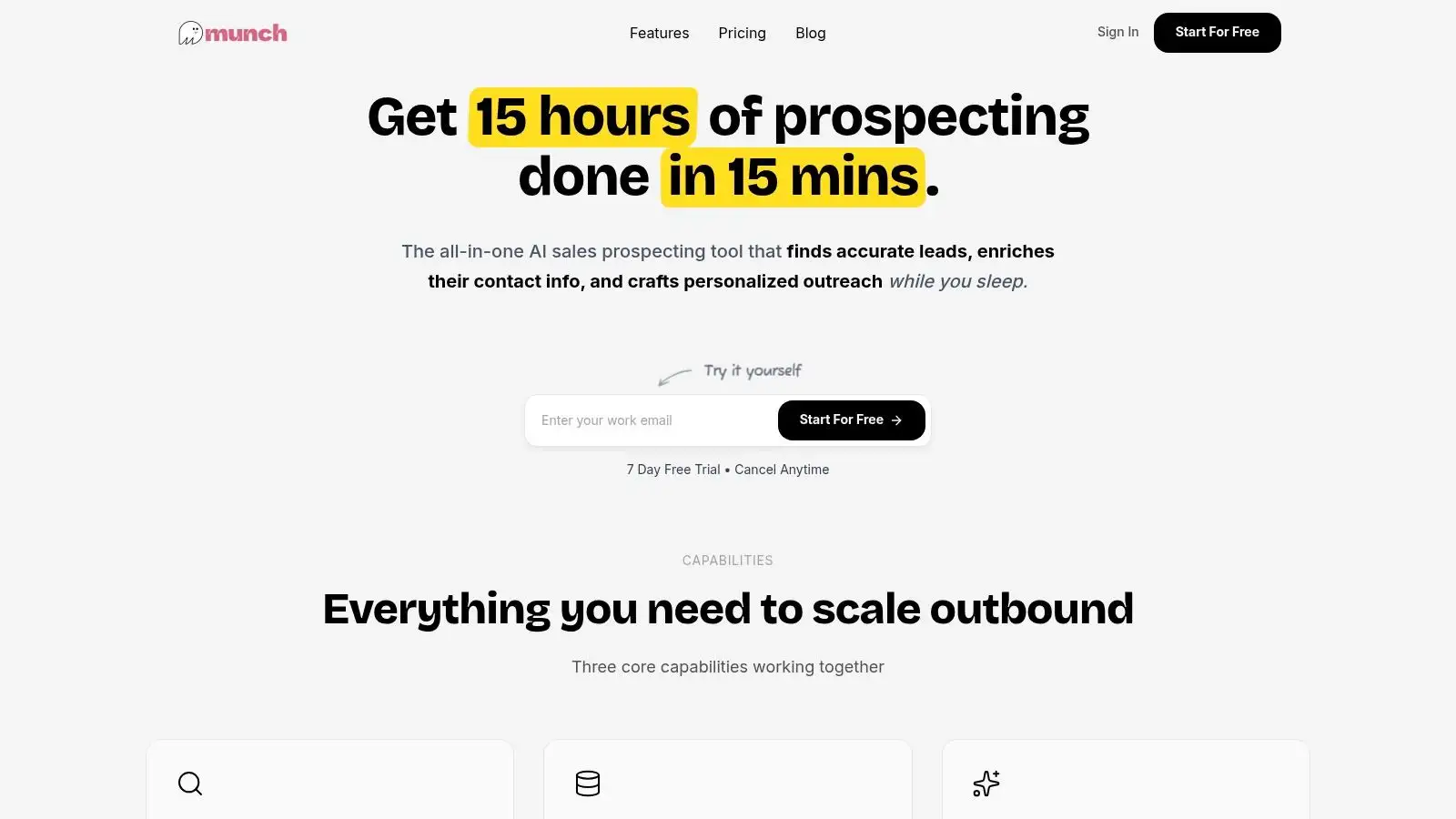
What truly sets Munch apart is its end-to-end integration. The platform scans over 50 data sources to surface prospects showing high-intent buying signals, like recent funding rounds or technology adoption. It then uses a waterfall enrichment process to verify contact data, boasting a 95%+ email accuracy rate. Finally, its AI generates unique, context-aware messages for both email and LinkedIn. This effectively turns what used to be 15 hours of manual prospecting into a 15-minute task. To understand how this works under the hood, you can learn more about AI in sales and its impact on modern outreach.
Quick Decision Guidance
| Best For | Key Strengths |
|---|---|
| SDR/BDR teams at growth-stage companies | Integrated workflow, AI personalization, fast campaign launch. |
| Founders and solo B2B SaaS builders | High time-to-value, affordable entry point, predictable pipeline. |
| Demand-gen and outbound agencies | Scalable credits, multi-channel outreach, high data accuracy. |
| Website: usemunch.com |
Pricing: Starts at $49/month for 1,000 credits, with a 7-day free trial.
Pros:
-
Unified Workflow: Seamlessly combines discovery, enrichment, and AI-powered outreach, eliminating the need for multiple tools.
-
High-Quality Data: Waterfall enrichment delivers 95%+ email accuracy plus valuable firmographics and technographics.
-
Rapid Deployment: Go from ICP definition to a live, personalized campaign in about 10 minutes.
Cons:
-
Emerging Integrations: Key features like CRM integrations and A/B testing are on the roadmap but not yet available.
-
Credit-Based Limits: High-volume teams may find lower-tier credit limits restrictive and need to upgrade.
2. Salesforce Sales Cloud
Let's address the 800-pound gorilla in the room: Salesforce. It’s the enterprise CRM mothership that anchors countless GTM stacks for a reason. Think of it less as a tool and more as a universe for your entire revenue operation, managing everything from leads and opportunities to complex forecasting. This isn't the nimble, plucky startup CRM; it's the established titan for teams that need deep customization and serious governance.
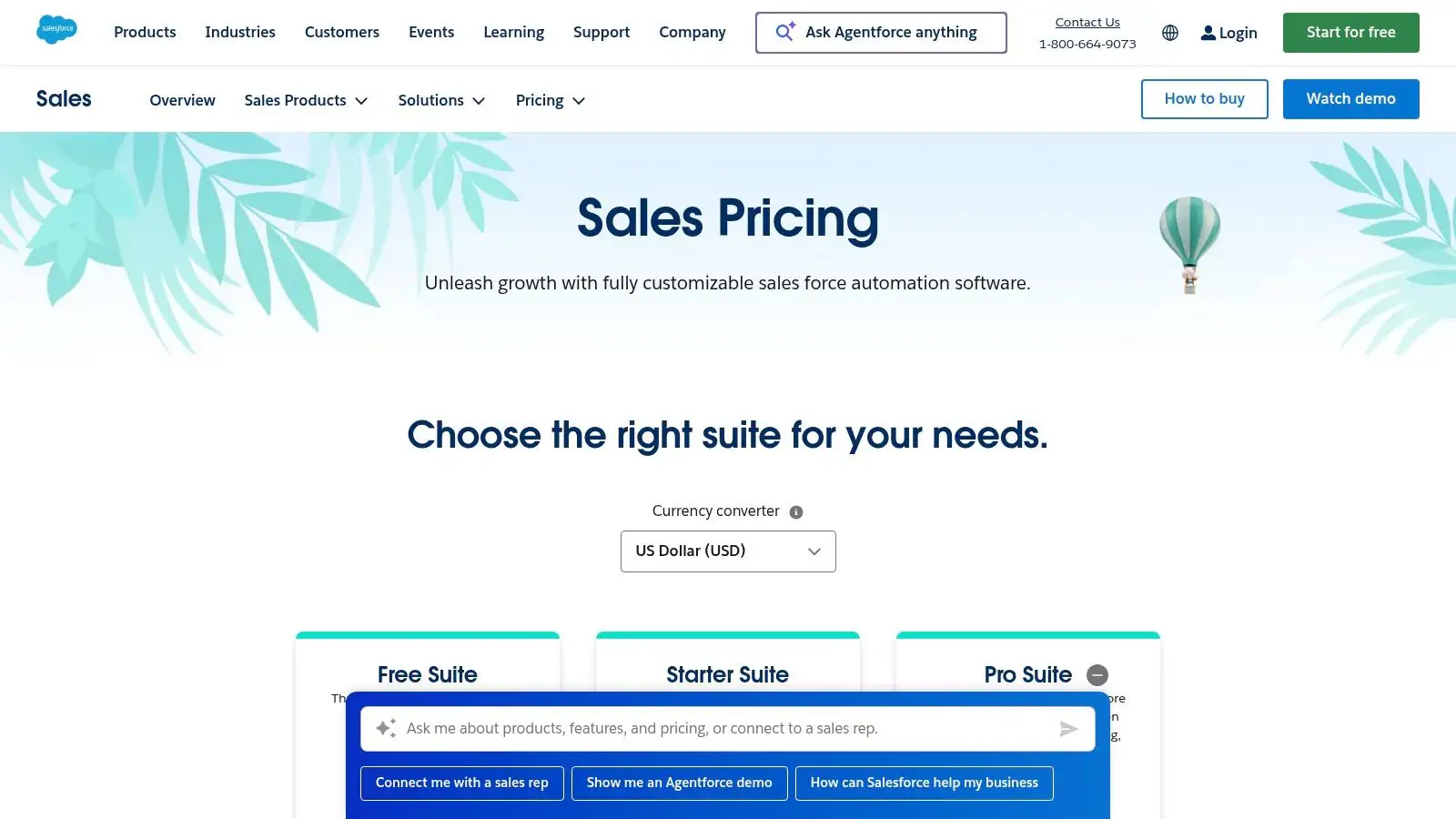
For sales leaders, it provides a single source of truth that scales with your org, preventing the data chaos of disconnected gtm tools. However, this power comes with a price, both in dollars and administrative effort. Getting it dialed in requires significant setup and often a dedicated admin who knows their way around its endless menus.
The Lowdown
-
Best For: Mid-market to enterprise teams needing a highly extensible and secure central nervous system for their sales process.
-
Pricing: Starts at $25/user/month (billed annually) for the "Starter" plan, but most growing teams will look at the "Professional" ($80) or "Enterprise" ($165) tiers to unlock necessary features. Add-ons like Revenue Intelligence cost extra.
-
Key Pro: The AppExchange is its superpower. You can bolt on functionality for virtually any need. For those already utilizing Salesforce Sales Cloud, exploring available Salesforce app integrations can further enhance your GTM efforts.
-
Key Con: High administrative overhead. It's not a "set it and forget it" platform; it's a commitment that requires ongoing maintenance and expertise to manage effectively.
3. HubSpot Sales Hub
If Salesforce is the enterprise titan, HubSpot is the scrappy, fast-moving hero that’s a delight to root for. It has rapidly evolved from an inbound marketing darling to a full-fledged CRM platform that anchors the GTM stack for startups and growth-stage companies. Its claim to fame is its user-friendliness and an all-in-one approach, connecting marketing, sales, and service data in one place.
HubSpot Sales Hub brings together deal pipelines, meeting schedulers, and outreach sequences into a single interface that your team can learn in an afternoon, not a semester. This low barrier to entry makes it an incredibly popular GTM tool for teams that need to move fast and can’t afford a dedicated administrator just to keep the lights on.
The Lowdown
-
Best For: Startups, small businesses, and mid-market teams looking for an easy-to-use, all-in-one platform that combines CRM with powerful sales engagement features.
-
Pricing: A generous free plan exists. Paid plans start at $15/user/month (billed annually), but most teams will need "Professional" ($90/user/month) to unlock automation and advanced features.
-
Key Pro: The unified platform is its killer feature. Having marketing, sales, and service data in one system provides a true 360-degree view of the customer without messy integrations.
-
Key Con: Costs can escalate quickly as you add more contacts and premium features. The jump from "Starter" to "Professional" is significant and necessary for serious automation. Exploring what is sales automation can help clarify if the upgrade is justified for your needs.
4. LinkedIn Sales Navigator
If your CRM is the brain of your GTM operation, think of LinkedIn Sales Navigator as its eyes and ears on the ground. It’s the definitive platform for prospecting and intelligence inside the world’s largest professional network. This isn't just about finding people; it's about understanding buying committees, tracking job changes that create new opportunities, and warming up cold outreach with genuine, relevant insights. It turns a social network into a precision-guided prospecting machine.
For sales teams, it's the difference between shouting into the void and having a quiet, informed conversation with the right person. For example, instead of a generic pitch, you can see a prospect just shared an article about AI in logistics. Your opening line is now, "Saw your post on AI in logistics..." It’s the difference between a cold call and a warm intro.
The Lowdown
-
Best For: B2B sales teams of all sizes who need to identify, track, and engage specific buyers within target accounts.
-
Pricing: Starts with "Core" at $99.99/user/month, but teams needing CRM sync and advanced features will look at the "Advanced" ($159.99) or "Advanced Plus" (custom pricing) plans.
-
Key Pro: Unparalleled, direct access to the most up-to-date professional data and network connections on the planet. To get the most out of it, mastering the art of LinkedIn prospecting is a must.
-
Key Con: InMail credits are limited, and its effectiveness hinges entirely on the quality of your rep's profile and their messaging skills. It's a powerful addition to your gtm tools, not a replacement for good sales fundamentals.
5. Outreach
If Salesforce is the CRM universe, Outreach is the high-powered starship your revenue team uses to explore it. This is the undisputed leader in sales engagement, built to orchestrate, automate, and analyze every touchpoint in the sales cycle. Outreach moves beyond simple email blasts, creating sophisticated "Sequences" that blend calls, emails, LinkedIn tasks, and more into a cohesive playbook for reps. It’s the engine that powers high-volume, high-quality outbound for teams that mean business.
For sales leaders, it’s about enforcing best practices at scale while gaining deep visibility into what actually works. Its AI and conversation intelligence tools (like Kaia) listen to calls, take notes, and surface insights, turning every interaction into a coachable moment. This is one of the most powerful GTM tools for ensuring your team's execution is as good as your strategy, but it requires a real commitment to adoption to see the full ROI.
The Lowdown
-
Best For: Mid-market and enterprise sales teams that need a robust, all-in-one platform to scale outbound engagement and manage deal execution with precision.
-
Pricing: Custom pricing that requires a conversation with their sales team. It's a premium product, so expect pricing to reflect its enterprise-grade capabilities.
-
Key Pro: The comprehensive nature of the platform. Having sequences, dialer, automation, and conversation intelligence under one roof creates a powerful, unified workflow for reps.
-
Key Con: Overage charges and add-ons can sneak up on you. The lack of public pricing and potential for extra costs on things like voice minutes requires careful budget management.
6. Salesloft
If Outreach is the fast-paced action hero of sales engagement, Salesloft is its more strategic, multi-layered counterpart. It's a revenue orchestration platform that goes beyond simple outreach cadences. It integrates conversation intelligence, deal management, and forecasting into a single cohesive system. This makes it an ideal choice for teams running complex, multi-stage go-to-market motions where coaching and analytics are just as important as the initial touchpoint.
For sales leaders, Salesloft provides a powerful lens into the entire revenue cycle, not just top-of-funnel activity. Its strength lies in connecting the dots between what reps do, what they say, and what ultimately closes. For instance, a manager can review a call recording where a rep stumbled on a pricing question and immediately assign a coaching playlist to address it. This holistic view makes it one of the most comprehensive gtm tools for organizations looking to scale their sales processes with data-driven insights and rigorous governance.
The Lowdown
-
Best For: Mid-market and enterprise sales teams that require an all-in-one platform for prospecting, deal management, and sales coaching.
-
Pricing: Pricing is not public and requires a consultation. Expect annual contracts, with costs dependent on the specific modules and professional services selected.
-
Key Pro: The platform offers end-to-end workflows from initial prospecting all the way to forecasting, with robust coaching and analytics features built-in.
-
Key Con: The total cost of ownership can be high and opaque, as pricing depends heavily on which parts of the platform you choose to implement.
7. Apollo
If you've ever heard an SDR say "I'm just gonna Apollo that," you understand the platform's verb-like status in the world of outbound sales. Apollo is the Swiss Army knife for prospecting, bundling a massive contact database, enrichment, and a full-fledged sales engagement platform into one surprisingly slick interface. It’s the go-to for scrappy startups and high-velocity sales teams that need to find contacts, build lists, and launch outreach sequences without duct-taping three different gtm tools together.
This all-in-one approach is its main draw. Instead of paying for a data provider, a separate enrichment tool, and then another for email sequencing, Apollo puts it all under one roof. For new teams building their GTM motion from scratch, this consolidation simplifies the stack and can be incredibly cost-effective, at least initially.
The Lowdown
-
Best For: Startups, SMBs, and individual reps needing an affordable, all-in-one platform for prospecting, data enrichment, and outreach.
-
Pricing: Offers a generous free plan with 60 mobile and 120 export credits/year. Paid plans start at $49/user/month (billed annually), scaling up to "Professional" ($79) and "Organization" ($99) for more features like a dialer and advanced reporting.
-
Key Pro: The value is undeniable. Combining a huge B2B database with robust sequencing and engagement features in a single subscription is a game-changer for lean teams.
-
Key Con: The credit system can be a double-edged sword. Heavy usage can lead to surprise overage costs, making the "true" price less predictable for teams scaling outbound aggressively.
8. ZoomInfo (SalesOS / MarketingOS)
When your GTM strategy demands a data sledgehammer, you bring in ZoomInfo. This is the enterprise-grade B2B intelligence platform that aims to be the definitive source for contact, company, and intent data. Think of it as the Death Star of data providers; its sheer scale and firepower are designed to obliterate prospecting guesswork for teams that can afford the operational costs.
For GTM leaders, ZoomInfo offers a unified data foundation for both sales (SalesOS) and marketing (MarketingOS) motions. It provides the raw material for building targeted lists, enriching your CRM, and identifying in-market accounts with its intent signals. This isn’t a tool you just "try out"; it's a strategic commitment to a data-centric approach. It demands investment in both budget and team enablement to fully exploit its capabilities.
The Lowdown
-
Best For: Enterprise and upper mid-market teams that need a comprehensive, all-in-one data solution with strong admin controls and deep integration capabilities.
-
Pricing: Entirely quote-based. Expect multi-year contracts and credit-based systems that require careful negotiation and a significant budget commitment.
-
Key Pro: The ecosystem is vast. With products covering sales, marketing, and operations, you can bundle solutions for data enrichment, conversation intelligence, and even website chat.
-
Key Con: The contract complexity and cost are legendary. Users often report aggressive renewal tactics and a feeling of being locked in, so go into negotiations with your eyes wide open.
9. 6sense
If your go-to-market strategy feels like shouting into the void, 6sense is the platform that hands you a megaphone and a list of who's actually listening. It’s an AI-powered crystal ball for B2B revenue teams, designed to stop you from wasting time on cold accounts. By analyzing intent signals across the web, it tells you which of your target accounts are actively researching solutions like yours right now. It essentially predicts who is ready to buy before they even fill out a form.
For GTM teams, this means sales and marketing can finally align around the same high-priority targets. Instead of marketing tossing leads over the fence and hoping for the best, like a quarterback throwing a Hail Mary, both teams work from a unified dashboard showing exactly which accounts are in-market. This transforms your outbound motion from a numbers game into a precision strike, but getting that level of insight requires a solid implementation and budget commitment.
The Lowdown
-
Best For: Mature GTM teams committed to an account-based motion who need to align sales and marketing efforts on high-intent, in-market accounts.
-
Pricing: Pricing is customized based on your database size and feature needs. Expect a significant investment appropriate for teams serious about account-based strategies.
-
Key Pro: The predictive scoring and orchestration are top-tier. It effectively prioritizes your team's focus on accounts most likely to convert, maximizing efficiency.
-
Key Con: This isn't a plug-and-play tool. The advanced packages require dedicated setup and implementation, and its advertising products involve a separate budget.
10. Demandbase One
If you’re tired of the sales and marketing teams acting like they’re in a heated episode of The Real Housewives, Demandbase One is the GTM tool designed to broker a peace treaty. It’s an ambitious, all-in-one Account-Based Marketing (ABM) platform that unites account intelligence, advertising, and cross-team activation. The goal is simple: get everyone rowing in the same direction by focusing on the same high-value accounts.
This unified approach helps teams identify which accounts are showing intent, engage them with targeted ads, and then arm sales with the right data to start a relevant conversation. It’s less about a collection of disconnected gtm tools and more about building a cohesive, data-driven revenue engine. When it works, it’s a beautiful thing; no more marketing generating leads that sales hates.
The Lowdown
-
Best For: Mid-market and enterprise B2B companies committed to an ABM strategy who need to align their sales and marketing execution.
-
Pricing: Primarily custom quotes tailored to your needs. They offer different packages for Advertising, Data, and the full GTM Platform. Be prepared for a premium investment.
-
Key Pro: Having a single platform for account data, segmentation, and activation eliminates data silos and streamlines campaign execution across departments.
-
Key Con: The price tag can be significant, and its true value is only unlocked when both sales and marketing teams fully adopt and use the platform together.
11. UpLead
UpLead offers a refreshingly straightforward approach to B2B data. It positions itself as the self-serve, no-nonsense alternative to the enterprise data behemoths. Instead of locking you into complex contracts, it provides a predictable credit-based system for accessing verified contacts, technographics, and buyer intent signals. It's the ideal GTM tool for teams that need high-quality data without the enterprise-level sales cycle and commitment.
For growing teams and agencies, this model means you can spin up a campaign, pull a clean list, and get to work without needing a budget meeting and a VP's signature. The 95% data accuracy guarantee adds a layer of confidence, ensuring your outreach efforts aren't just firing into the void. It’s a solid foundation for any outbound strategy.
The Lowdown
-
Best For: SMBs, startups, and agencies needing a predictable, flexible B2B contact database with a strong focus on data accuracy.
-
Pricing: Plans start at $74/month for 2,040 annual credits. Higher tiers offer more credits, mobile numbers, and advanced features like technographics. A free trial is available.
-
Key Pro: The transparent, credit-based pricing is a huge plus. You know exactly what you're getting, making it easy to manage costs without surprise overages.
-
Key Con: The credit model requires some planning. If you're running massive, high-volume exports, you could burn through credits faster than a Stormtrooper misses his target.
12. G2
Before you commit to a multi-year contract for a new GTM tool based on a slick demo, you need a reality check. G2 is that reality check. Think of it as the ultimate peer-review council for B2B software, a place where real users go to praise, complain, and share unfiltered feedback on the tools they use daily. It’s where you go to see if the marketing promises hold up under real-world pressure.
For any sales leader building or refining their GTM stack, G2 is an indispensable research hub. It allows you to move beyond vendor-supplied case studies and see how a platform performs across hundreds of different companies. This is how you validate your shortlist and avoid purchasing a tool that looks great on paper but fails in practice.
The Lowdown
-
Best For: Any team, from startup to enterprise, that is actively evaluating, shortlisting, or purchasing new software for their GTM stack.
-
Pricing: Free for buyers and researchers. Vendors pay for premium profiles, buyer intent data, and advertising.
-
Key Pro: The sheer volume of authentic, up-to-date user reviews provides unparalleled social proof and helps you discover potential red flags before you buy.
-
Key Con: Not all reviews are created equal. Be mindful of sponsored placements and campaigns where vendors incentivize reviews, and cross-reference with other sources.
Top 12 GTM Tools Comparison
| Product | Core Capabilities | Data & Quality (★) | Unique Selling Points (✨) | Target Audience (👥) | Pricing & Value (💰) |
|---|---|---|---|---|---|
| Munch 🏆 | Lead discovery + waterfall enrichment + AI‑personalization | ★★★★★ : 95%+ email accuracy, real‑time scoring | End‑to‑end workflow, fast setup, AI‑generated context messages | SDRs, growth teams, founders, agencies | 💰 $49/mo Basic → $249+/mo Advanced; credit tiers (trial available) |
| Salesforce Sales Cloud | Enterprise CRM: pipeline, forecasting, automation | ★★★★☆ : enterprise‑grade reliability & security | Massive AppExchange ecosystem & extensibility | Mid‑market → enterprise GTM orgs | 💰 Quote/add‑ons; cost grows with features & success plans |
| HubSpot Sales Hub | CRM + sequences, calling, playbooks, reporting | ★★★★☆ : easy onboarding, integrated hubs | Freemium entry; tight marketing↔sales‑service integration | Startups → scaling growth teams | 💰 Free → Pro/Enterprise; contact/seat limits increase cost |
| LinkedIn Sales Navigator | Advanced prospect search, alerts, InMail, CRM sync | ★★★★☆ : live professional profiles & signals | Direct access to network + intent signals for ABM | Outbound reps, account/ABM teams | 💰 Per‑seat subscription; costs add up at scale |
| Outreach | Sequencing, automation, dialer, convo intelligence | ★★★★☆ : enterprise engagement + analytics | Conversation intelligence & AI coaching at scale | Enterprise outbound/sales operations | 💰 Quote required; add‑ons (voice/minutes) may increase cost |
| Salesloft | Cadences, dialer, conversation intelligence, forecasting | ★★★★☆ : strong coaching & analytics | Robust coaching, forecasting & governance workflows | Scaling sales orgs needing ops & coaching | 💰 Typically quoted; module‑based pricing |
| Apollo | Contact database + enrichment + engagement (self‑serve) | ★★★★☆ : large verified DB, Chrome extension | Self‑serve signup, competitive entry pricing | SDRs, startups, agencies needing fast outbound | 💰 Credits model; transparent tiers (affordable entry) |
| ZoomInfo (SalesOS) | Extensive contact/company data, intent, technographics | ★★★☆☆ : broad coverage & enrichment | Massive dataset + enterprise integrations | Large GTM teams & enterprises | 💰 Quote‑based; often premium multi‑year contracts |
| 6sense | Predictive scoring, intent, account orchestration | ★★★★☆ : strong predictive & intent signals | Revenue AI + account prioritization for ABM | Marketing + sales ABM/ABX teams | 💰 Custom pricing; implementation required |
| Demandbase One | ABM data, advertising, activation & account intelligence | ★★★★☆ : unified ABM activation | Cross‑team ABM + ad activation in one platform | Enterprise ABM teams across sales & marketing | 💰 Custom/enterprise pricing (premium) |
| UpLead | Verified lead data, enrichment, technographics | ★★★★☆ : 95%+ email accuracy claim | Transparent pricing; predictable credit model | SMBs, agencies needing reliable lead data | 💰 Clear monthly/annual plans; credit limits |
| G2 | B2B software marketplace with peer reviews & grids | ★★★★☆ : peer reviews + category comparisons | Buyer reviews, side‑by‑side shortlisting | Buyers researching GTM tools & vendors | 💰 Free for buyers; vendors pay for products/services |
Choosing Your GTM Stack's Headliner
And there you have it, a backstage pass to the world of go-to-market tools. We've explored the titans of CRM, the ninjas of lead discovery, and the automation wizards that make it all hum. It’s like assembling the ultimate supergroup for your sales team. You wouldn't put a thrash metal drummer in a smooth jazz trio, and you shouldn't cram your sales process with tools that don't vibe together.
The goal isn't to collect software licenses like they're Pokémon cards. The real mission is to build a cohesive, integrated system that eliminates soul-crushing manual work and lets your sellers do what they do best: sell. Think of your GTM stack as the central nervous system of your revenue engine. A disjointed system leads to confusion, data silos, and reps who spend more time updating fields than closing deals.
Finding Your Bottleneck, Finding Your Tool
The first step to building your perfect GTM stack is a moment of brutal honesty. Where is your revenue machine leaking oil?
-
Is your pipeline as empty as a concert hall after the show? Your problem is lead discovery. Look to powerhouses like Munch, Apollo, or ZoomInfo to fill the seats with qualified prospects who are actually looking for a solution like yours.
-
Are your reps drowning in a sea of manual emails and follow-ups? You've got an outreach problem. A sales engagement platform like Outreach or Salesloft is your life raft, automating the tedious tasks so your team can focus on building relationships.
-
Is your customer data scattered across a dozen spreadsheets, looking like a Jackson Pollock painting? You need a CRM. A solid foundation like Salesforce or HubSpot will bring order to the chaos and give you a single source of truth for every interaction.
-
Are you flying blind, guessing which accounts are ready to buy? An intent data and ABM platform like 6sense or Demandbase is your crystal ball, revealing which prospects are actively in-market before they even know you exist.
The Most Important Factor: Adoption
Remember, the best stack is the one that actually gets used. A Ferrari is useless if it just sits in the garage. Prioritize tools with intuitive user interfaces, strong support, and seamless integrations. If a tool requires a Ph.D. in computer science to operate, your team will find creative ways to avoid it, effectively turning your expensive investment into digital shelfware.
The modern sales landscape is no place for a GTM strategy held together by manual processes and crossed fingers. It’s a competitive arena, and your rivals are already using these platforms to get an edge. By investing in the right GTM tools, you’re not just buying software. You are building a strategic advantage, a well-oiled machine ready to conquer your market and scale for whatever comes next. Now go build your chart-topping stack.
Ready to find high-intent leads that convert without the guesswork? Munch is your all-in-one GTM platform that uncovers ready-to-buy prospects from your website visitors and syncs them directly into your CRM. Stop chasing cold leads and start engaging with the buyers already knocking on your door by visiting Munch.