B2B Lead Generation Software: Elevate Outreach With B2B Lead Generation Software

By Mriganka Bhuyan
•Founder at Munch
Alright, let's ditch the robotic jargon and talk about B2B lead generation software like we're mapping out a sales strategy over coffee. At its core, this software is all about helping your sales team find, connect with, and actually qualify potential business customers without the soul-crushing manual labor.
It’s the smart way to move past old-school prospecting, swapping it out for AI-driven platforms that pinpoint companies actively looking to buy. The result? A sales process that’s a whole lot smarter and way more effective.
What Is B2B Lead Generation Software Anyway?
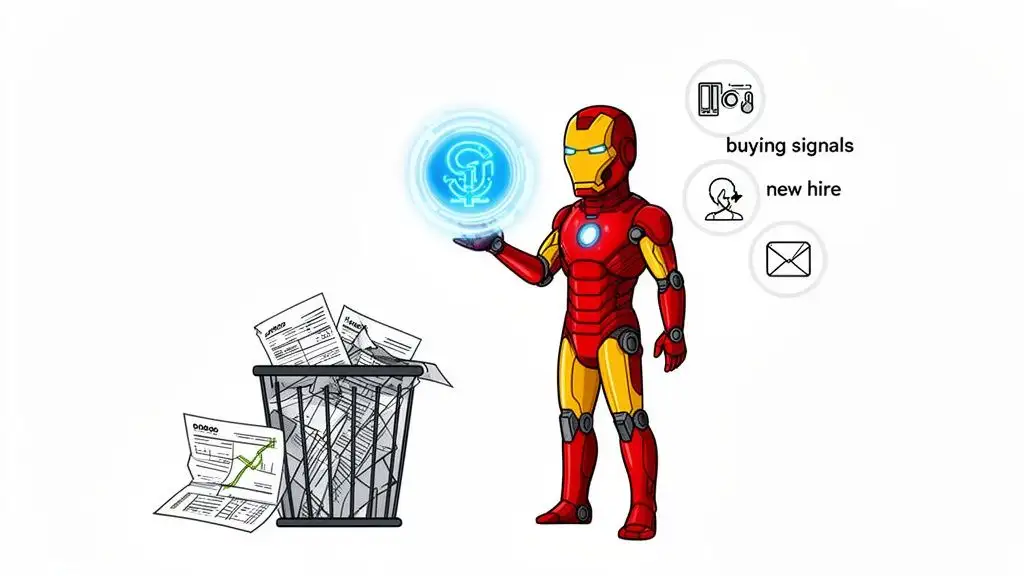
Let's cut right to it. Think of B2B lead generation software as your sales team's Iron Man suit. It gives them the power, intelligence, and pinpoint targeting they need to hit their numbers with almost superhuman accuracy.
Instead of your reps spending hours scraping websites and LinkedIn, which is a digital wild goose chase if there ever was one, this software automates the entire hunt. It’s the difference between trying to navigate a new city with a crumpled paper map and just plugging the address into Waze for the fastest route.
This Isn’t Your Dad’s Contact List
That dusty old spreadsheet filled with company names and generic email addresses? It’s time to let it go. Modern lead gen platforms are worlds apart from a simple contact list. They use AI to find companies that are practically waving a giant "we're ready to buy" flag.
These tools are engineered to detect buying signals, which are real-world events that scream a company is in the market for what you're selling. For example, a buying signal could be:
-
A company just landed a fresh round of funding.
-
They hired a new decision-maker, like a VP of Sales.
-
One of their key competitors just hiked up their prices.
-
They started using a new piece of tech that plays nicely with your product.
Once the software flags a signal, it instantly layers on the good stuff: accurate contact info for the people you actually need to talk to. This means you get verified emails and direct-dial phone numbers, not some generic "info@" address that goes straight to a digital void.
The whole point is to shift from a "spray and pray" mindset to a "scan and strike" strategy. You stop blasting thousands of generic emails and start sending a few hyper-relevant messages to prospects who are already warm. It's basically a Jedi mind trick for sales.
Why This Is a Game-Changer for Modern Sales
This move toward intelligent prospecting isn’t just some passing fad; it's a massive shift in how B2B sales gets done. The global B2B lead generation software market is blowing up, rocketing from about $3.2 billion in 2023 to a projected $9.8 billion by 2032. This incredible growth is proof that companies everywhere are ditching outdated manual methods for smarter tools that scour the web for high-intent signals. You can dive deeper into the trends of the B2B lead generation software market to see for yourself.
At the end of the day, this software helps you write a message that doesn’t sound like it came from Clippy, Microsoft's notoriously unhelpful paperclip assistant from the '90s. By blending buying signals with rich data, you can craft personalized outreach that gets replies and kicks off real conversations.
The Three Pillars of Elite Lead Generation Platforms
Let's be honest, not all B2B lead generation software is playing in the same league. The best ones are like the Avengers, combining several distinct powers into one unstoppable force. They do so much more than just scrape a stale list of names and generic "info@" emails from the web.
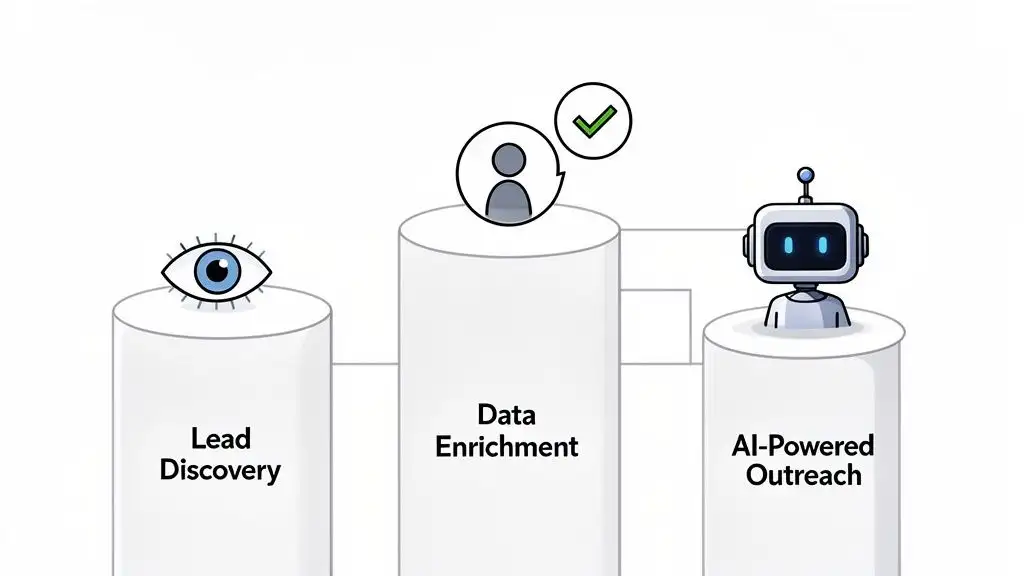
The truly game-changing platforms are built on three core capabilities that work in perfect sync. Getting a handle on these "pillars" is how you separate the sidekicks from the superheroes when picking your tool. They're the engine that turns random, scattergun prospecting into a precise, revenue-driving machine.
Pillar 1: Lead Discovery
Think of Lead Discovery as your team's all-seeing eye. This is the part of the software that constantly scans the entire business world for buying signals, flagging opportunities as they happen. We're not talking about finding a static list of companies in an industry; we're talking about identifying companies that are screaming, "I have a problem you can solve!" right now.
For example, a killer Lead Discovery feature could ping you the second a company in your target market:
-
Posts a job for a "Director of Demand Generation," which is a giant flashing sign of a new budget and strategy.
-
Announces a fresh Series B funding round, meaning they have a mountain of new cash to invest in tools that drive growth.
-
Just started using HubSpot, which happens to be a perfect integration partner for your software.
This is the difference between cold calling every single house on the block versus only knocking on doors with a "For Sale" sign out front. It focuses your team's energy where it actually counts: on prospects who are already warm.
Pillar 2: Data Enrichment
Okay, so Lead Discovery spots an opportunity. That's when Data Enrichment steps in as the brains of the operation. This pillar takes a basic signal, like a company name and a job title, and morphs it into a rich, actionable profile. It’s like upgrading a blurry, pixelated photo into a stunning 4K masterpiece.
An enrichment process automatically digs up and verifies all the juicy details you need to make your outreach count. It adds layers of context so you never have to send a generic "Hi there" email again. This includes:
-
Verified Contact Info: Getting the direct email and phone number of that new Director of Demand Generation, not some black-hole "contact@" address.
-
Firmographics: Confirming the company's size, revenue, and industry to make sure they're a perfect fit for your Ideal Customer Profile (ICP).
-
Technographics: Identifying their current tech stack, so you know for a fact they use complementary tools like Salesforce and Slack.
Data enrichment is the antidote to the dreaded, "Hi, I'd like to add you to my professional network" LinkedIn message. It gives you the ammunition you need to prove you’ve done your homework.
Pillar 3: AI-Powered Outreach
The final pillar, AI-Powered Outreach, is where the charisma comes in. After you’ve discovered a high-intent lead and enriched their profile with all that valuable data, this capability helps your team kick off a meaningful conversation. Think of it as the Tony Stark of your sales process, using intelligence and wit to make a killer first impression.
And this goes way beyond a simple mail merge. Modern AI analyzes all those enriched data points to generate hyper-personalized icebreakers and unique angles for your messages. For instance, the AI could instantly draft an email that says, "Congrats on the new Director of Demand Gen role! I saw you just raised a Series B and are using HubSpot. We help companies in your exact position scale their inbound with our HubSpot integration."
This pillar often connects with sales automation tools to build out smart, multi-step sequences across both email and LinkedIn. For more on that, check out our complete guide on what is sales automation and see how it fits into the puzzle. Together, these three pillars form a powerful, modern system that makes B2B lead gen feel less like guesswork and more like a science.
Pro Tip: You can use Munch to not only build your prospecting lists, but also enrich them and create personalized outreach messages at scale! In one platform!
Essential Features Every Sales Team Needs
Choosing the right B2B lead generation software can feel like trying to pick a Netflix show on a Friday night. You scroll endlessly, every option starts to look the same, and you’re dangerously close to just giving up and re-watching The Office for the tenth time. This is your curated ‘Top Picks’ list, designed to cut through the decision paralysis.
We’re moving beyond shiny marketing claims to focus on the non-negotiable features that actually help sales development reps (SDRs) book more meetings. These are the core functions that separate a nice-to-have gadget from a mission-critical tool for your revenue team.
Real-Time Buying Signal Detection
First up: knowing when someone is actually ready to buy. This is the difference between learning about a party after it's over and getting an invite while it's still raging. You need a platform that alerts you the moment a prospect shows they're in-market, not weeks later when your competitor has already closed the deal.
For instance, your software should immediately flag when a target account:
-
Hires a new C-level executive. This is a prime opportunity. New leaders almost always have the budget and mandate to shake things up and buy new solutions within their first 90 days.
-
Secures a new round of funding. Fresh capital means new projects and an increased appetite for tools that can accelerate growth. Cash is burning a hole in their pocket.
-
Starts using a complementary technology. If a company just adopted Salesforce, and your tool integrates perfectly with it, that’s a warm, relevant entry point for your outreach.
This feature turns your sales team from passive observers into proactive problem solvers who show up at the perfect moment. It’s less like cold calling and more like being the friendly neighbor who shows up with a wrench the second a pipe bursts.
High-Accuracy Waterfall Enrichment
Next, let's talk about data. Sending emails to invalid addresses is the digital equivalent of shouting your sales pitch into an empty room. It's a total waste of time and effort that tanks your domain reputation. This is where waterfall enrichment becomes absolutely critical.
Instead of pulling from a single, static database (which gets stale faster than a loaf of bread in the desert), waterfall enrichment checks multiple data providers in a cascading sequence until it finds verified contact information. This method dramatically increases the odds of getting accurate, up-to-date details.
Your standard for data quality should be sky-high. If a B2B lead generation software can't promise 95%+ email accuracy, you should swipe left. Anything less means your SDRs are spending valuable time dealing with bounced emails instead of booking meetings.
This isn’t just a minor detail; it’s the foundation of every successful outbound campaign.
Seamless and Simple CRM Integration
A powerful tool is useless if it doesn't play nicely with your existing tech stack. Your B2B lead generation software must offer a seamless CRM integration that doesn’t require a computer science degree to set up. It should connect to platforms like Salesforce or HubSpot with just a few clicks.
A solid integration automatically syncs new leads, contact details, and outreach activity directly into your CRM. This eliminates mind-numbing manual data entry, prevents duplicate records, and gives your entire team a single source of truth for every prospect. For example, when your software identifies a new lead, it should automatically create a contact in your CRM, log the buying signal, and track all subsequent emails and calls.
Multi-Channel Sequencing and Analytics
Finally, modern buyers don’t live in their email inboxes alone. Your software needs to support multi-channel sequencing across both email and LinkedIn. This allows you to create automated touchpoint cadences that engage prospects where they are most active.
An effective sequence might start with an email, follow up with a LinkedIn connection request a day later, and then send another email referencing a recent post they shared. It’s about being present, not just persistent.
Beyond just sending messages, the platform must have robust analytics and A/B testing capabilities. This feature lets you experiment with different subject lines, messaging angles, and calls to action to see what truly resonates. Without it, you’re just guessing. With it, you're not just sending more emails, you're sending smarter ones that get results.
For a deeper dive into how this connects to your on-site efforts, explore our guide on how to track website visitors to complete your visibility.
Core Feature Checklist for B2B Lead Generation Software
Feeling overwhelmed? Don't be. To make your decision easier, we've broken down the essential features from the 'nice-to-haves'. Use this checklist to quickly evaluate any platform you're considering.
| Feature | Why It's a Must-Have | Impact on Sales Workflow |
|---|---|---|
| Buying Signal Detection | Identifies prospects actively looking to buy, giving you a massive timing advantage over competitors. | Shifts SDRs from cold outreach to warm, context-driven conversations. Increases meeting book rates by targeting the most receptive accounts. |
| Waterfall Data Enrichment | Ensures contact data is highly accurate by checking multiple sources, minimizing bounced emails and wasted effort. | Protects your domain reputation, maximizes deliverability, and ensures your SDRs spend their time talking to prospects, not cleaning lists. |
| One-Click CRM Integration | Automates data sync between your lead gen tool and your CRM (e.g., Salesforce, HubSpot). | Eliminates manual data entry errors and saves hours of administrative work. Provides a single, unified view of all prospect activity for the team. |
| Multi-Channel Sequencing | Allows you to engage prospects across both email and LinkedIn, meeting them where they are most active. | Increases response rates by creating more touchpoints and building familiarity. Prevents your outreach from being ignored in a crowded inbox. |
| A/B Testing & Analytics | Provides concrete data on which messaging, subject lines, and CTAs are most effective for your audience. | Turns your outbound strategy from guesswork into a data-driven science. Enables continuous improvement and optimization of your sales cadences. |
Think of this table as your ultimate cheat sheet. If a tool you're vetting doesn't check these five boxes, it's probably not going to deliver the ROI your team needs. Stick to the essentials, and you’ll be well on your way to a smarter, more effective sales process.
Getting Lead Gen Software to Actually Stick in Your Daily Workflow
So, you bought the shiny new software. Great. Now comes the real challenge: getting your team to actually use it. A powerful B2B lead generation platform isn't just another browser tab your team has to remember to open; it's a complete overhaul of how your sales reps attack their day.
It’s about turning the mind-numbing, manual grind of prospecting into a strategic, high-stakes mission. The goal is to weave this thing into their daily rhythm so tightly they’ll wonder how they ever prospected without it. It becomes less of a tool and more of a trusted sidekick.
The New Playbook for Outbound Sales
A successful rollout starts with a clear, modern game plan. Forget the old way of dumping a static CSV on your team and wishing them luck. A workflow powered by top-tier lead gen software is alive, intelligent, and built for one thing: speed.
Here’s what that actually looks like moment-to-moment:
-
Morning Mission Briefing (First 30 Minutes): An SDR logs in and instantly sees a fresh, prioritized hit list. These aren't just random names. They’re accounts flagged overnight by critical buying signals. Maybe a competitor just announced a price hike, and the software has already lined up ten of their best customers who also happen to be your perfect ICP.
-
AI-Powered Recon (Next 45 Minutes): Instead of sinking hours into scrolling through LinkedIn profiles, the SDR uses the platform’s AI to instantly generate personalized icebreakers. The AI scans all the enriched data, including job titles, recent company news, and the tech they use, and spits out unique opening lines that prove you did your homework.
-
Launch the Attack (Before the Coffee Gets Cold): With just a few clicks, the SDR drops these hyper-relevant leads into a multi-channel sequence. We’re not talking about a generic email blast. This is a smart cadence of emails and LinkedIn connection requests, all designed to start a real conversation, not just beg for a meeting.
The entire hunt, from spotting the opportunity to firing the first shot, is over before their first coffee is finished. It’s about working smarter, giving your sales team a wildly unfair advantage. To take this even further, check out our guide on how to create workflows that turn your reps into machines.
From a Blip on the Radar to a Real Conversation
Let's make this real. Imagine your SDR, Sarah, is targeting mid-sized SaaS companies.
Her day kicks off with a ping from her lead gen software: "Acme Corp, a perfect-fit account, just hired a new VP of Marketing."
The old way? Sarah would waste an hour finding the new VP's name, guessing their email, and sending a cringey, "Congrats on the new role!" message. It’s the sales equivalent of a weak, floppy handshake.
The new way is a different ballgame. The software has already found the VP's verified email and direct dial. It also flagged that Acme Corp uses a CRM that plays nicely with your product. The platform’s AI drafts this little gem: "Saw you just joined Acme Corp to run marketing, congrats! Noticed you’re a Salesforce shop; our integration helps teams like yours squeeze 30% more out of their CRM data in the first 90 days."
Sarah gives it a quick polish, then launches the sequence. This approach respects the buyer's time and instantly positions her as a helpful expert, not just another sales drone clogging their inbox.
Your Secret Weapon: Social Platforms
This modern workflow is especially deadly on the right channels. LinkedIn is the undisputed king of the B2B jungle, responsible for a staggering 80% of all social media B2B prospects. When you give your team tools that connect the dots between LinkedIn signals, data enrichment, and AI-powered outreach, it’s a total game-changer. You can discover more insights about B2B tools and how they're reshaping the industry.
Properly integrating your B2B lead generation software means transforming your team's daily grind from a reactive chore into a proactive, signal-driven engine that spits out high-quality sales conversations on repeat.
How to Measure Success and Calculate Your ROI
So, you've shelled out for some fancy new B2B lead generation software. Great. Now comes the moment of truth: convincing the finance team it was money well spent. You're going to need more than good vibes and a slick-looking dashboard. It's time to talk numbers.
Measuring success here isn't about chasing feel-good metrics like email opens or social media likes. Those are the sales equivalent of getting a "u up?" text at 2 a.m. It’s a sign of life, sure, but it’s not leading to a serious commitment. We need to focus on what actually moves the needle and brings in the cash.
Moving Beyond Vanity Metrics
The real magic of good B2B lead gen software is in making your team dramatically more efficient and beefing up your pipeline. You’re essentially paying for a machine that frees up your reps' time and helps them book more qualified meetings. If it's not doing that, it's just an expensive paperweight.
Your mission is to track the metrics that matter, the ones that justify the budget and prove you’re getting a return. Here are the big ones to keep an eye on:
-
Time Saved Per SDR: This one’s huge. Figure out how many hours your reps used to burn on manual research and compare it to now. For example, if they save 10 hours a month, that's time they can spend actually talking to prospects.
-
Meetings Booked Per SDR: Are your reps booking more qualified appointments? With a steady stream of high-intent leads, this number should be climbing. A spike here is a fantastic sign that both your lead quality and team efficiency are up.
-
Sales Cycle Length: Better leads should mean a shorter trip from "hello" to "closed-won." Track the average time it takes to close a deal. A faster cycle means revenue hits the bank account sooner.
This is the kind of slick, repeatable workflow your software should be creating, from spotting a buying signal all the way through to personalized outreach.
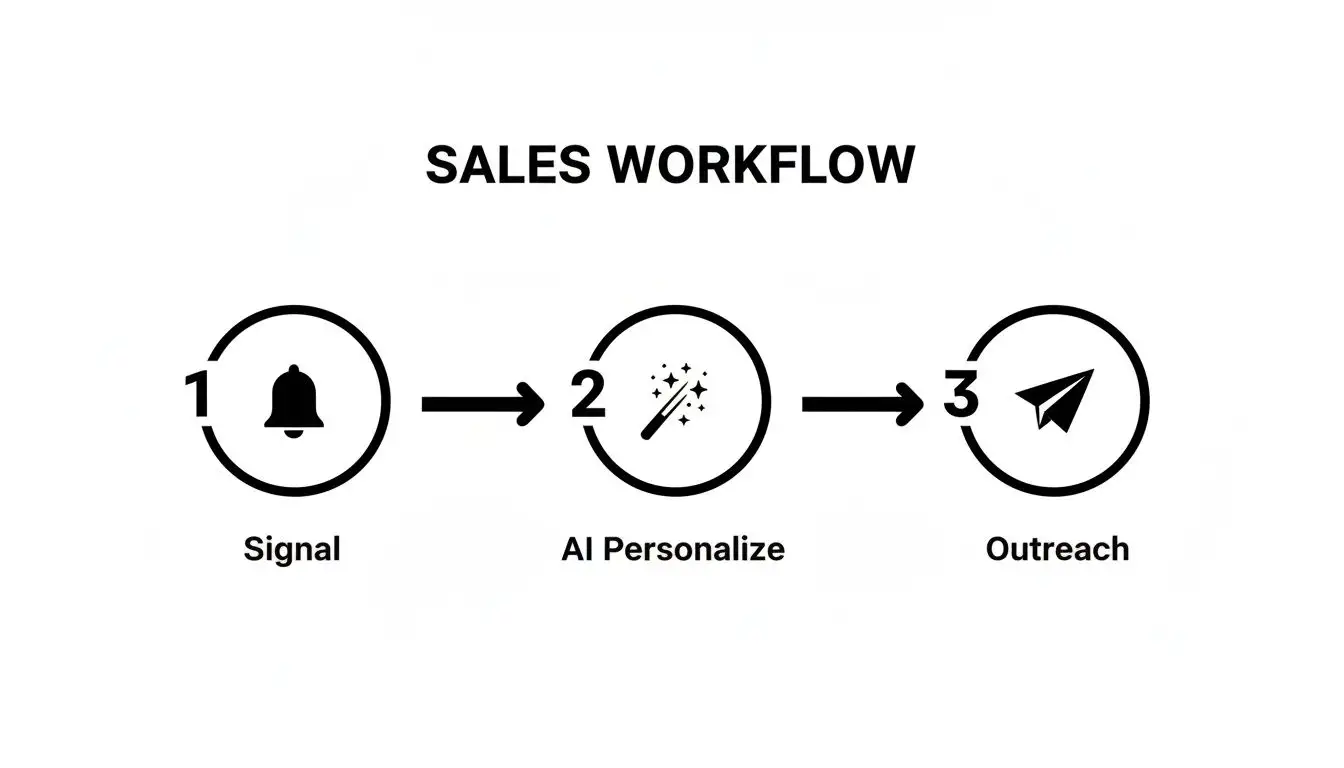
This simple flow is what separates the old-school manual grind from a modern, intelligent engine for booking meetings.
The Simple Math for Calculating ROI
Alright, let's get down to the brass tacks. Calculating your return on investment doesn't require a degree in theoretical physics. It’s all about connecting the cost of the software to the value it’s creating.
Here’s a dead-simple way to frame it. Let's say the software costs you $500 a month. You have a team of five SDRs, and each one is now saving 10 hours a month that they used to spend digging for leads. If an SDR’s fully-loaded cost is $40 an hour, that’s a $400 savings per rep. That adds up to $2,000 in saved time across the team.
Back-of-the-Napkin ROI:
Time Savings: (5 SDRs x 10 hours/month) x $40/hour = $2,000
Software Cost: $500/month
Net Gain: $2,000 (Savings) - $500 (Cost) = $1,500
ROI: ($1,500 Net Gain / $500 Cost) x 100 = 300% ROI
And get this, that calculation doesn't even touch the revenue from the 20% increase in meetings booked. Once you start factoring in that new pipeline value, the ROI can get pretty astronomical.
Another critical piece of the puzzle is Lead Quality, which is where scoring comes in. Higher-quality leads close faster and at a much better rate. If you want to dial in how your team finds the absolute best opportunities, it's worth exploring some proven lead scoring best practices.
At the end of the day, proving the software’s value is about showing how it transforms your sales team’s output. You’re not just buying another tool; you’re investing in a system that makes every rep more productive and every single outreach attempt more likely to succeed.
Finding the Right B2B Lead Generation Software For You
Choosing the right B2B lead generation software can feel a lot like picking a character in Mortal Kombat for the first time. You’re staring at a screen packed with options, each with their own flashy moves, and you’re just hoping you don't pick the one that gets you pummeled in the first round. With so many choices, how do you find your champion?
The market is absolutely flooded with tools. Some are hyper-specialized, doing just one thing like sniffing out email addresses. Others are pure sales engagement platforms, built only for blasting out outreach sequences. While these niche tools can be great at their one job, trying to juggle a bunch of them usually creates more headaches than it solves.
The Case for a Unified Platform
Stitching together a half-dozen different tools is like trying to build a LEGO masterpiece with parts from three different sets. It's clunky, the pieces don't quite fit, and you end up spending more time forcing connections than actually building something cool. This is where a unified platform saves the day, blending lead discovery, data enrichment, and outreach into one seamless workflow.
A unified platform is the clear answer for teams that want to kill the friction and get straight to the good stuff: selling. Think of it as the ultimate sales multi-tool. It's for teams who know their reps' time is far better spent talking to qualified prospects than digging through data like they're on some bizarre archaeological dig.
A unified platform is for the sales leader who’s sick of staring at a credit card statement with a dozen different software subscriptions. It's about consolidating your tech stack so your team can rally behind a single, powerful engine for growth instead of trying to be a DJ mixing five different tracks at once.
Who Needs a Unified Solution Most?
So, is a do-it-all platform right for you? It’s the perfect fit if you're a:
-
Startup SDR Team: You need to move at lightning speed and can't afford the complexity of managing a Frankenstein's monster of different tools. You need one solution that punches way above its weight class.
-
Founder Handling Sales: Your time is your most valuable currency. A single platform lets you find and engage leads without wasting a precious second on manual grunt work.
-
Sales Leader Tired of Juggling Tools: You want to streamline your team's workflow, make training a breeze, and get a clear picture of your ROI from one dashboard, not five.
The real goal is to find a solution that surfaces high-intent leads and helps your team spark meaningful conversations, fast. For a closer look at what’s out there, you can explore our breakdown of top-tier B2B lead generation tools to see how they stack up.
Choosing the right software isn't just about a feature checklist; it's about finding a true partner that understands your team's unique needs and clears your path to revenue.
Got Questions? We've Got Answers.
Alright, let's tackle some of the common questions that pop up when people start looking into B2B lead generation software. No fluff, just straight answers to help you figure this all out.
How Is B2B Lead Generation Software Different From a CRM?
Think of it like this: your CRM is your team's playbook. It’s where you keep track of all the players you already know, like your current customers, your warm leads, and every past interaction. It’s your system of record for managing relationships.
B2B lead generation software, on the other hand, is your scout. It’s out in the world, actively finding new, all-star prospects you’ve never even heard of. It identifies them based on real-time buying signals, gathers intel, and helps you make a killer first impression.
The two systems are best friends. Your lead gen software finds the talent and hands it off to your CRM, which then takes over to manage the journey from prospect to happy customer. One finds, the other manages. Simple as that.
How Long Does It Take to See Results?
This isn't an overnight magic trick, but you'll see the impact much faster than you think. Most teams start feeling the benefits within the first 30 days. The very first thing you'll notice, often within a week, is how much time your team gets back. The hours once lost to manual prospecting? Gone.
Higher reply rates usually follow soon after, since you're reaching out with better, more relevant info. As for the big-ticket ROI, like a measurable jump in booked meetings and pipeline growth, you’ll typically see that crystalize within the first quarter. It all comes down to using the tool consistently and letting the automation do its heavy lifting.
You don't just flip a switch and have meetings rain down from the sky like it's the end of The Matrix. But you will see SDRs reclaim hours of their day almost immediately, which is the first step toward a healthier pipeline and a happier sales team.
Can Small Businesses and Startups Afford This Software?
Yes, 100%. There's a huge myth that this kind of tech is reserved for enterprise giants with budgets the size of a small country. The reality is, many of today's best platforms were built from the ground up for startups and small businesses.
Pricing is often designed to be super scalable, with entry-level plans costing far less than hiring a part-time researcher. When you do the math on the time saved and the deals closed, the right b2b lead generation software doesn't just pay for itself; it becomes one of the most profitable tools in your stack. It's how small teams punch way above their weight class.
Ready to stop the manual grind and start booking more meetings? Munch unifies lead discovery, data enrichment, and AI-powered outreach into one seamless platform. Find your next customer today.