What Is Outbound Sales and How Does It Actually Work?

By Mriganka Bhuyan
•Founder at Munch
Alright, let's ditch the robotic jargon and talk about what outbound sales really is. Forget the dry, textbook definitions for a moment.
At its core, outbound sales is the art of starting a conversation. Instead of waiting for potential customers to find you, your team goes out and finds them. You're not casting a wide net and hoping for the best; you're the hunter, not the farmer, seeking out the exact people who need what you're selling.
So What Is Outbound Sales, Anyway?
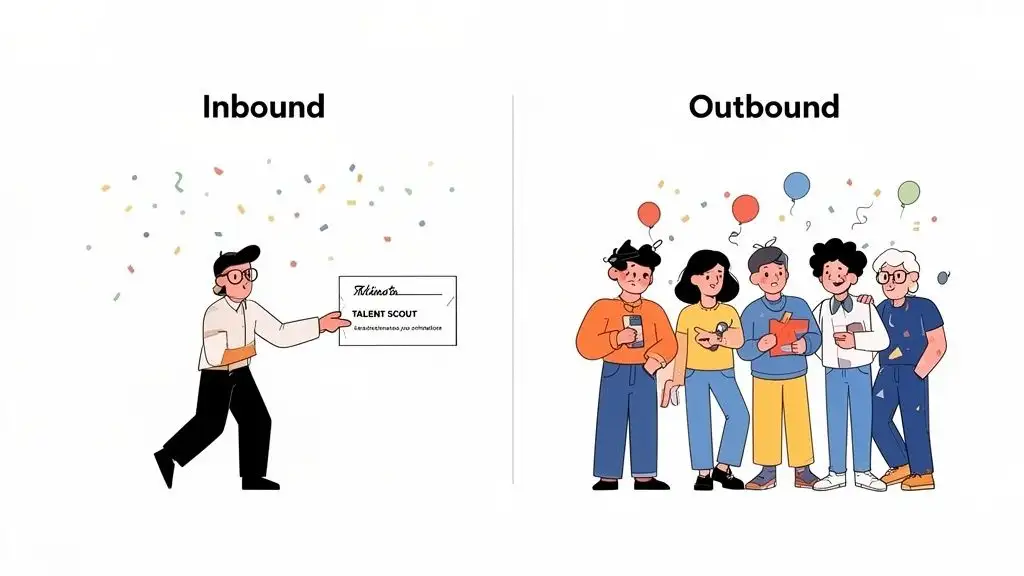
Think of it this way: inbound sales is like being a celebrity chef who opens a hot new restaurant. You create an amazing menu (your content), get rave reviews (SEO), and people line up at your door, eager to get a table. They come to you.
Outbound sales? That's more like being a world-class talent scout. You don't wait for talent to walk into your office. You hit the road, scouting specific clubs and venues, looking for that one-in-a-million star who fits the exact role you need to fill. You're proactive, you're targeted, and you initiate the conversation.
The Heart of the Outbound Hustle
Modern outbound isn't about blasting out a million generic emails or making annoying, high-pressure cold calls. That stuff died with dial-up internet (or at least, it should have). Today, it's a much smarter, more strategic game.
It all boils down to a simple, powerful idea: find a specific problem, identify who has it, and reach out with a direct solution. It’s about being a problem-solver, not just a product-pusher.
A solid outbound strategy usually follows these steps:
-
Pinpoint Your Ideal Prospects: First, you get crystal clear on who your perfect customer is. Then, you use smart tools to build a list of companies and decision-makers who fit that profile to a T.
-
Start the Conversation: Your sales development reps (SDRs) then reach out. This could be through a carefully crafted email, a call, a LinkedIn message, or a mix of all three.
-
Qualify and Educate: Once you've made contact, the goal is to see if there's a real fit. Does the prospect actually have the problem you solve? Are they in a position to buy? This is where you educate them on the value you offer.
For example, imagine a B2B software company that sells advanced logistics software. Their outbound team might see that a mid-sized e-commerce brand just secured a huge round of funding to expand internationally. That’s a trigger. They’d reach out directly to the COO, not with a generic pitch, but with a message like, "Congrats on the new funding! Scaling globally brings massive shipping headaches. We helped [Similar Company] cut their international shipping costs by 15% in 60 days. Worth a quick chat?"
The goal isn’t to interrupt someone’s day. It’s to deliver the right message to the right person at the exact moment they need to hear it, making your outreach feel less like a sales pitch and more like a genuinely helpful tip from an expert.
Let's break down the key pieces of a modern outbound motion.
Outbound Sales At a Glance
This table gives you a quick snapshot of the essential components that make a modern outbound sales strategy tick.
| Component | Description | Primary Goal |
|---|---|---|
| Ideal Customer Profile (ICP) | A detailed definition of your perfect customer, including industry, company size, revenue, and challenges. | To focus all outreach efforts on the most promising accounts. |
| Prospecting | The process of finding and building lists of contacts who match your ICP. | To create a high-quality pipeline of potential leads. |
| Outreach Channels | The methods used to contact prospects, such as cold email, cold calling, and social selling (e.g., LinkedIn). | To initiate meaningful conversations with decision-makers. |
| Sales Cadence | A scheduled sequence of touchpoints (emails, calls, social DMs) over a set period. | To stay top-of-mind without being annoying, and to maximize response rates. |
| Qualification | The process of vetting leads to ensure they have a genuine need, budget, and authority to buy. | To ensure the sales team spends time on high-potential deals only. |
As you can see, it's a sophisticated process that relies on precision and timing.
This is a far cry from the old "smile and dial" approach. Success today often depends on using powerful tools to automate the grunt work, so your team can focus on what humans do best: building real relationships. To see how technology is changing the game, take a look at our deep dive into what is sales automation. It's a game-changer.
Outbound vs. Inbound Sales: The Ultimate Rivalry
It’s time for the ultimate showdown, a rivalry that has defined sales teams for decades. Think of it like the great boy band debate of the 90s: NSYNC or the Backstreet Boys? One wasn't necessarily better, but they had completely different playbooks for winning over their fans.
Inbound sales is the NSYNC of the business world. They built a massive following by creating catchy, magnetic content, the business equivalent of chart-topping hits like "Bye Bye Bye." Their appeal was so strong that fans came to them, lining up around the block for concert tickets. Inbound marketing works the same way, using things like SEO, blogs, and podcasts to attract customers who are already looking for what you sell.
Outbound sales? That’s the Backstreet Boys. They were always on a massive world tour, proactively hitting every city to find their fans. They didn't sit back and wait; they went directly to the people, booking arenas and plastering their faces on posters. That’s the heart of outbound: proactively pursuing ideal customers instead of waiting for them to show up.
The Core Differences
The real split between inbound and outbound boils down to one simple question: who makes the first move? Inbound is passive and magnetic, pulling people in. Outbound is active and direct, pushing the message out.
Let’s get practical with an example. Imagine a company that sells accounting software.
-
Their Inbound Strategy: They write a bunch of helpful blog posts like "Top 10 Tax Deductions for Freelancers" or "How to Manage Cash Flow as a Small Business." A freelance designer stumbles upon one via Google, downloads a free guide, and eventually signs up for a trial. The customer initiated the whole thing.
-
Their Outbound Strategy: The sales team creates a target list of tech startups that just closed their Series A funding. An SDR finds a CFO on LinkedIn and shoots over a personalized message: "Hey, congrats on the funding round! Scaling that fast often creates accounting nightmares. We actually helped [Similar Company] automate their invoicing and saved them 20 hours a month." The company started that conversation from scratch.
The real magic isn't in picking a side. It's in blending both approaches to create a powerhouse system where inbound generates a steady flow of warm leads, while your outbound team goes after the high-value accounts that might never have found you otherwise.
How They Fit Together
The smartest companies don't choose a favorite boy band; they appreciate what makes each one great. Inbound is fantastic for filling the top of your sales funnel with curious prospects, while outbound lets you handpick and target specific, high-value accounts with surgical precision.
Think of them as two sides of the same revenue-generating coin.
Your inbound efforts warm up the entire market, building brand awareness and capturing people who are already in buying mode. This actually makes your outbound team's job way easier. A "cold" email feels a lot warmer when the person on the other end already recognizes your company's name. To see how these leads travel from awareness to purchase, check out our deep dive on the B2B marketing funnel.
At the end of the day, the goal isn't to be Team NSYNC or Team Backstreet Boys. It's to create a supergroup that dominates the charts by combining the best of both worlds.
Your Modern Outbound Sales Playbook
Let's get one thing straight: if your picture of an outbound salesperson is some guy in a cheap suit cold-calling from a phone book, you're about 20 years out of date. Forget Glengarry Glen Ross. Today's outbound sales is less about brute force and more like a high-tech special ops mission. It’s all about precision, intelligence, and a multi-step plan of attack.
This modern playbook is a sophisticated engine for turning complete strangers into qualified opportunities. Each step feeds into the next, creating a predictable, revenue-generating machine.
Step 1: Prospecting and Discovery
First things first, you have to find your targets. This isn't just about aimlessly scrolling through LinkedIn, hoping for a miracle. It's about using smart tools to spot companies that are practically waving a flag saying, "We need what you're selling!"
These are what we call buying signals. Think of them as clues. For example, a company just raised a new round of funding, they’re hiring for a very specific role (like a "Head of Cybersecurity"), or they just started using a new piece of tech that your product integrates with. These are your openings.
Let’s imagine a cybersecurity firm we’ll call "Securitas." They're not just blanket-emailing every bank on a list. Instead, they use a tool like Munch to find banks that recently posted a job for a "Cloud Security Architect." That's a huge signal that the bank is investing heavily in an area where Securitas is an expert. It’s not random; it's strategic hunting.
Step 2: Data Enrichment
Okay, you've got your target company. Now, who do you actually talk to? In the old days, this meant hours of soul-crushing detective work, digging through corporate websites and endless LinkedIn profiles, only to get a bounced email for your trouble.
Thankfully, we can automate this now. Data enrichment tools do the heavy lifting, instantly finding verified contact info like the direct email and phone number for the Chief Information Security Officer (CISO) at that bank Securitas is targeting. This saves a massive amount of time and makes sure your message actually lands in the right inbox.
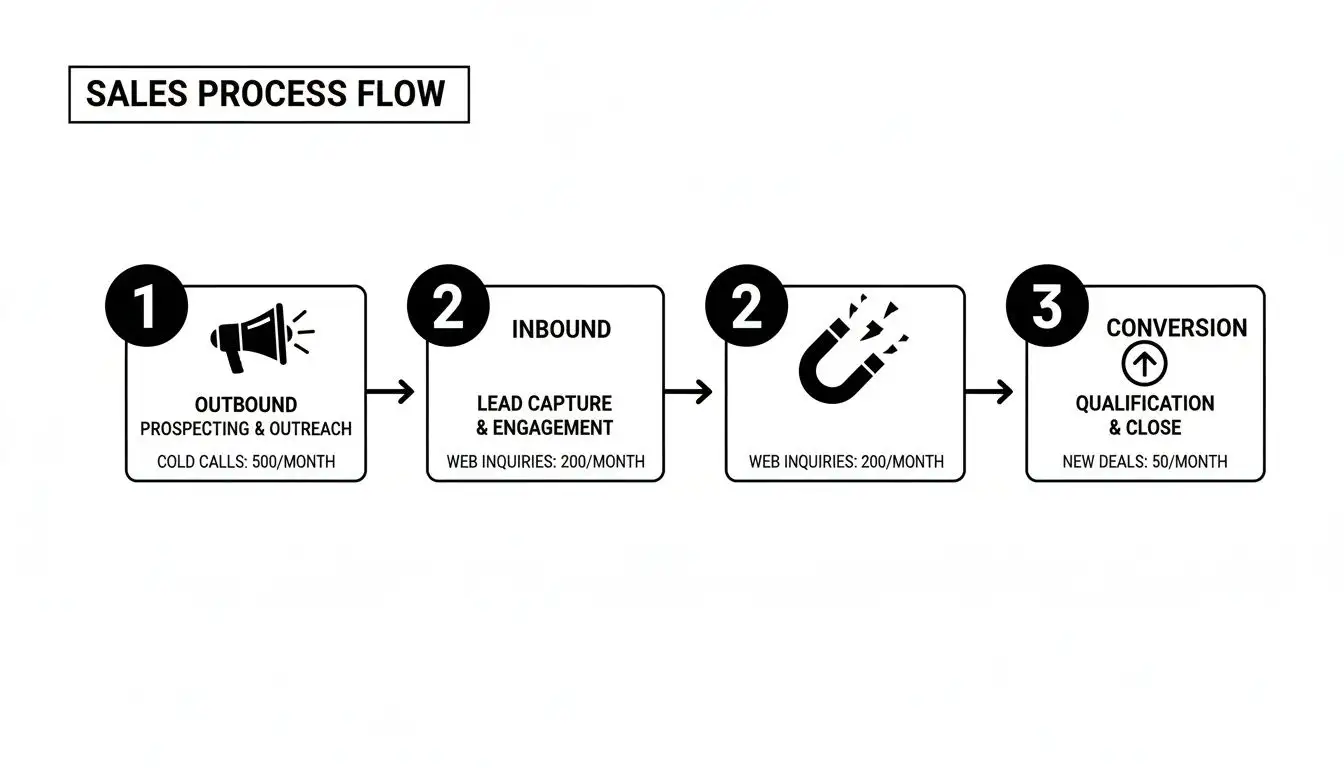
This diagram shows it perfectly: outbound starts with proactive identification. You go out and find the leads, which is a world away from the inbound model of waiting for them to find you.
Step 3: Hyper-Personalization and Outreach
You’ve got the right person. Now it's time to craft a message that doesn’t get immediately dragged to the trash folder. Generic, copy-pasted templates are the kiss of death. The name of the game is hyper-personalization, which means writing an email so specific and relevant it feels like you've been following their company for months.
So, the Securitas sales rep won't send a lazy "we sell security" email. They'll write something like this: "Saw your new job post for a Cloud Security Architect. With your recent expansion into mobile banking, securing those new cloud assets must be a top priority. We helped [Another Major Bank] lock down their cloud infrastructure during a similar expansion."
See the difference? It shows you've done your homework and you’re reaching out with a specific, timely solution. This is how you start a real conversation.
Pro Tip: Munch not only helps you find accurate leads, but also enriches their data and crafts personalized outreach messages for every single lead.
Step 4: Multi-Channel Engagement
Nobody lives in their email inbox 24/7. A truly modern playbook engages prospects across multiple platforms using a coordinated sequence, often called a sales cadence.
It might look something like this:
-
Day 1: Send that personalized email.
-
Day 1: Connect with them on LinkedIn (with a short, custom note!).
-
Day 3: Follow up on your original email with another quick, valuable insight.
-
Day 5: Make a brief, to-the-point phone call. No rambling.
-
Day 7: Find one of their recent LinkedIn posts and leave a thoughtful comment.
The goal here isn't to be a pest; it's to be professionally persistent. When you show up in different places with valuable context, you stay top-of-mind and dramatically increase your chances of getting a response.
Step 5: Qualification
Boom! A prospect replies. Mission accomplished, right? Not quite.
The final, crucial step is turning that reply into a genuine sales opportunity. This is the qualification stage. Here, you confirm they have a real problem you can solve, the budget to actually fix it, and the authority to sign on the dotted line. This process is vital for ensuring your account executives only spend time on deals that have a real shot at closing.
For a much deeper dive into this, check out our guide on how to qualify sales leads.
By following this exact playbook, Securitas transforms a simple buying signal into a qualified meeting with a major bank. That’s how modern outbound sales gets real results.
Picking Your Outbound Channels and Tactics
Alright, you've got the playbook. Now it's time to choose your weapons. In the world of outbound sales, your success hinges on picking the right channels and wielding them with some serious skill.
Think of it like this: you wouldn't bring a butter knife to a sword fight. The same logic applies here. You need the right tool for the right prospect at the right time.
Your main arsenal usually comes down to three heavy hitters: cold email, cold calling, and social outreach (looking at you, LinkedIn). Each has its own rhythm and requires a totally different approach. The real magic happens when you start using them together in a coordinated attack, which is how you actually cut through the noise and get noticed.
The Art of the Cold Email
Cold email is often your first shot, but let's be honest, most people are terrible at it. Their emails are so generic they sound like they were written by a bored robot on a Monday morning. The secret to a killer cold email isn't some magic template; it's genuine personalization that makes someone stop mid-scroll and think, "Huh, this person actually gets it."
Forget those lazy, overused subject lines like "Quick Question" or "Following Up." They scream "SALES PITCH" from a mile away and are destined for the trash folder. Instead, try something that proves you’ve done a smidgen of homework.
-
Bad Example: "Introductory Call?"
-
Good Example: "Idea re: [Prospect Company]'s recent launch"
The goal is to be intriguing, not invasive. Your email should be a short, sharp message that shows you understand their world and have a darn good reason for popping into their inbox. To really nail this, you can dive deeper into our detailed guide on cold email best practices.
Not Your Grandfather's Cold Call
Cold calling gets a bad rap, mostly because we all picture those cringey, high-pressure telemarketers from the '90s. But modern cold calling isn't dead; it has just evolved. Today, it’s a killer tool for pattern interruption, but only when you do it right.
The trick is to disarm their skepticism in the first seven seconds. Ditch the robotic script and open with something that shows you're a real human who did their research. A simple, "Hey, I know I'm calling you out of the blue, but I saw your team is hiring a new Head of Logistics and I had a specific idea..." can completely change the vibe of the call.
It's a distinct skill within the wider outbound world. In fact, outbound telemarketing is still a massive industry, valued at around $11.5 billion in 2024 and expected to keep growing. You can check out more stats on the outbound telemarketing market on ResearchAndMarkets.com. This proves the phone is still a vital channel for sparking real conversations.
Sliding Into LinkedIn DMs the Right Way
Finally, we have social outreach, which for B2B sales, pretty much means LinkedIn. This is where so many reps make truly cringeworthy mistakes. The absolute worst offense? The instant connection request immediately followed by a five-paragraph monologue about their company. It’s the sales equivalent of proposing on a first date. Don't be that person.
Instead of pitching, your goal should be to build some actual rapport. Your connection request note needs to be short and have some context.
-
Avoid This: "Hi [Name], I see we have mutual connections. I'd love to connect and tell you about my company's amazing services..."
-
Try This: "Hi [Name], I really enjoyed your recent post on supply chain trends. Would love to connect and follow your insights."
Once you’re connected, for the love of all that is good, don't pounce. Engage with their content. Share something useful. Play the long game. When you eventually do slide into their DMs with a direct message, you're no longer a stranger, you're a familiar face from their feed. This multi-channel dance, combining email, calls, and social touches, is your ticket to the big leagues.
How Munch Pulls Your Whole Strategy Together
Knowing the outbound sales playbook is one thing. Actually running the plays without fumbling the ball is something else entirely. Most teams are stuck juggling one tool for prospecting, another for finding emails, and a third for trying to write decent outreach. It’s a recipe for disaster, bogged down by manual work and data that never quite lines up. It’s like trying to build the car while you're driving it down the highway.
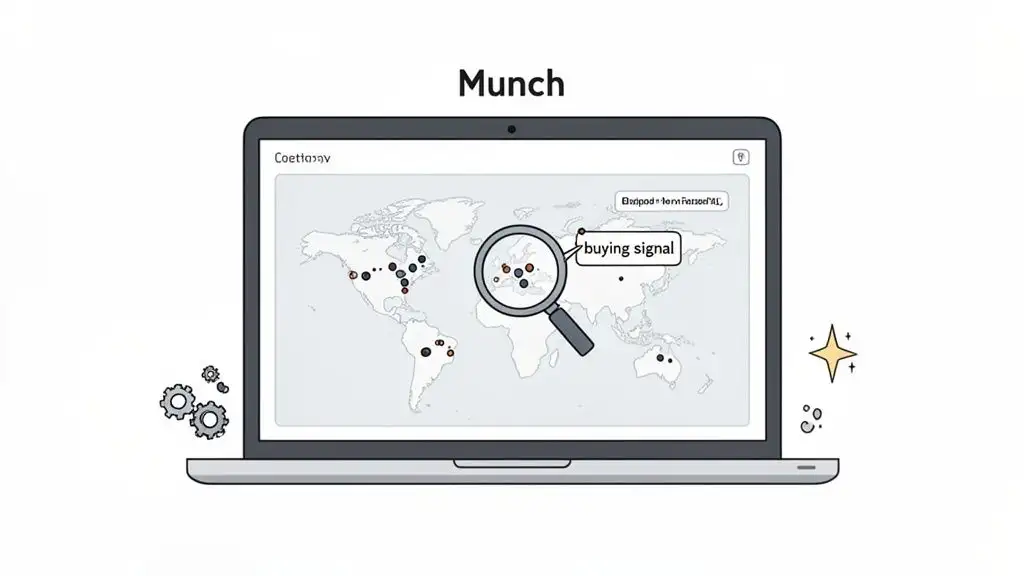
This is exactly the headache that a smart, all-in-one platform like Munch is designed to cure. Instead of duct-taping three different apps together and hoping for the best, a unified platform becomes your mission control. It turns all that theory into a smooth, high-performance reality by bringing speed, accuracy, and genuine relevance together in one place.
Your Unfair Advantage in a Crowded Inbox
The market stats back it up, too. The global outbound customer support BPO market alone was valued at $8.23 billion in 2024 and is expected to rocket to $15.08 billion by 2030. What does that tell you? Companies are doubling down on proactive outreach, which means your prospects' inboxes are more packed than ever. You can dig into these outbound market trends from Grand View Research for the full picture.
To cut through that noise, you need more than just a list of names. You need an integrated system that gives you a genuine edge. This is where the right tool completely changes the game.
Finding Leads With Pinpoint Accuracy
Forget scraping generic lists. A powerful lead discovery engine is your high-tech targeting system, scanning the entire market for buying signals. It lets you find companies that are practically raising their hands to say they need what you're selling.
-
Job Changes: Get an instant heads-up when a decision-maker you’ve worked with before lands at a new company.
-
Funding Events: Be the first to know the moment a company in your sweet spot gets a fresh round of cash.
-
Technology Adoption: See exactly when a prospect starts using a tool that pairs perfectly with yours.
This isn't just prospecting. It's strategic intelligence that tells you who to call and, more importantly, when.
Automating the Soul-Crushing Busywork
Once you’ve locked onto your target, the real grind begins: finding their contact info. Manually digging for verified emails and direct dials is a soul-crushing time-sink that kills all your momentum.
A great platform handles all of this for you. Using waterfall enrichment, it automatically pulls verified contact details, company info, and tech stack data. This ensures your message actually lands in the right inbox instead of bouncing back into the digital void. This is how you win back hours of your day for the part that actually matters: selling.
AI Personalization That Doesn't Sound Like a Robot
And now for the secret weapon. The one thing that gets replies is outreach that feels like it was written by a human, for a human. Generic templates are dead on arrival. An AI personalization engine can craft unique, context-aware messages for every single person on your list.
It references their specific buying signals, recent company news, and even their LinkedIn activity to create an opening line so relevant it feels like you wrote it just for them.
By combining lead discovery, data enrichment, and AI-driven personalization into a single, seamless workflow, a tool like Munch gives you the ultimate advantage. It collapses your tech stack and arms your reps with the speed and relevance they need to build a predictable pipeline and actually win.
Still Got Questions About Outbound Sales?
Alright, you've got the game plan, but I bet a few questions are still rattling around in your head. That's a good sign. The best in this business never stop asking questions. Let's tackle the big ones head-on and put those doubts to rest.
Is Cold Calling Really Still a Thing?
Is the cold call dead? In a word: nope. But lazy cold calling? The kind where you just hammer a list with a script you found on Google? Oh yeah, that’s a fossil.
Think of it less as a "cold" call and more as a "smart" call. The new game isn't about how many dials you can make; it's about making the right dial. When you pick up the phone armed with a little knowledge, like knowing the person you're calling just launched a new product, it’s not an interruption anymore. It’s a relevant conversation starter.
In a world where execs delete 90% of their emails without a second glance, the phone is a pattern interrupt. A well-timed, intelligent call can slice through the digital noise like nothing else. It’s not dead, it just grew up.
How Much Personalization Is Too Much?
This is a fantastic question. There's a fine line between showing you've done your homework and coming across like you've been camping outside their office. The sweet spot is "relevant, not creepy."
Good personalization is way more than just slotting Hi {first_name} into a template. It’s about proving you have a darn good reason for reaching out to them specifically, out of all the people in the world.
-
Doing it right: "I saw your recent LinkedIn post about the challenges of scaling your engineering team and had an idea for how you could slash your cloud infrastructure costs."
-
Getting it wrong (and weird): "I see from your Instagram you were in Hawaii last week, hope it was fun! Anyway, about our software..."
The goal is to tie your outreach to a professional pain point or a public business event. Stick to their company's latest win, a new hire, or an industry challenge they've talked about. Keep it about business, and you'll stay on the right side of that line.
Will Outbound Sales Even Work for My Industry?
Outbound shines brightest in the B2B world, especially when two things are true: your average deal size is high enough to make the effort worthwhile, and you know exactly who you need to talk to. This is a sniper rifle, not a shotgun.
It’s the perfect play when you're selling complex solutions to specific decision-makers. Think of a SaaS company selling a $50,000 annual license to VPs of Marketing; that’s a home run. It makes a lot less sense for a B2C company selling a $10-a-month app to everyone and anyone.
While you might see it work for some high-ticket consumer sales (like luxury real estate or wealth management), its true home court will always be B2B.
What Are the Most Important Metrics to Track?
Everyone wants to count booked meetings and closed deals, but those are the final score. They don't tell you how you're winning or losing the game. To really know if your outbound engine is humming, you need to watch the metrics that predict success.
Keep your eyes glued to these KPIs:
-
Positive Reply Rate: Are people actually responding with interest? This is your first signal that your message is hitting home. If it’s low, your targeting or your copy is off.
-
Conversion Rate (Contact to Qualified Lead): Of the people you talk to, how many turn into real, qualified opportunities? This tells you how good your reps are at starting valuable conversations.
-
Sales Cycle Length: How long does it take an outbound lead to become a customer? Knowing this helps you predict revenue and plan for the future.
Tracking these numbers is like a doctor checking your vital signs. It lets you spot problems early, long before the patient (your pipeline) ends up in the emergency room.
Ready to stop guessing and start building a predictable outbound machine? Munch gives you the prospect discovery, data enrichment, and AI-powered personalization you need to fill your pipeline with your best-fit customers. Sign up now!