7 Tools For Sales Prospecting You Should Know

By Mriganka Bhuyan
•Founder at Munch
Sales prospecting can sometimes feel like trying to find a specific needle in a galaxy-sized haystack. You know your ideal customers are out there, but sifting through endless data points to find them can make you question all your life choices. It's less "Wolf of Wall Street" and more "Where's Waldo," but with higher stakes and a lot more caffeine. The right stack of tools for sales prospecting can change the game entirely, transforming your daily grind into a well-oiled, high-intent lead-generating machine.
This isn't just another list. We're diving deep into the platforms that will help you discover, enrich, and engage with your future biggest fans. Think of this as your ultimate playbook, equipping you with the digital equivalent of X-ray vision to see straight to your ideal customer profile. We'll break down the heavy hitters like LinkedIn Sales Navigator, ZoomInfo, and Apollo.io, plus innovative newcomers like Munch and Clay that are changing how prospecting gets done.
Of course, the shiniest tools are only as good as the strategy behind them. Before you start building your dream tech stack, getting a solid grip on fundamental sales prospecting best practices will ensure you're using these powerful platforms to their full potential.
In this guide, you’ll get the full scoop on each tool: key features, pricing, who it's perfect for, and the unfiltered pros and cons. We've included screenshots and direct links to get you started faster. Prepare to find the perfect additions to your arsenal, streamline your workflow, and finally start booking meetings with the people who actually want to hear from you. Let's get to it.
1. Munch: The All-in-One Prospecting Powerhouse
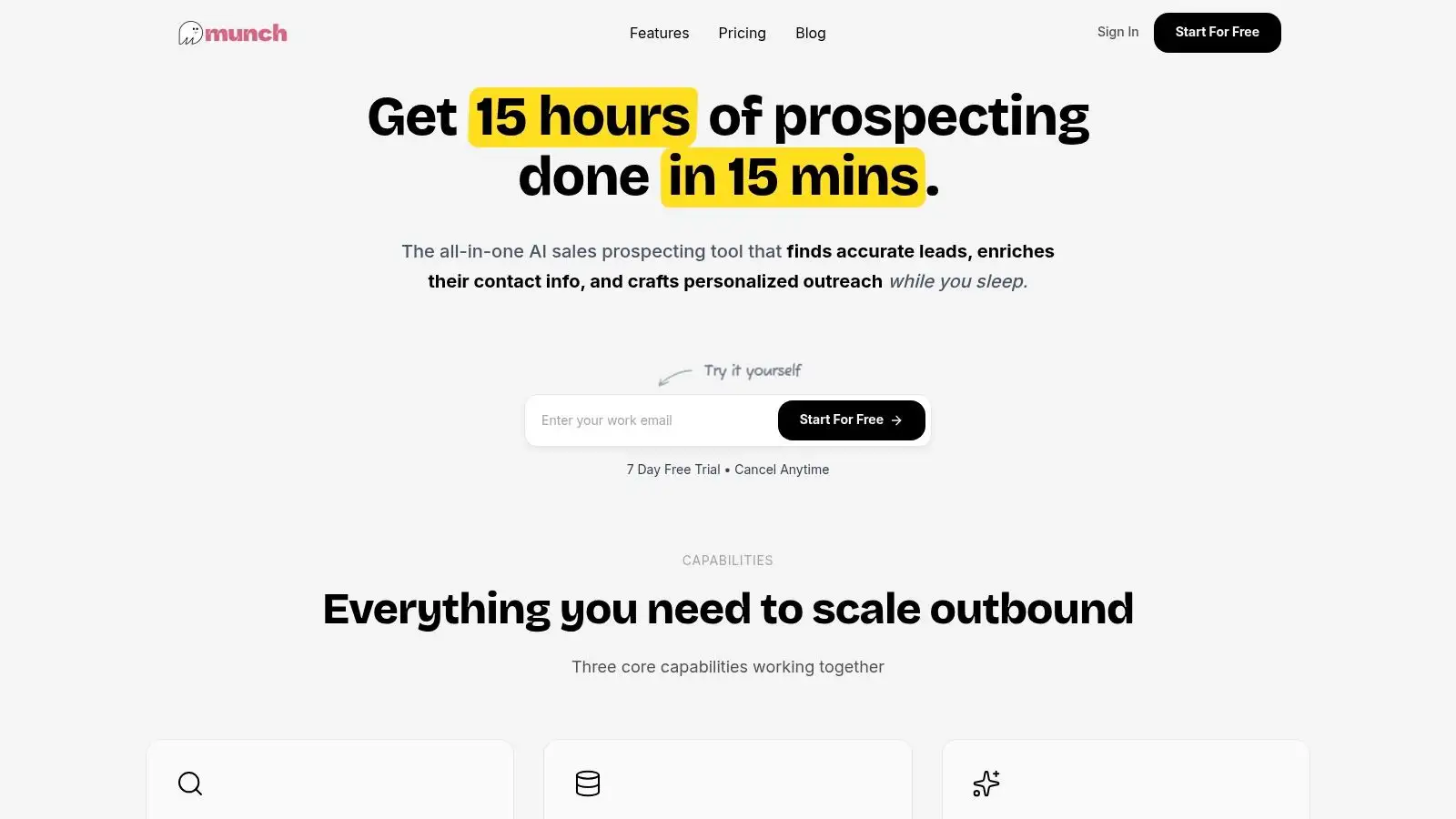
When it comes to tools for sales prospecting, the holy grail is finding a single platform that does it all without forcing you to glue together five different subscriptions with duct tape and wishful thinking. Enter Munch, a unified sales intelligence platform that's less of a tool and more of a complete outbound operating system. It’s designed to take you from "Who do I even talk to?" to "Wow, they actually replied" in a single, streamlined workflow.
Munch consolidates three critical sales functions: finding high-intent leads, enriching their data with frightening accuracy, and launching personalized outreach that doesn't sound like it was written by a robot from a 1990s sci-fi movie. It’s the full package, built for B2B teams who would rather spend their time closing deals than drowning in spreadsheets and bad data.
Why Munch Stands Out: The Unified Workflow
Most prospecting stacks are a chaotic mess. You use one tool to find companies, another to find contacts, a third to verify emails, and a fourth to send the actual outreach. Munch’s standout feature is its integrated pipeline that eliminates this tool-switching nightmare.
It starts with signal-driven lead discovery. Munch scans over 100 verified sources to catch prospects at the perfect moment, flagging buying signals like:
-
Job Changes: A new VP of Sales just started? They're probably looking to shake things up and buy new tools.
-
Funding Events: A company just raised a Series B? They have cash to burn and problems to solve.
-
Technology Adoption: A competitor just adopted HubSpot? They might be open to other marketing automation integrations.
Once a signal is detected, Munch matches it against your ideal customer profile (ICP) and scores the lead in real time. This ensures you're not just finding leads; you're finding leads that are ready to buy now.
Key Features and Capabilities
Let's break down the engine running this prospecting machine.
-
Waterfall Enrichment: Forget manual data entry. Munch automatically enriches contacts with verified emails, direct-dial phone numbers, firmographics, employee counts, and technographics. Their advertised 95%+ email accuracy is a game-changer, drastically reducing bounce rates and saving your domain's reputation.
-
AI-Powered Personalization: This isn't your average "Hi {first_name}" mail merge. Munch's AI analyzes each prospect’s profile and the buying signal to generate unique, context-aware messages. For example, it can reference a recent funding announcement or a new job role to create an opening line that feels genuinely personal and relevant.
-
Multi-Channel Sequences: Your prospects live on more than just email. Munch supports automated outreach sequences across both email and LinkedIn. You can build sophisticated, multi-touch campaigns, A/B test your messaging, and optimize based on what actually gets replies.
Pro Tip: When setting up Munch, connect it to your CRM immediately. The real power is unleashed when high-intent signals automatically flow into your pipeline, enriched and ready for your sales team to engage without any manual intervention.
Who is Munch For?
Munch is particularly effective for revenue teams at growth-stage companies, startup founders who need to build a predictable pipeline from scratch, and demand generation teams looking to scale their outbound efforts. If you're a solo founder of a B2B SaaS, this platform can act as your first SDR, tirelessly finding and warming up leads while you focus on building your product.
| Feature Comparison | Munch | Standard Prospecting Stack |
|---|---|---|
| Lead Discovery | Integrated, signal-based scoring | Separate tool (e.g., LinkedIn Sales Nav) |
| Data Enrichment | Automatic waterfall enrichment | Manual or separate tool (e.g., ZoomInfo) |
| Outreach | AI-personalized, multi-channel | Separate tool (e.g., Outreach.io) |
| Workflow | Unified in one platform | Disjointed, requires multiple subscriptions |
Pros & Cons
-
Pros:
-
All-in-One Workflow: Combines discovery, enrichment, and outreach, saving time and reducing subscription costs.
-
High-Quality Data: The 95%+ email accuracy claim is a huge advantage, cutting down on wasted effort.
-
Signal-Driven Prospecting: Focuses on high-intent leads, leading to more relevant conversations.
-
Advanced AI Personalization: Generates context-aware messaging that stands out in a crowded inbox.
-
-
Cons:
- Potential for Variation: The 95%+ accuracy and AI effectiveness can vary depending on your specific industry and target audience.
Pricing and Access
Munch offers a tiered pricing model, with plans starting at $49/month. Higher-tier plans unlock more advanced features, a higher volume of credits, and priority support. You can explore its full capabilities by visiting their website.
Website: https://usemunch.com
2. LinkedIn Sales Navigator
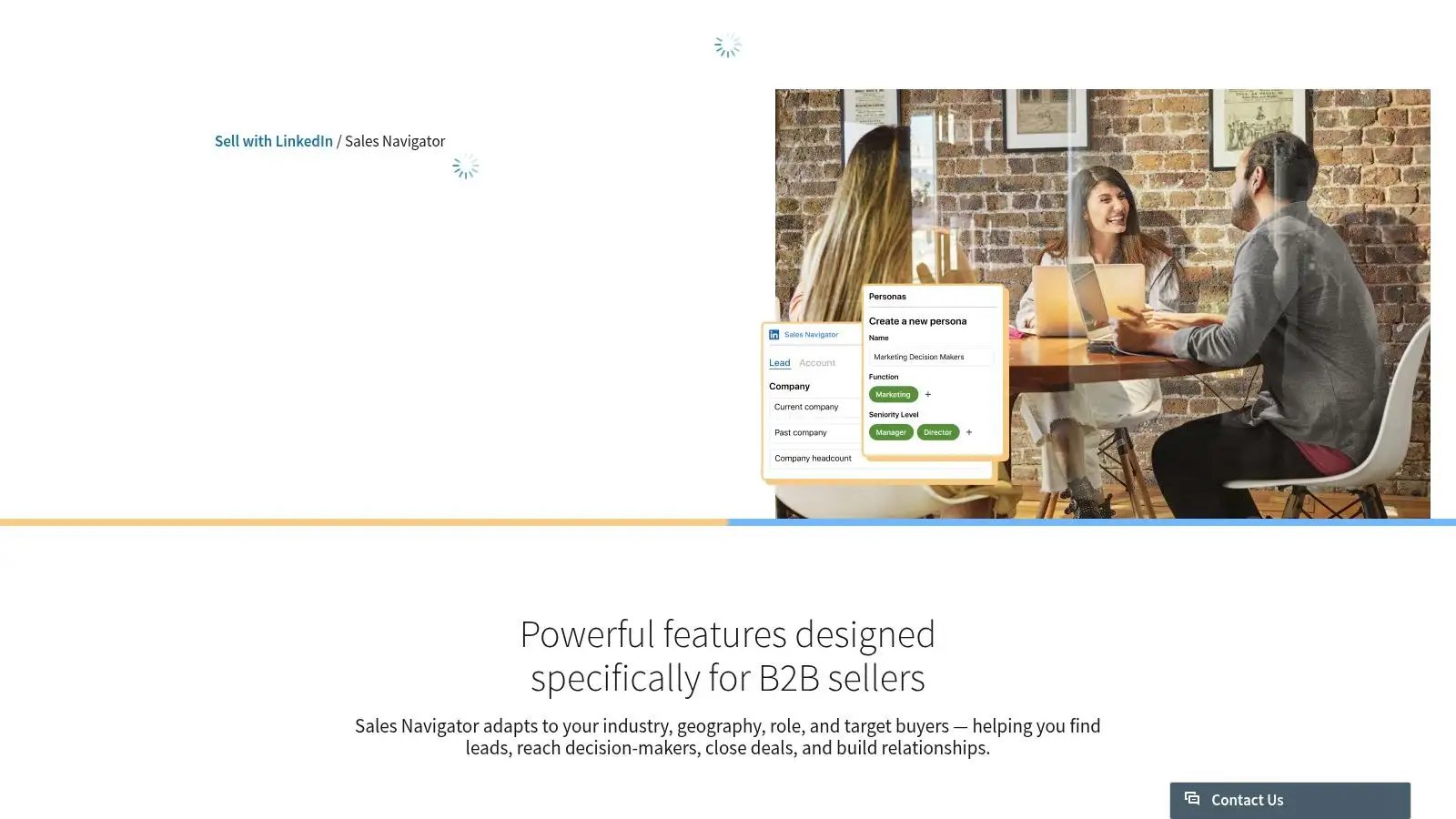
If B2B prospecting were the MCU, LinkedIn Sales Navigator would be Iron Man: the well-funded, technologically superior OG that everyone knows. It’s LinkedIn’s premier prospecting platform, built directly on its colossal network of professionals. This isn't some third-party tool scraping data; it's the source. Sales Navigator transforms the standard LinkedIn experience into a dedicated, high-powered command center for finding, tracking, and engaging with decision-makers.
Sales Navigator is one of the most essential tools for sales prospecting because it leverages first-party data. You get access to an unparalleled set of filters to pinpoint your ideal customer profile with surgical precision. Think beyond just title and company; you can filter by company headcount growth, recent job changes, seniority level, and even prospects who have posted on LinkedIn in the last 30 days.
Key Features & Benefits
What makes Sales Navigator a must-have in your sales tech stack?
-
Advanced Search & Filtering: With over 50 lead and account filters, you can build hyper-specific lists. For example, you can find VPs of Marketing at SaaS companies in California with 50-200 employees that recently hired a new CMO. Easy.
-
Lead & Account Alerts: Get real-time notifications when a saved lead changes jobs, gets promoted, or posts content. These "trigger events" are golden opportunities for timely, relevant outreach.
-
InMail Messages: This is your secret weapon. InMail allows you to slide into a prospect's DMs without needing a verified email address, bypassing crowded inboxes entirely. The monthly credits encourage concise, high-value messaging.
-
CRM Integration: Higher-tier plans (Advanced and Advanced Plus) sync seamlessly with major CRMs like Salesforce and HubSpot, allowing you to create contacts and log activities without leaving the platform.
Pricing & Tiers
Sales Navigator operates on a per-seat subscription model with three main tiers:
-
Core: ~$99/month. Ideal for individual reps getting started.
-
Advanced: ~$149/month. Adds team features, enhanced CRM sync, and advanced reporting.
-
Advanced Plus: Custom pricing. For enterprise teams needing the highest level of CRM integration and data validation.
Pros & Cons
| Pros | Cons |
|---|---|
| Unmatched First-Party Data: The data quality on professional roles and company info is second to none. | Limited Contact Info: Lacks direct-dial phone numbers and often requires a separate data enrichment tool. |
| Powerful Buying Signals: Job change and engagement alerts provide perfect timing for outreach. | Costly CRM Features: The most powerful CRM integrations are locked behind the more expensive tiers. |
| Native InMail Outreach: A direct line to prospects that bypasses traditional email filters. | InMail Credits are Limited: You can't just spam everyone; your outreach has to be strategic. |
The Verdict
LinkedIn Sales Navigator is the foundational layer for any serious B2B prospecting strategy. While it doesn't give you everything (like direct phone numbers), its ability to identify the right people and signal the right time to connect is invaluable. For a powerful workflow, pair it with a contact data provider to get phone numbers and verified emails for the leads you discover.
3. ZoomInfo SalesOS
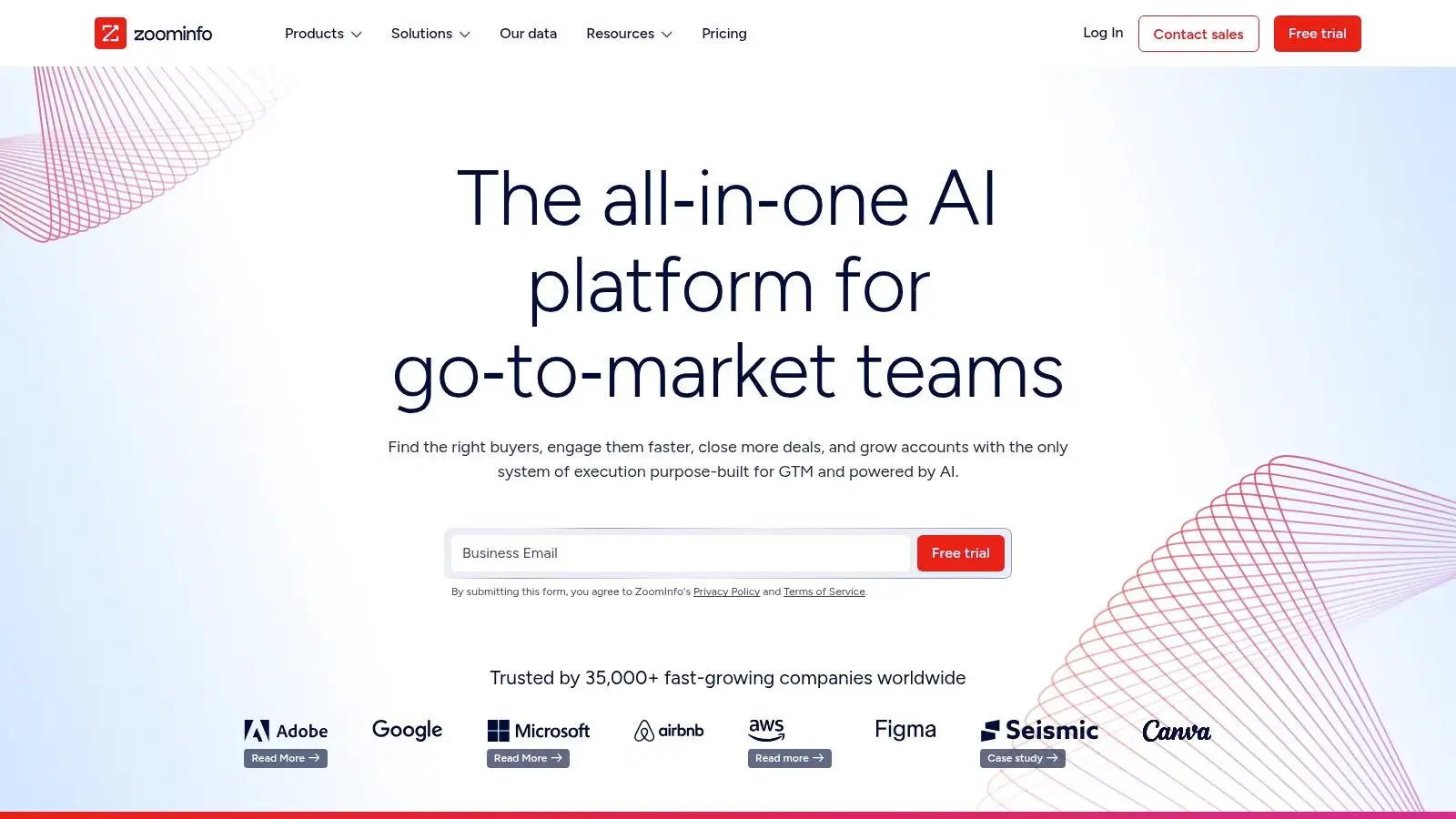
If LinkedIn Sales Navigator is the refined strategist, ZoomInfo is the heavy-hitting enforcer with an endless supply of intel. It's an enterprise-grade B2B database that goes beyond just names and titles; it’s a full-blown market intelligence machine. ZoomInfo has built a reputation for its massive contact database, particularly its coverage in North America, and its almost mythical ability to surface direct-dial phone numbers.
ZoomInfo is one of the most powerful tools for sales prospecting because it combines a colossal data repository with actionable intent signals. It's not just about finding who to contact, but knowing when and why to contact them. For instance, the platform can track which companies are actively searching for "project management software," letting you engage them while they're already in a buying mindset. This turns cold outreach into a much warmer conversation.
Key Features & Benefits
What makes ZoomInfo the go-to for data-driven sales teams?
-
Massive Contact & Company Database: Gain access to millions of B2B profiles, complete with verified email addresses, mobile numbers, and direct dials, significantly reducing the time spent hunting for contact info.
-
Buyer Intent Data: Identify accounts that are actively researching your products or competitors. This feature lets you prioritize outreach to prospects who are already in the buying cycle.
-
Advanced Filtering & Org Charts: Drill down with dozens of filters to build precise prospect lists. The dynamic org charts help you visualize reporting structures and identify key decision-makers and influencers within a target account.
-
Data Enrichment & Integrations: Automatically clean, update, and enrich your CRM data to ensure your single source of truth is always accurate. It integrates deeply with Salesforce, HubSpot, and other major platforms.
Pricing & Tiers
ZoomInfo's pricing is customized and not publicly listed. It typically involves a sales consultation to build a package that fits your team's needs.
-
Professional: The entry-level tier for individual users or small teams.
-
Advanced: Adds more credits, advanced features like intent data, and deeper integrations.
-
Elite: The top-tier plan with the full suite of automation, data, and analytics capabilities for large or enterprise-level teams.
Pros & Cons
| Pros | Cons |
|---|---|
| Excellent US Data & Direct Dials: Its coverage of North American contacts, especially direct phone numbers, is a key differentiator. | Opaque Pricing & Annual Contracts: You must go through a sales process to get a quote, and contracts are typically annual commitments. |
| Robust Intent & Enrichment: The platform's ability to signal buying intent and keep CRM data clean is a huge asset for revops. | Can Be Expensive: The platform is a significant investment, especially for smaller businesses or startups. |
| Mature Enterprise Ecosystem: Offers a wide range of add-ons and integrations designed for sophisticated sales operations. | Credit System Can Lead to Overages: Heavy usage can burn through credits quickly, potentially leading to additional costs. |
The Verdict
ZoomInfo SalesOS is a powerhouse for sales teams that want to operate with a high degree of data-driven precision. Its combination of contact data, intent signals, and enrichment capabilities makes it an all-in-one prospecting command center. While its price point may place it out of reach for some smaller teams, its value is undeniable for organizations ready to invest in top-tier intelligence.
4. Apollo.io
If LinkedIn Sales Navigator is the specialized sniper rifle, Apollo.io is the fully-loaded Swiss Army knife for prospecting. It’s an end-to-end sales engine that rolls a massive B2B database, contact enrichment, email sequencing, and a phone dialer all into one cohesive platform. For teams that want to find, engage, and analyze their outreach without juggling multiple subscriptions, Apollo is a game-changer.
Apollo stands out as one of the most versatile tools for sales prospecting because it consolidates the entire top-of-funnel workflow. Instead of finding a lead in one tool, enriching it in another, and sequencing it in a third, you can do it all from a single dashboard. This unified approach not only saves money but also dramatically speeds up the time from prospect discovery to the first conversation.
Key Features & Benefits
What makes Apollo the go-to platform for so many growth-stage teams?
-
All-in-One Platform: It combines a database of over 275 million contacts with robust sequencing tools. You can build a list, find verified emails and phone numbers, and immediately enroll prospects into an outreach cadence with A/B testing.
-
Powerful Chrome Extension: Work where you are. The extension allows you to prospect directly on LinkedIn and company websites, pulling contact data and adding prospects to sequences without ever switching tabs.
-
Built-in Dialer & Call Recording: Call prospects directly from the platform. The integrated dialer lets you click-to-call, leave pre-recorded voicemails, and automatically log all call activity and recordings to your CRM.
-
Buying Intent Data: Apollo helps you find companies actively researching solutions like yours. You can filter for accounts showing intent signals on specific topics, turning cold outreach into a much warmer conversation.
Pricing & Tiers
Apollo's pricing is known for its accessibility, especially for smaller teams:
-
Free: A generous free-forever plan with limited email and mobile credits to test the platform.
-
Basic: ~$49/user/month. A great starting point for individuals and small teams.
-
Professional: ~$79/user/month. Unlocks more credits, advanced features like A/B testing, and buying intent.
-
Organization: ~$119/user/month. Includes call recording, advanced API access, and higher credit limits.
Pros & Cons
| Pros | Cons |
|---|---|
| Excellent Value for Money: Combines multiple tools (database, sequencer, dialer) into one affordable subscription. | Credit System Can Be Limiting: High-volume prospecting can quickly burn through monthly credits, requiring costly add-ons. |
| Unified Workflow: Dramatically simplifies the sales tech stack and streamlines the entire prospecting process. | Data Accuracy Varies: While generally strong, some users report occasional inaccuracies or outdated contact information. |
| Generous Free Plan: One of the best free plans on the market, making it easy to try before you buy. | Learning Curve for Advanced Features: The sheer number of features can feel overwhelming for brand new users. |
The Verdict
Apollo.io is the perfect command center for sales teams that value efficiency and consolidation. It’s particularly powerful for SMBs and startups that need an all-in-one solution without the enterprise price tag. While heavy users might find the credit system restrictive, its combination of a huge database and built-in engagement tools provides an incredible amount of prospecting firepower in a single platform.
5. Cognism
If your sales team has ever felt like they're playing a high-stakes game of "Guess Who?" with phone numbers, Cognism is the cheat code. This platform is a B2B data provider that puts a massive emphasis on two things often overlooked by competitors: data compliance and phone-verified mobile numbers. In a world where GDPR and CCPA are the final bosses of data privacy, Cognism positions itself as the lawful good Paladin of prospecting, ensuring your outreach is not just effective, but also compliant.
Cognism is one of the most powerful tools for sales prospecting because it focuses on getting you direct access to decision-makers through their most guarded channel: their mobile phone. Its commitment to compliance and manually verified contact data, particularly for the European market, makes it a go-to for global teams who can't afford to play fast and loose with privacy regulations.
Key Features & Benefits
What makes Cognism a top-tier data provider in your arsenal?
-
Diamond Data®: This is Cognism's crown jewel. It's a database of mobile numbers that are manually phone-verified by their research team, leading to significantly higher connect rates. It's like having a direct line instead of just a switchboard number.
-
Comprehensive Buyer Signals: Timing is everything. Cognism provides signals like recent job changes, company funding events, hiring trends, and intent data (powered by Bombora) to help you prioritize accounts that are actively looking for a solution like yours.
-
Documented Compliance: For teams selling into Europe or other highly regulated regions, this is a massive benefit. Cognism provides documented proof of its GDPR and CCPA compliance, giving legal and security teams peace of mind.
-
Global Data Coverage: With a strong database covering North America, EMEA, and APAC, it's built for international sales teams that need reliable contact information across different continents.
Pricing & Tiers
Cognism's pricing isn't listed publicly on their website. They operate on a custom-quoted model based on your specific needs, team size, and the data packages you require.
- Custom Packages: You'll need to book a demo with their sales team to get a quote. This approach allows them to tailor a plan that fits your exact go-to-market strategy, whether you need access to North American data, European data, or both.
Pros & Cons
| Pros | Cons |
|---|---|
| Emphasis on Verified Mobile Numbers: The "Diamond Data" feature significantly boosts connect rates for sales calls. | Opaque Pricing: You have to go through a sales demo to get a quote, which can slow down the evaluation process. |
| Strong Compliance Posture: A huge selling point for enterprise and regulated industries concerned with GDPR/CCPA. | Learning Curve: Like any data-rich platform, it takes some time to master all the filters and features to get the most value. |
| Excellent Buyer Intent Data: The combination of Bombora intent, technographics, and trigger events is powerful for timing outreach. | Cost: It's a premium tool, and the pricing may be prohibitive for very small businesses or solo founders. |
The Verdict
Cognism is the ideal choice for established sales teams, especially those with a global footprint, who prioritize high-quality mobile numbers and strict data compliance. If your sales motion relies heavily on cold calling and you're tired of hitting dead-end phone lines, the investment in their verified Diamond Data can pay for itself quickly in saved time and increased conversations. It’s a premium tool for serious prospectors who understand that getting the right number is half the battle.
6. Lusha
If you’ve ever found a perfect prospect on LinkedIn and thought, "Now, how do I actually talk to them?", Lusha is the hero you were waiting for. Think of it as the easy button for contact data. It's a sales intelligence platform designed for speed and simplicity, letting you pull verified emails and direct-dial phone numbers with a single click, directly from a prospect's social profile or company website. It's built for reps who need to move fast and don't have time for a data science degree.
Lusha is one of the most popular tools for sales prospecting because of its incredible ease of use and generous free plan. Its browser extension is its superpower, integrating seamlessly into your existing workflow. You just navigate to a LinkedIn profile, click the Lusha icon, and instantly get the contact details you need to turn a digital connection into a real conversation. This frictionless approach makes it a favorite for SMBs and individual reps.
Key Features & Benefits
What makes Lusha a go-to for so many sales teams?
-
Browser Extension: The Chrome extension is the star of the show. It overlays contact data on top of LinkedIn, Salesforce, and company websites, so you can enrich contacts without ever switching tabs.
-
Simple Credit System: Lusha operates on a straightforward "credit" model. You use credits to reveal contact information, making it easy to understand your usage and costs. No complex algorithms, just simple transactions.
-
Generous Free Plan: Lusha offers a free-forever plan with monthly credits. This isn't a timed trial; it's a genuine way for solo reps or small teams to get started with data enrichment at no cost.
-
List Building & Alerts: You can build targeted prospect lists within the platform and get alerts on key buying signals, like when a company in your list receives funding or hires new leadership.
Pricing & Tiers
Lusha’s pricing is designed to be accessible and scalable:
-
Free: 5 credits per month for one user. Perfect for getting a feel for the platform.
-
Pro: ~$39/month per user. Provides 480 credits annually.
-
Premium: ~$69/month per user. Offers 960 credits annually plus more advanced features like list building and analytics.
-
Scale: Custom pricing. For larger teams needing bulk enrichment, CRM integrations, and API access.
Pros & Cons
| Pros | Cons |
|---|---|
| Generous Free Plan: The free tier is genuinely useful and a great way to start. | Credit-Intensive Phone Numbers: Revealing direct dials can cost significantly more credits than emails. |
| Incredibly Easy to Use: The browser extension makes it one of the most intuitive tools on the market. | High-Volume Usage Gets Pricey: If you're a power user, credits can be burned through quickly, requiring an upgrade. |
| Great for SMBs: The pricing model and simple interface are perfect for smaller teams and individual sellers. | Data Accuracy Can Vary: Like all data providers, accuracy isn't 100%, and sometimes you'll find outdated information. |
The Verdict
Lusha is the perfect entry point into the world of contact data enrichment. Its simplicity and powerful free plan make it a no-brainer for any rep looking to supplement their LinkedIn prospecting. While heavy-duty enterprise teams might need more firepower, Lusha provides immense value for SMBs and individuals who need accurate contact info without the complexity or cost of enterprise-grade platforms. It’s the ideal second step after identifying a lead on Sales Navigator.
7. Clay
If most prospecting tools are like a pre-built Lego set with fixed instructions, Clay is the giant, unsorted bin of Lego bricks with every possible piece you could ever imagine. It's a powerful, programmable enrichment and personalization engine that connects to over 100 data providers. Instead of giving you a single source of truth, Clay lets you build your own by daisy-chaining different data sources, web scrapers, and AI to find and qualify prospects like never before.
Clay is one of the most advanced tools for sales prospecting for teams that want to move beyond generic, templated outreach. It's a workspace where you can pull in a list of companies, then programmatically find the right contact, check their tech stack, find their latest funding round, read their company's "About Us" page, and then use an AI agent to draft a hyper-personalized opening line based on all that information. It's less of a tool and more of an automated research assistant for your entire team.
Key Features & Benefits
What makes Clay the ultimate sandbox for creative prospectors?
-
100+ Data Integrations: Clay unifies data from dozens of providers like PeopleDataLabs, Clearbit, and Owler. You can waterfall enrichments, meaning if one provider fails to find an email, Clay automatically tries the next one in your sequence.
-
No-Code Automation Table: Everything happens in a familiar spreadsheet-style interface. You can build complex, multi-step research workflows without writing a single line of code, making it accessible to operators, not just engineers.
-
Built-in Email Sequencing: Higher-tier plans include native email outreach capabilities, allowing you to build your hyper-personalized campaigns and send them directly from the platform.
Pricing & Tiers
Clay uses a credit-based system with several tiers. All plans include unlimited users.
-
Explorer: $149/month. Includes 2,500 credits for data and AI tasks.
-
Pro: $349/month. Bumps you up to 10,000 credits and adds features like webhooks.
-
Scale: $800/month. Offers 30,000 credits and includes native email sending.
-
Enterprise: Custom pricing. For large-scale operations needing custom integrations and support.
Pros & Cons
| Pros | Cons |
|---|---|
| Unmatched Flexibility: You can chain together any data source and AI prompt to build a completely custom prospecting motion. | Steep Learning Curve: This is not an "out-of-the-box" tool; it requires a strategic, operational mindset to get the most value. |
| Powerful AI Personalization: Claygent can perform research tasks that would take a human SDR hours, scaling high-quality outreach. | Can Become Complex: Building sophisticated workflows can be time-consuming and requires careful setup and testing. |
| Cost-Effective Enrichment: The waterfall model and credit system can be more cost-efficient than relying on a single, expensive data provider. | Best for Technically-Minded Teams: Teams without a dedicated sales ops person might struggle to leverage its full power. |
The Verdict
If you have someone on your team who loves tinkering with workflows and thinks in "if/then" statements, Clay will become their favorite new toy.
Top 7 Sales Prospecting Tools Comparison
| Tool | 🔄 Implementation complexity | ⚡ Resource requirements | 📊⭐ Expected outcomes | 💡 Ideal use cases | ⭐ Key advantages |
|---|---|---|---|---|---|
| Munch | Low–Medium: unified, single workflow | Low–Moderate: plans from $49; advanced features on higher tiers | Intent‑driven prospecting; claims 95%+ email accuracy (results may vary) | SDRs, demand‑gen, startups, solo founders | All‑in‑one discovery→enrichment→AI personalization; multi‑channel sequences |
| LinkedIn Sales Navigator | Low: native LinkedIn UX, minimal setup | Moderate: per‑seat subscriptions; higher tiers for CRM integrations | Strong relationship signals; InMail enables outreach without email | Relationship‑driven B2B prospecting; enterprise & SMB teams | First‑party member data; rich lead/account filters; InMail |
| ZoomInfo SalesOS | Medium–High: enterprise deployment and integrations | High: sales‑assisted pricing; annual contracts common | Comprehensive US contact coverage, direct dials, intent data | Large sales teams, revops, enterprise sales orgs | Broad US data, direct dials, mature enterprise ecosystem |
| Apollo.io | Low–Medium: quick onboarding, integrated engagement | Low entry cost: free plan available; credit model can scale costs | Fast GTM for outreach; consolidated sequences and analytics (data accuracy variable) | SMBs, growth teams, SDRs testing outbound | Database + sequencing + dialer in one; attractive entry pricing |
| Cognism | Medium: compliance and verification setup | Moderate–High: quote‑based pricing for global coverage | Verified mobile numbers and compliance‑ready data; improved connect rates | Global teams, regulated industries needing GDPR/CCPA compliance | Compliance‑first (ISO/SOC/GDPR), phone‑verified "Diamond Data" |
| Lusha | Low: browser extension, simple setup | Low: free plan with monthly credits; pay‑per‑credit model | Quick contact access for low volume; phone contacts cost more credits | Solo sellers, SMBs, quick trials | Fast to try; simple credit pricing; Chrome extension |
| Clay | High: configurable, requires ops/technical maturity | Moderate: self‑serve credits; integrates many providers | Flexible multi‑source enrichment and AI‑drafted personalization | Teams building programmable data stacks and scalable personalization | Federates 100+ sources; AI research (Claygent); transparent pricing |
Final Thoughts
And there you have it, folks. We’ve journeyed through the wild, wonderful world of sales prospecting tools, from the all-in-one behemoths to the specialized data wizards. It’s a lot to take in, and if your brain feels like it just binged all nine seasons of The Office in one sitting, that’s perfectly normal. The good news? You’re now armed with the knowledge to stop prospecting like it’s 1999 and start building a pipeline that’s the envy of your entire sales floor.
The central theme weaving through all these platforms is a shift from brute force to intelligent strategy. The era of "smile and dial" is over. Today, winning in sales means using technology to be smarter, faster, and more relevant than the competition.
Your Mission, Should You Choose to Accept It
So, what’s next? Don’t just close this tab and go back to your old spreadsheet. The most powerful tool is useless if it just sits there collecting digital dust. Your next step is to turn this information into action.
Here’s a simple framework to guide your decision:
-
Assess Your Current State: Where are the biggest leaks in your prospecting bucket? Are you struggling to find leads (Discovery)? Is your data inaccurate (Enrichment)? Is your outreach falling flat (Engagement)? Be brutally honest about your weaknesses.
-
Define Your Ideal Future: What does success look like in 90 days? Is it booking 15 more meetings a month? Is it reducing your research time by 50%? Get specific. A clear goal makes it easier to evaluate which tools for sales prospecting will actually get you there.
-
Start Small and Test: You don't need to buy the entire tech stack at once. Pick one or two tools that address your most pressing need. Run a pilot program with a small part of your team. Measure the results, gather feedback, and then decide whether to expand. Think of it like a free sample at Costco; you try before you commit to the family-sized box.
The Human Element in a World of Automation
Before you rush off to sign up for a dozen free trials, remember this critical point: these are tools, not silver bullets. They amplify your skill, they don’t replace it. The most sophisticated automation sequence in the world can’t save a poorly written email. The most accurate contact data is useless if you don't have a compelling reason for reaching out.
Your creativity, your empathy, and your ability to solve a prospect's real problems are still your greatest assets. These tools are here to handle the grunt work, freeing you up to do what humans do best: build relationships, tell stories, and close deals. Use them to automate the robotic tasks so you can be more human, not less.
Ultimately, the best stack of tools for sales prospecting is the one you’ll actually use. It’s the one that fits your workflow, your budget, and your team's unique style. So go forth, experiment, and build a prospecting machine that not only hits quota but makes the entire process a little more fun.
Ready to find high-intent leads before they even know they're looking? Munch analyzes long-form video content to pinpoint engaged users and potential customers, turning passive viewers into your next qualified meeting. Start discovering hidden opportunities and supercharge your prospecting at Munch.